Reviews AI Models
Gemini 4 Hydrogen Review: 1M Context Pricing, Capabilities and API Limits
At a glance
Gemini 4 Hydrogen is Google’s fast daily-driver model with a 1M token window, flat pricing at $1.50 per million input tokens, and configurable thinking levels.
Gemini 4 Hydrogen launched on November 12, 2026, as Google DeepMind’s efficient model for routine coding, agentic tasks, and multimodal work. It replaces Gemini 3.8 Flash across many Google surfaces and offers a unified 1,048,576-token context window shared between input, reasoning, and output. Developers access it through the standard Gemini API, Vertex AI, and Google AI Studio with a knowledge cutoff of March 2026.
Gemini 4 Hydrogen Features and Performance Benchmarks
The model accepts text, images, audio, video, and PDF inputs while producing text output. Four thinking levels—low, medium, high (default), and xhigh—let users balance speed against reasoning depth. Default synchronous output is limited to roughly 65,536 tokens, though longer background execution can reach the full window minus input size. Function calling, structured outputs, and grounding are supported without explicit context caching; only implicit caching for prompts of 4,096 tokens or more is available.
Google reports strong gains over Gemini 3.8 Flash: roughly 2.5 times faster at the default high setting, a Terminal-Bench 4.1 score of 57 percent versus 18.2 percent, and more than a fivefold drop in fabricated claims. On Artificial Analysis Intelligence Index the model scores 51 at default high and 54 at xhigh. It leads its class on HLE-Diamond (58.8 percent), AutomationBench-AA (76.1 percent), MKA (53.4 percent), Agents’ Last Exam v1.1 (71.6 percent), and SWE-sweep (13.5 percent), though it trails Claude Sonnet 5.5 on Terminal-Bench 4.1 where the latter reaches 63.9 percent.
Gemini 4 Hydrogen Pricing, API Limits and Availability
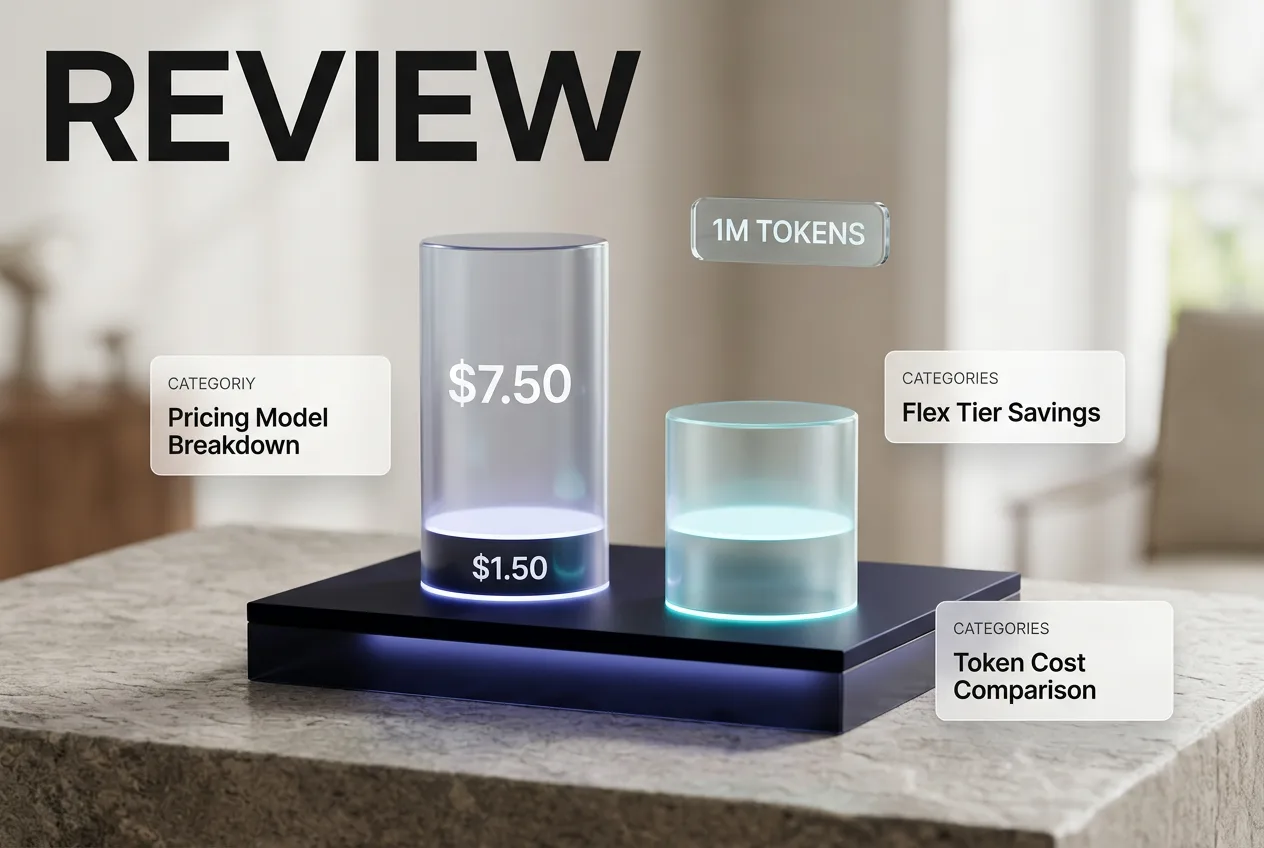
Standard pricing stands at $1.50 per million input tokens and $7.50 per million output tokens across the entire 1M window, with thinking tokens billed as output. Batch and Flex tiers reduce rates to $0.75 and $3.75; Priority tier raises them to $2.70 and $13.50. A free tier exists with rate limits. Implicit caching costs $0.075 per million input tokens. Rate limits in requests per minute, tokens per minute, and requests per day vary by tier and project and appear in AI Studio; spend-based caps also apply.
The model is available in Gemini API, Google AI Studio for all tiers, the Gemini app (auto-selected for free users, direct for Pro and Ultra), Google Search, Gemini for business, Android Studio, and Antigravity for Pro and Ultra subscribers. It complements deeper-reasoning models such as Carbon and Argon in multi-model setups. Short-term general availability follows Google’s 45-day retirement notice policy. Full safety evaluations continue, with a comprehensive report still pending.
Limitations, Comparisons and Practical Considerations
Long-context requests and higher thinking levels increase token consumption and can hit rate limits faster. No explicit context caching exists, so repeated long prompts incur full input costs unless they qualify for implicit caching. Users report that spend-based limits require monitoring in production agent workflows. Compared with frontier alternatives, Gemini 4 Hydrogen prioritizes speed and cost over maximum reasoning depth.
Against Claude Sonnet 5.5 it shows lower scores on certain agent benchmarks but offers lower per-token prices and faster default inference. Relative to earlier Gemini Flash models it delivers measurable improvements in code generation and reduced hallucinations while maintaining the same flat pricing structure. Developers should test rate limits and token usage at their expected thinking level before scaling workloads.
Frequently asked questions
What is the context window size for Gemini 4 Hydrogen?
Gemini 4 Hydrogen uses a unified 1,048,576-token window shared across input, reasoning, function calls, and output. Default synchronous responses are capped near 65,536 tokens, while longer background runs can approach the full window.
How much does Gemini 4 Hydrogen cost per million tokens?
Standard pricing is $1.50 per million input tokens and $7.50 per million output tokens. Implicit caching for prompts of 4,096 tokens or longer costs $0.075 per million input tokens. Batch, Flex, and Priority tiers offer different rates.
Does Gemini 4 Hydrogen support multimodal inputs?
Yes. The model accepts text, images, audio, video, and PDF files. Output is text only, with multimodal understanding for the provided inputs and a knowledge cutoff of March 2026.
Where can developers access Gemini 4 Hydrogen?
Access is available through the Gemini API, Google AI Studio, Vertex AI, the Gemini app for Pro and Ultra users, Android Studio, and Antigravity. Free users receive it via auto-selection in the Gemini app.
Filed under
Comments 1