Reviews AI Models
Nvidia Nemotron 3.5 review examines science-focused multimodal capabilities
At a glance
Nvidia Nemotron 3.5 Super VL delivers 120B parameters with strong chart and document reasoning. This review details its science applications, pricing, and limitations.
Nvidia Nemotron 3.5 review centers on the open-weights multimodal model released October 15, 2026. The 120B parameter MoE system uses 12B active parameters per token, hybrid Mamba-2 layers, and a C-RADIO vision encoder to handle documents, charts, images, and video with up to 1M token context.
Nvidia Nemotron 3.5 Review: Science Datasets and Post-Training
The November 16, 2026 Nemotron for Science release bundles the model with LitmusBench v0.2, a dataset of roughly 49,000 chemistry reasoning questions drawn from ChEMBL, ExpansionRx, and Biogen sources. Training splits contain 47,000 examples and test sets hold about 2,000. Recipes include NeMo RL/Gym with GRPO plus LoRA and verifiable rewards for tasks such as molecular property prediction, ADME modeling, assay analysis, experiment planning, and protein design.
Third-party tests from Thoughtworks showed chart-reading accuracy on CharXiv rising from 17-18 percent to 78-99 percent after three hours of fine-tuning on four H200 GPUs. Legal and healthcare adapters lifted next-token prediction scores by five to nine points on held-out data. The model runs on four H100, two GB200, or one DGX Spark instance with quantization that shrinks memory from 232 GiB to 68 GiB at four-bit precision. Early users include Lila Sciences, Terray Therapeutics, Therna, Argonne National Laboratory, and KTH.
Nvidia Nemotron Pricing, Benchmarks, and Alternatives
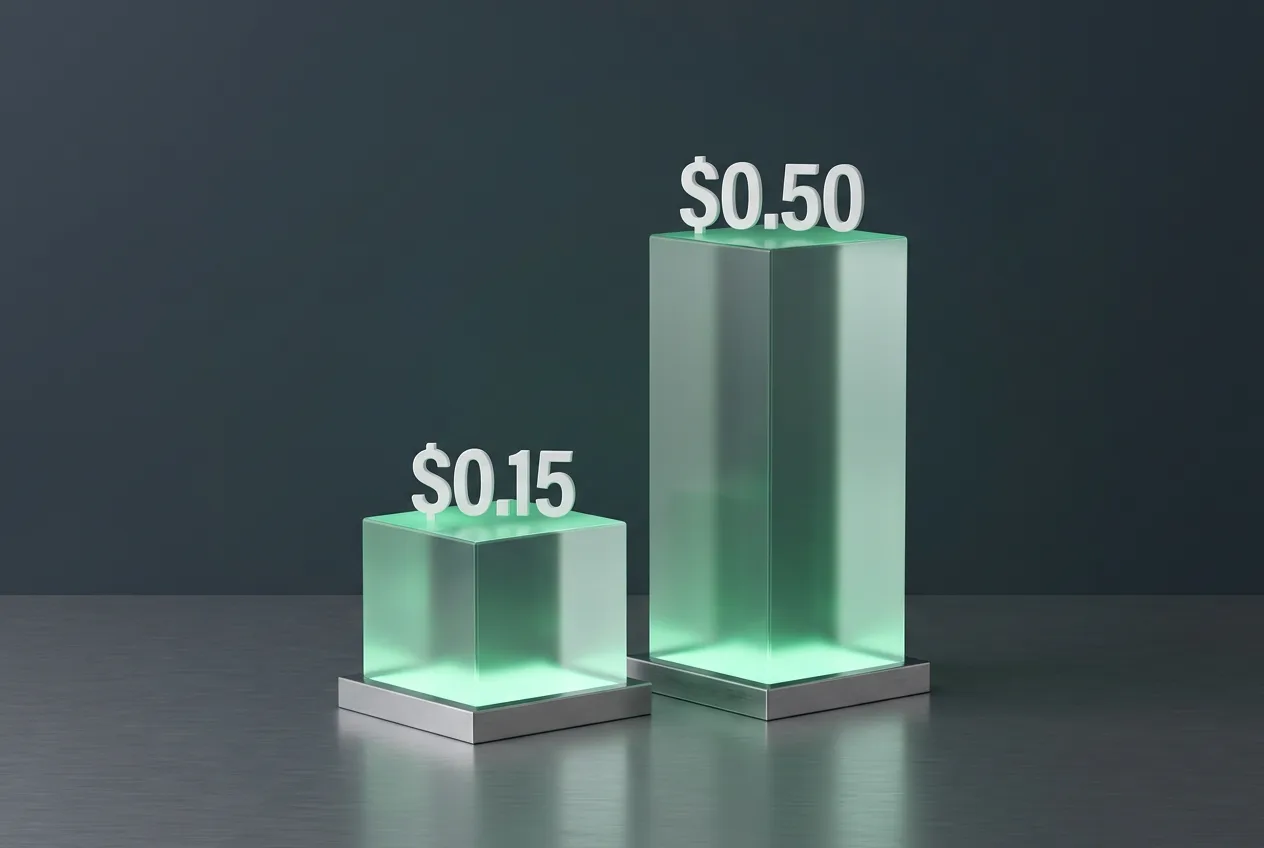
Hosted inference costs approximately $0.15 per million input tokens and $0.47 to $0.50 per million output tokens as of mid-November 2026, with lower rates available through cached inputs or certain resellers. Open weights are free on Hugging Face under the OpenMDW-1.1 license that permits commercial use. Vendor-reported scores include GPQA-Diamond at 89.5-89.9, SWE-bench Verified at 71.1, and CharXiv at 80, with output speeds reaching 450-630 tokens per second.
Compared with Qwen and DeepSeek open-weights models, Nemotron 3.5 trails on some general coding and agent benchmarks yet leads among U.S. open models on the Artificial Analysis Intelligence Index at 26-26.5. Meta Muse and Llama derivatives offer different licensing and hardware optimization profiles. Limitations include weaker performance on certain agentic tasks versus closed models and dependence on NVIDIA GPU infrastructure for full efficiency. Community deployments and independent benchmarks continue to evaluate real-world reliability.
Frequently asked questions
What datasets come with Nemotron for Science?
The bundle includes LitmusBench v0.2 with 49,000 chemistry questions covering molecular properties, ADME, and assays from ChEMBL and related sources.
How much does hosted Nvidia Nemotron 3.5 inference cost?
Pricing stands at roughly $0.15 per million input tokens and $0.47-$0.50 per million output tokens, with variations by provider and caching.
What hardware runs the 120B Nemotron 3.5 model?
Quantized versions fit on four H100, two GB200, or one DGX Spark system; full precision requires more memory.
How does Nemotron 3.5 compare with Qwen models?
It leads U.S. open-weights models on several science benchmarks but trails some Chinese open models on general coding and agent tasks.
Filed under
Comments 2