Reviews AI Models
Tencent Hy4 Review: 770B MoE Model Open Weights and API Pricing
At a glance
Tencent released the full Hy4 model with 770B parameters and open weights on November 20, 2026, alongside updated API rates and a detailed system card.
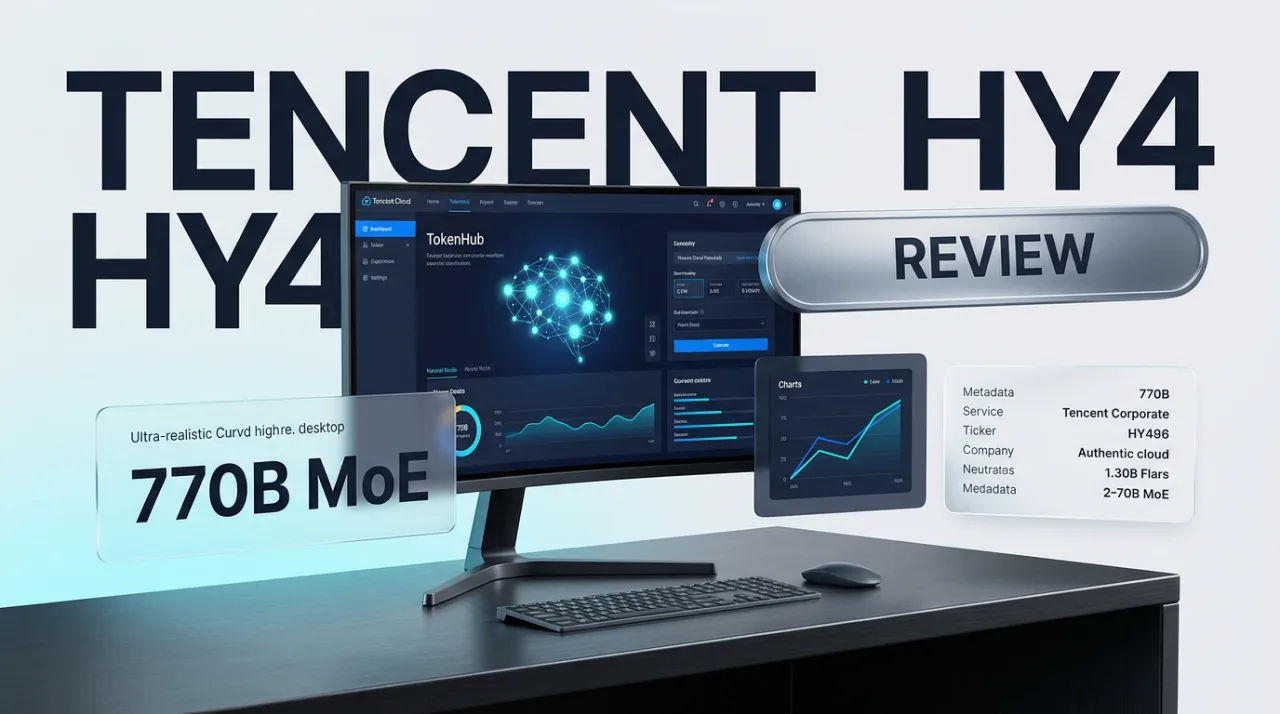
Tencent Hy4 is a 770B-parameter mixture-of-experts model with 49B active parameters per token. The full multimodal version became available with open weights on November 20, 2026, after a text-only preview in August. It targets long-context agentic workloads such as coding, research, and computer-use tasks.
What Is Tencent Hy4 and Its Core Features
The model uses a 78-layer architecture. The first layer is a dense feed-forward network, while the remaining 77 layers each contain 256 routed experts and one shared expert, with the top eight routed experts activated per token. It incorporates Gated DeepSeek Sparse Attention with IndexCache, identity Hyper-Connections, and speculative decoding via MTP and Dfly2. Native context length reaches 1,048,576 tokens, supported by a 1.23B-parameter vision encoder for image and video input.
Reported strengths include reduced hallucination rates, from roughly 15.76 percent in earlier versions to 5.45 percent, and improved factual consistency on finance and research agent benchmarks. Tencent states leading results among open-weight models on internal evaluations covering 579 finance tasks and various research suites. Day-one support exists in vLLM and SGLang, with tensor-parallel configurations documented for eight GPUs running the FP8 variant.
The open weights release includes the instruct model in FP8, the base model, a fine-tuning pipeline, and community GGUF builds. The license starts from Apache 2.0 but adds commercial restrictions under Tencent Hy License v1.0 for large-scale MaaS providers.
Tencent Hy4 Pricing, Deployment, and Security Details
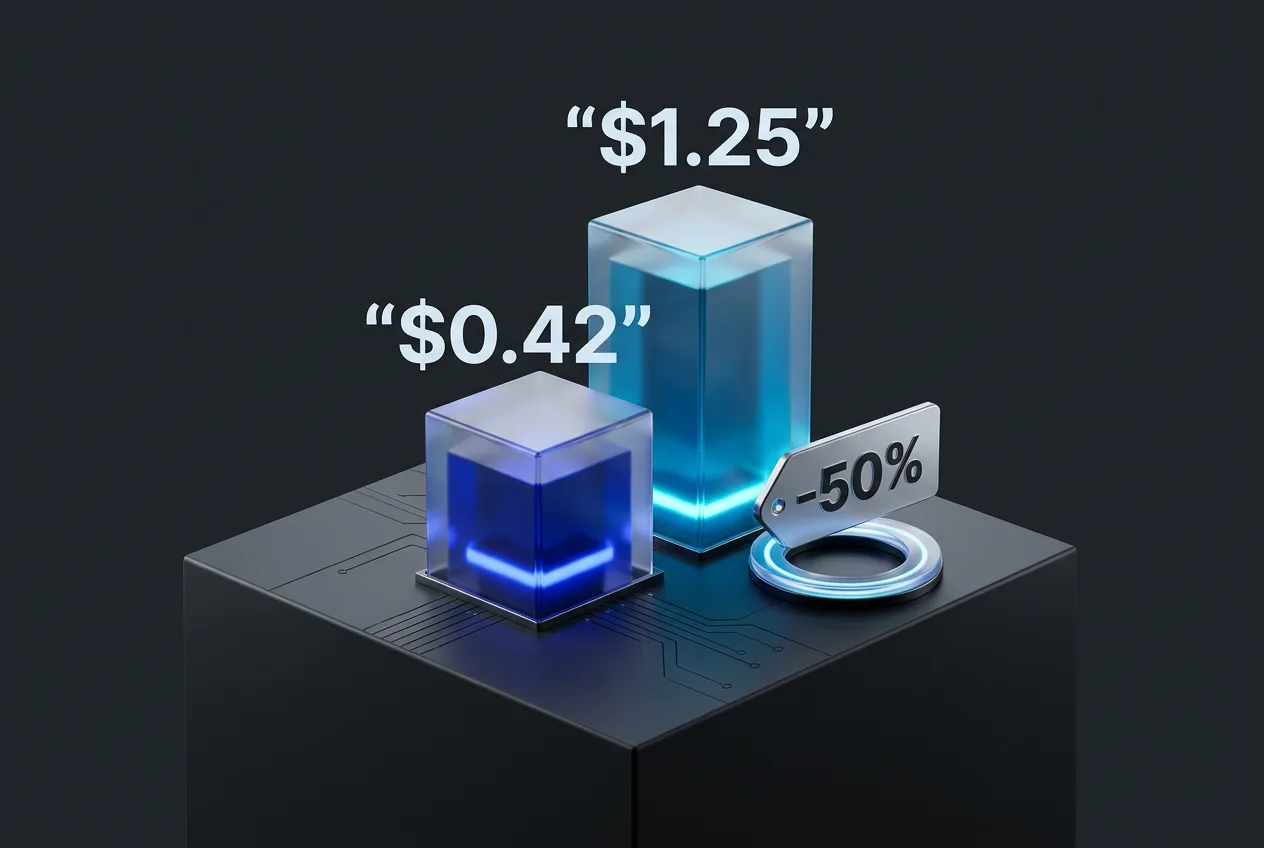
API access through Tencent Cloud TokenHub lists input at $0.417–0.834 per million tokens, output at $1.25–2.501, and cached tokens at $0.021–0.042, with a 50 percent promotional discount through December 31, 2026. A lighter Hy4 Flash variant offers approximately $0.07 input and $0.28 output. The preview model carries similar base rates.
Memory requirements are 0.79 TB for FP8 and 1.55 TB for BF16, making consumer hardware impractical. Deployment examples focus on server-grade clusters with documented parallelization scripts. Registration occurs via Tencent Cloud accounts, with standard token-based billing and no reported hidden fees beyond published rates.
Security documentation appears in the Hy4 System Card, which evaluates cyber and biological risks plus alignment. Training data excluded offensive cyber content, and red-team audits by Tencent labs and independent groups found no elevated offensive capabilities and bio-risk levels below defined thresholds. This represents the first such public card from a major Chinese frontier lab. The license excludes certain jurisdictions including the EU, UK, and South Korea for some commercial uses, while internal deployment remains exempt from additional approvals.
Performance Comparisons, Limitations, and Final Assessment
Independent benchmarks remain limited at release. Internal results place Hy4 ahead of DeepSeek-V4.1-Flash, GLM-5.3, and several Kimi variants on finance and agent tasks, yet gaps persist versus leading closed models on advanced mathematics, coding, and visual question answering. Long-context reliability and multi-turn agent stability require individual verification.
| Model | Parameters (active) | Context | Input price per M tokens (USD) | License notes |
|---|---|---|---|---|
| Tencent Hy4 | 770B (49B) | 1M | 0.417–0.834 | Hy License v1.0 with revenue thresholds |
| DeepSeek-V4.1-Flash | ~236B (est.) | 128K | Lower (public lists) | More permissive open weights |
| GLM-5.3 | ~355B (est.) | 128K | Comparable | Standard open license |
Common user observations on forums note strong long-context coherence but occasional drops in instruction following during extended computer-use sessions. Storage and inference costs remain the primary barriers for smaller teams. The model ships with comprehensive evaluation artifacts that users can inspect before deployment.
Frequently asked questions
What license applies to the full Hy4 weights?
The full release uses Tencent Hy License v1.0, which builds on Apache 2.0 but requires separate written approval for MaaS providers above $50 million annual revenue or 100 million MAU.
How does Hy4 API pricing compare after the promotion ends?
Standard rates resume in 2027 at the published $0.417–0.834 input and $1.25–2.501 output per million tokens, with cached input remaining the lowest tier.
What hardware is needed to run Hy4 locally?
FP8 inference requires roughly 0.79 TB of memory and benefits from documented eight-GPU tensor-parallel setups in vLLM or SGLang; consumer GPUs are not practical.
Does the system card address bio-risk concerns?
Yes, the Hy4 System Card reports bio capabilities below high-risk thresholds after red-team audits by Tencent and independent reviewers.
Filed under
Comments 4