Reviews Cloud Storage
Dropbox DBX Agent Cloud Review: S3 Object Storage for AI Workloads
At a glance
Dropbox plans to launch DBX Agent Cloud as standalone S3-compatible object storage for AI agents after acquiring Tigris Data for $350 million.
Dropbox announced on November 5, 2026, that it signed a definitive agreement to acquire Tigris Data Inc. for approximately $350 million in cash. The deal positions the company to enter the market for S3-compatible object storage aimed at AI workloads. DBX Agent Cloud will operate as a standalone service separate from Dropbox’s core file sync and sharing products.
Acquisition Details and Service Overview
Dropbox will acquire Tigris Data, a Sunnyvale-based startup founded around 2021 by former Uber storage engineers. The company raised a $25 million Series A in October 2025. The transaction, described as Dropbox’s largest acquisition, is expected to close in the fourth quarter of 2026. Existing Tigris customers will keep the same product, API, pricing, and support during the transition period.
DBX Agent Cloud begins with S3-compatible object storage designed for training datasets, model artifacts, images, video, and multimodal content. The service leverages Tigris’ globally distributed infrastructure with intelligent data placement to support low-latency access across multiple clouds. Dropbox stated that the offering will work alongside existing compute providers rather than requiring migration of entire workloads.
The roadmap includes future filesystem capabilities for persistent agent state across sessions and content-processing tools that convert documents, images, audio, and video into formats ready for AI models. These additions are planned after the initial object storage launch.
Current Pricing, Features, and Limitations
Tigris pricing remains in effect for current customers and includes a free tier of 5 GB Standard storage, 10,000 Class A requests, and 100,000 Class B requests per month. Standard storage costs roughly $0.02 per GB-month, Infrequent Access $0.01 per GB-month with a 30-day minimum retention, and Archive $0.004 per GB-month with a 90-day minimum. Class A requests are $0.005 per 1,000 and Class B requests $0.0005 per 1,000. The service charges zero egress fees for regional, cross-region, and internet transfers.
Dropbox has not yet published DBX Agent Cloud rates, SLAs, or exact availability date. The initial release focuses on the S3-compatible API and global distribution. No information has been released on encryption defaults, access controls beyond standard S3 mechanisms, or compliance certifications for the new branded service.
Dropbox is simultaneously rolling out natural-language file actions across its existing platform to more than 70,000 teams, with broader availability scheduled for 2027. These features remain separate from DBX Agent Cloud and rely on the company’s long-standing Magic Pocket storage system.
Competitor Comparison and Outlook
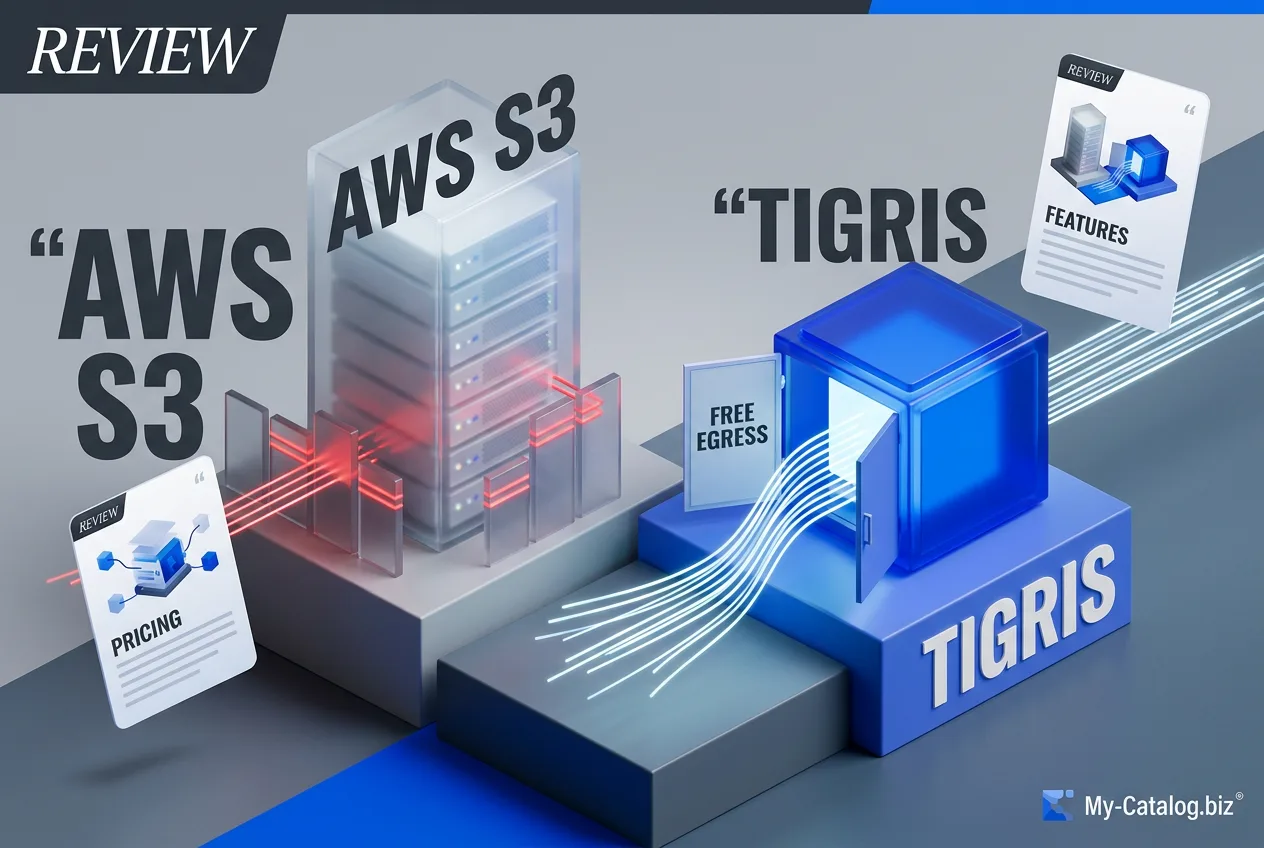
Compared with AWS S3, the Tigris model offers zero egress fees and a more generous free tier, though it lacks the same breadth of integrated compute services. Versus Cloudflare R2, Tigris provides similar zero-egress economics but targets AI-specific data placement rather than general web delivery. Backblaze B2 remains lower-cost for cold storage but does not emphasize multi-cloud agent workloads.
Key limitations at launch include the absence of published DBX Agent Cloud pricing and the delayed availability of filesystem and content-processing features. Users seeking immediate production commitments must rely on Tigris terms until Dropbox releases updated details after the acquisition closes. The service’s long-term positioning will depend on how Dropbox integrates Tigris technology with its established enterprise customer base.
Frequently asked questions
When will DBX Agent Cloud become available?
Dropbox expects to close the Tigris acquisition in Q4 2026. No public launch date for the rebranded service has been announced.
Does DBX Agent Cloud keep Tigris pricing?
Existing Tigris customers retain current rates and zero-egress policy during the transaction. New Dropbox pricing has not been disclosed.
Is DBX Agent Cloud separate from regular Dropbox plans?
Yes. The service launches as standalone S3-compatible object storage for AI developers and does not require a Dropbox file-sync subscription.
What happens to Tigris customers after the acquisition?
Tigris customers keep the same product, API endpoint, pricing, team, and support channels at least through the closing period.
Filed under
Comments 1