Reviews AI Models
DeepSeek V4.1 Flash review: Open Weights, Agentic Performance and Costs
At a glance
DeepSeek V4.1 Flash 1017 offers MIT-licensed weights and improved agent scores on a 552B MoE model with 1M context, priced from $0.15 per million input tokens.
DeepSeek released V4.1-Flash-1017 on October 17, 2026, as a checkpoint update to the September model. The service runs under the deepseek-flash alias on the company API and ships with MIT-licensed weights on Hugging Face. Users gain access to a multimodal mixture-of-experts system that supports 1 million token context, tool calls, and vision inputs at unchanged rates.
Model Specifications and Features
The architecture uses a 552 billion parameter backbone with 196 billion engram parameters and activates roughly 8 billion tokens during prefill and 16 billion during decode. It accepts text and image inputs, produces up to 384 thousand output tokens, and includes thinking and non-thinking modes plus JSON and tool-call formats. Vision capabilities function on the Flash tier without extra charges.
DeepSeek added standalone search and fetch endpoints on the same day. These routes operate on an internal engine and charge $0.75 per thousand successful requests. Rate limits stand at five queries per second per account, with additional per-domain restrictions on fetch calls. The endpoints remain free through early November 2026 when invoked from DeepSeek Harness or compatible coding environments.
Performance gains appear across eleven internal benchmarks. The largest reported lift occurred on Terminal-Bench 4.0, which rose 11.1 points to 42.3. DeepSWE v1.1 reached 77.0, surpassing the vendor figure for Claude Opus 5. Other scores include Automation-Bench 60.5, Agents Last Exam 35.4, and Apex Bench 72.1. Output length shortened on average, which reduced per-task latency for coding and agent workflows.
Pricing Structure and Open Weights
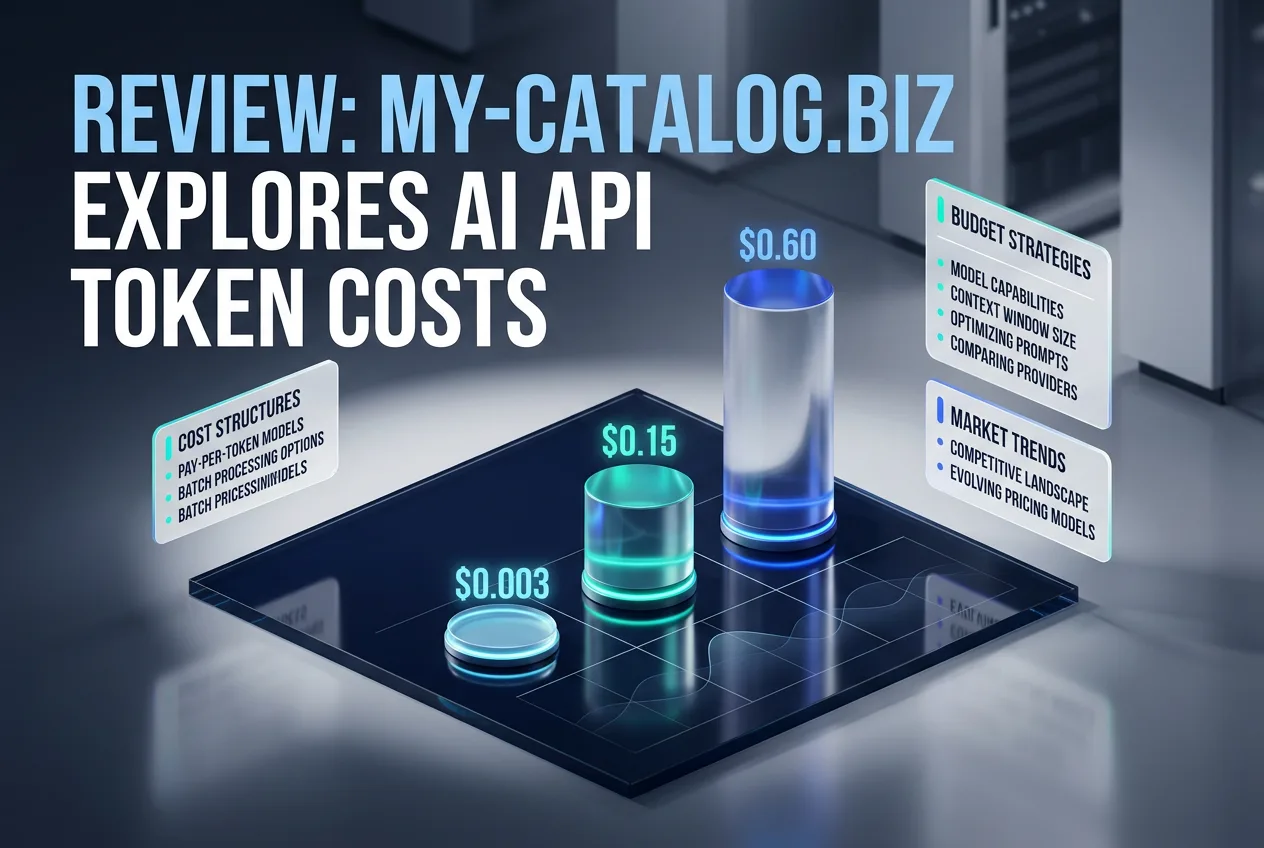
API rates stayed identical to the prior Flash checkpoint. Off-peak cache-miss input costs $0.15 per million tokens, cache-hit input costs $0.003, and output costs $0.60. Peak hours, defined as weekdays 01:00–04:00 and 06:00–10:00 UTC, double those figures. Third-party hosts sometimes list lower prices, though availability varies.
Weights totaling approximately 510 GB in safetensors format sit on Hugging Face under the MIT license. Both FP8 and BF16 variants are provided, and community GGUF quants appeared within days. Exact hardware requirements for self-hosting the 1017 checkpoint remain sparsely documented on the model card.
Third-party hosts and reviewers note competitive cost per completed agent task compared with closed models. Some deployments report occasional hallucinations and extended thinking traces on complex prompts. Independent reproductions of the vendor benchmarks have not yet appeared in public leaderboards.
Benchmarks, Comparisons and Limitations
Vendor numbers place the model ahead of Claude Opus 5 on DeepSWE yet behind on Terminal-Bench. ProgramBench scored 29.1 and HLE without tools reached 42.6. Visual tool-use benchmarks such as BabyVision improved to 92.5. These results reflect controlled internal tests rather than external verification.
| Model | DeepSWE v1.1 | Terminal-Bench 4.0 | Output Price per 1M |
|---|---|---|---|
| DeepSeek V4.1 Flash 1017 | 77.0 | 42.3 | $0.60 |
| Claude Opus 5 | 74.0 | 51.8 | Higher (undisclosed) |
| Prior DeepSeek Flash | 74.2 | 31.2 | $0.60 |
Limitations include pending independent verification, partial documentation for self-hosting scale, and the start of paid search billing in November. Gaps versus frontier models on raw reasoning tasks without tools remain visible in the HLE score. Potential future checkpoints or a V4.1-Pro variant could alter the current trade-offs.
Real-world use cases highlighted in public demos include game asset generation and 3D scene creation, where the combination of long context and low output cost produced measurable savings. Users seeking maximum reasoning depth may still prefer higher-priced alternatives for certain workloads.
Frequently asked questions
What license applies to DeepSeek V4.1 Flash 1017 weights?
The weights carry an MIT license and are hosted on Hugging Face. Both FP8 and BF16 formats are available, and community GGUF versions appeared shortly after release.
How much does the DeepSeek search endpoint cost?
Successful requests on the /v1/tools/search and /v1/tools/fetch endpoints cost $0.75 per thousand. Failures and empty results incur no charge. The rate limit is five queries per second per account.
Does DeepSeek V4.1 Flash 1017 support vision inputs?
Yes, the Flash tier accepts image inputs alongside text. Vision tool-use benchmarks showed improvement to 92.5 on BabyVision when tools are enabled.
When does paid billing for the new search tools begin?
Free access through DeepSeek Harness and compatible environments ends around November 1, 2026. After that date, standard per-request pricing applies.
Filed under
Comments
No comments yet. Be the first!