Reviews AI Models
MiniMax M3.1 Flash Review: API Pricing, Context Window and Performance Benchmarks
At a glance
MiniMax M3.1 Flash launched October 19, 2026 as a low-cost multimodal model with 1M context and strong agentic benchmarks at $0.15 per million input tokens.
MiniMax M3.1 Flash is a multimodal reasoning model released on October 19, 2026 and built for high-volume agentic, coding and cybersecurity tasks. It uses a Mixture-of-Experts architecture with 428 billion total parameters and 23 billion active parameters, delivering inference roughly three times faster than the prior M3 model while cutting agentic task costs by about 70 percent.
Access runs through the official MiniMax API at platform.minimax.io, the M Plan subscription tier, and the MiniMax Code desktop application. Weights are scheduled for public release on October 23, 2026. The model supports text, image and video inputs with text output and maintains always-on reasoning across five adjustable effort levels.
MiniMax M3.1 Flash Overview and Key Features
The model targets developers and teams running large-scale automated workflows. It inherits MiniMax Sparse Attention from the June 2026 M3 release and adds stronger tool and function calling support along with prompt caching. Maximum context reaches one million tokens, while output length commonly caps between 512,000 and 524,000 tokens depending on the provider.
Reasoning effort settings range from low to max and cannot be disabled, which affects both token usage and output quality. The service also offers video understanding, an area where many competing models still lag. Early internal testing showed improved handling of long agent trajectories compared with the original M3.
MiniMax AI Model Pricing and Context Window
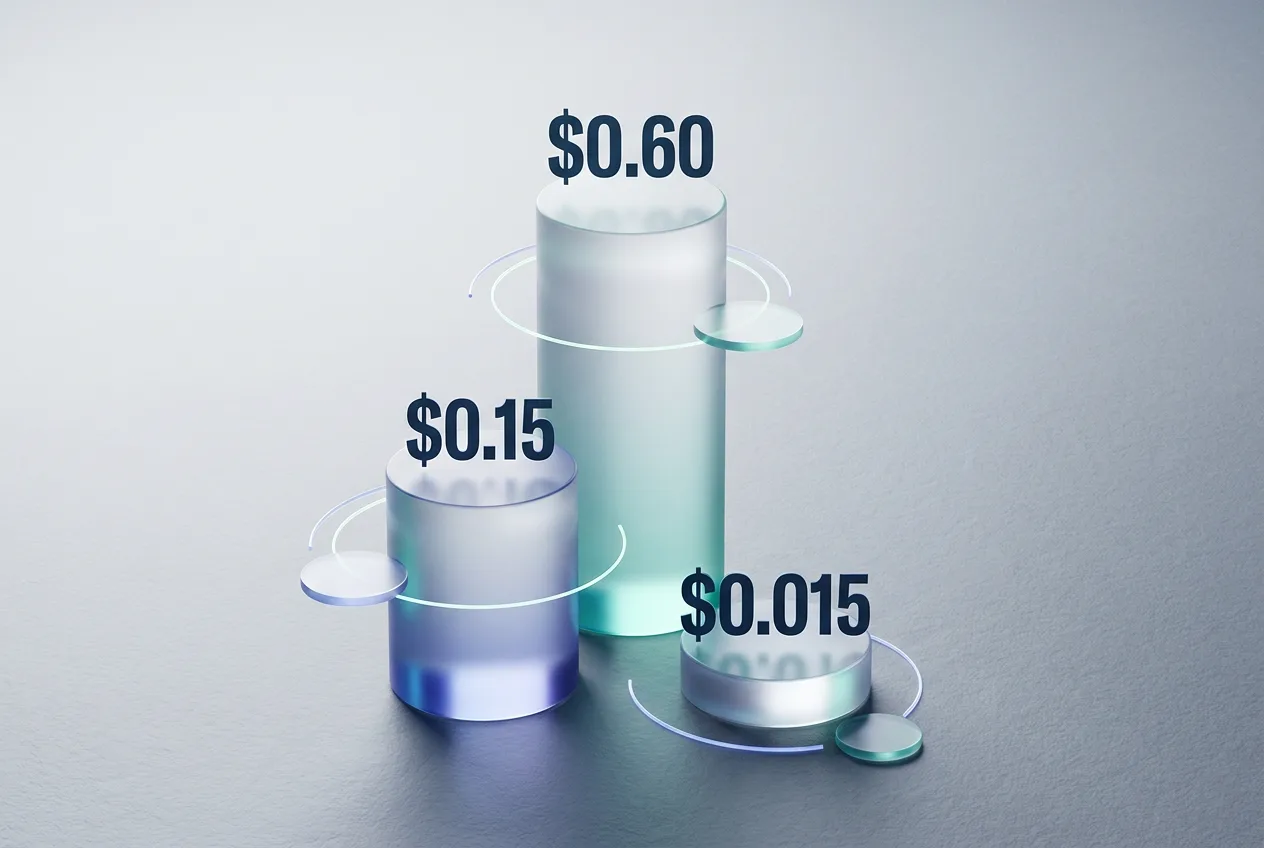
Flat pricing stands at $0.15 per million input tokens, $0.60 per million output tokens and $0.015 per million cached input tokens as of October 20, 2026. These rates sit at roughly half the cost of the previous M3 tiered schedule. Some third-party platforms list small additional discounts, though official documentation confirms the base rates above.
The one-million-token context window enables processing of entire codebases or lengthy video transcripts in a single call. Prompt caching further reduces repeated input costs on long sessions. No hidden per-request fees appear in the current documentation, but users should monitor output token counts because reasoning effort directly influences generation length.
| Model | Input price per M tokens | Output price per M tokens | Context window |
|---|---|---|---|
| MiniMax M3.1 Flash | $0.15 | $0.60 | 1,000,000 |
| DeepSeek R1 | $0.14 | $0.28 | 128,000 |
| Claude 3.5 Sonnet | $3.00 | $15.00 | 200,000 |
MiniMax AI Benchmarks, Speed and Limitations
Vendor-reported scores include 73.7 percent on DeepSWE v1.1, 61.7 percent on OSWorld V2, 76.2 percent on BankerToolBench and 82 percent on CyberGym. Independent Artificial Analysis placed the Intelligence Index between 42 and 43, with 48 percent on Humanity’s Last Exam. Output speed reaches vendor peaks above 200 tokens per second, though third-party measurements record sustained rates of 105 to 120 tokens per second.
One noted drawback is a 93 percent hallucination rate on the AA-Omniscience benchmark because the model attempts nearly every question. Early user reports also mention occasional overconfidence and incomplete outputs at the highest reasoning effort setting. Weights remain unavailable until October 23, 2026, limiting independent verification of both benchmarks and real-world reliability at present.
Compared with DeepSeek and Opus 5, MiniMax M3.1 Flash records higher scores on selected business-agent tasks at substantially lower per-token cost, yet trails in measured inference speed. The combination of large context, flat pricing and tool-calling support positions it for high-volume automated pipelines once weights become public and further external testing confirms consistency.
Frequently asked questions
What is the context window size of MiniMax M3.1 Flash?
The model supports a 1,000,000-token context window with typical maximum output between 512,000 and 524,000 tokens depending on the provider.
How much does MiniMax M3.1 Flash API cost?
Current rates are $0.15 per million input tokens, $0.60 per million output tokens and $0.015 per million cached input tokens.
When will MiniMax M3.1 Flash weights be released?
Official weights are scheduled for release on October 23, 2026.
What benchmarks does MiniMax M3.1 Flash lead?
Vendor numbers show leading results on BankerToolBench at 76.2 percent and CyberGym at 82 percent.
Filed under
Comments 1