Reviews AI Models
LongCat-2.5 Review: Meituan’s 1.6T Multimodal Agent Model Capabilities and API Details
At a glance
LongCat-2.5 is Meituan’s 1.6-trillion-parameter multimodal MoE model built for long-horizon agent tasks. This review examines its architecture, pricing, and reported performance.
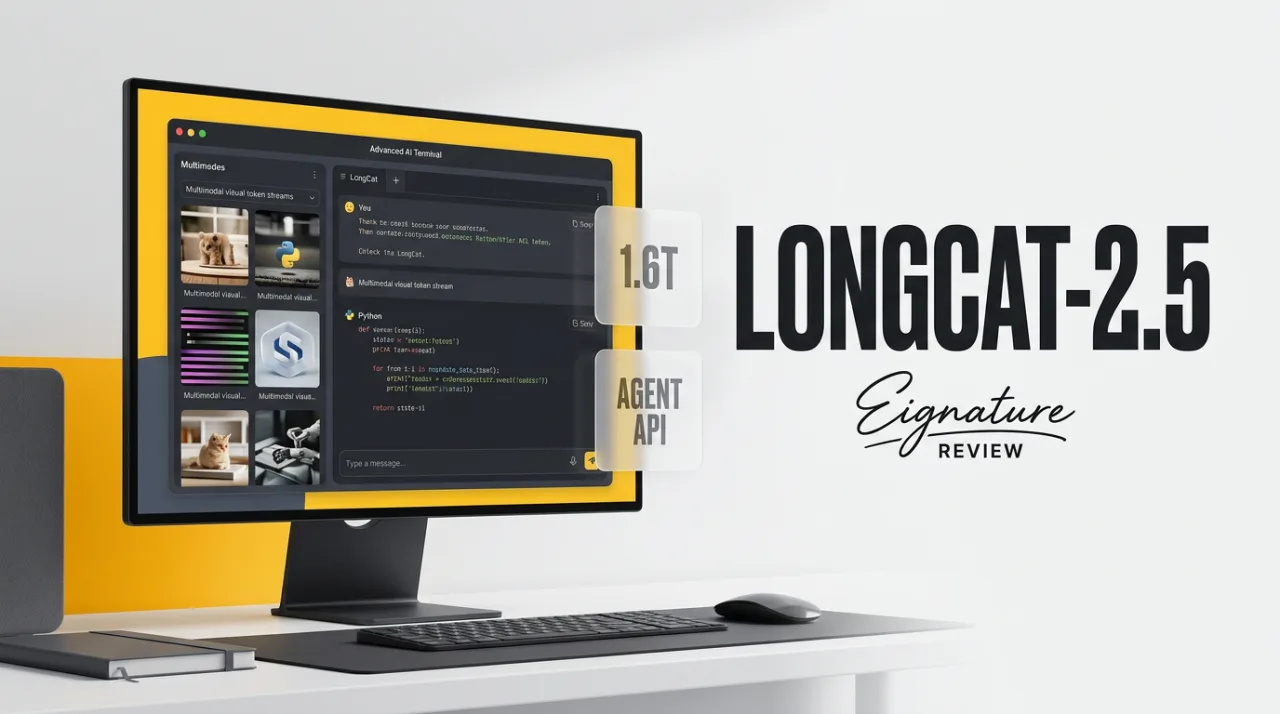
LongCat-2.5 is a native multimodal Mixture-of-Experts model developed by Meituan’s LongCat team. Released on November 2, 2026, it targets long-horizon agentic workflows such as complex software engineering and multi-step reasoning with visual inputs. The model activates roughly 48 billion parameters per token within a 1.6-trillion total parameter count and maintains a native 1-million-token context window.
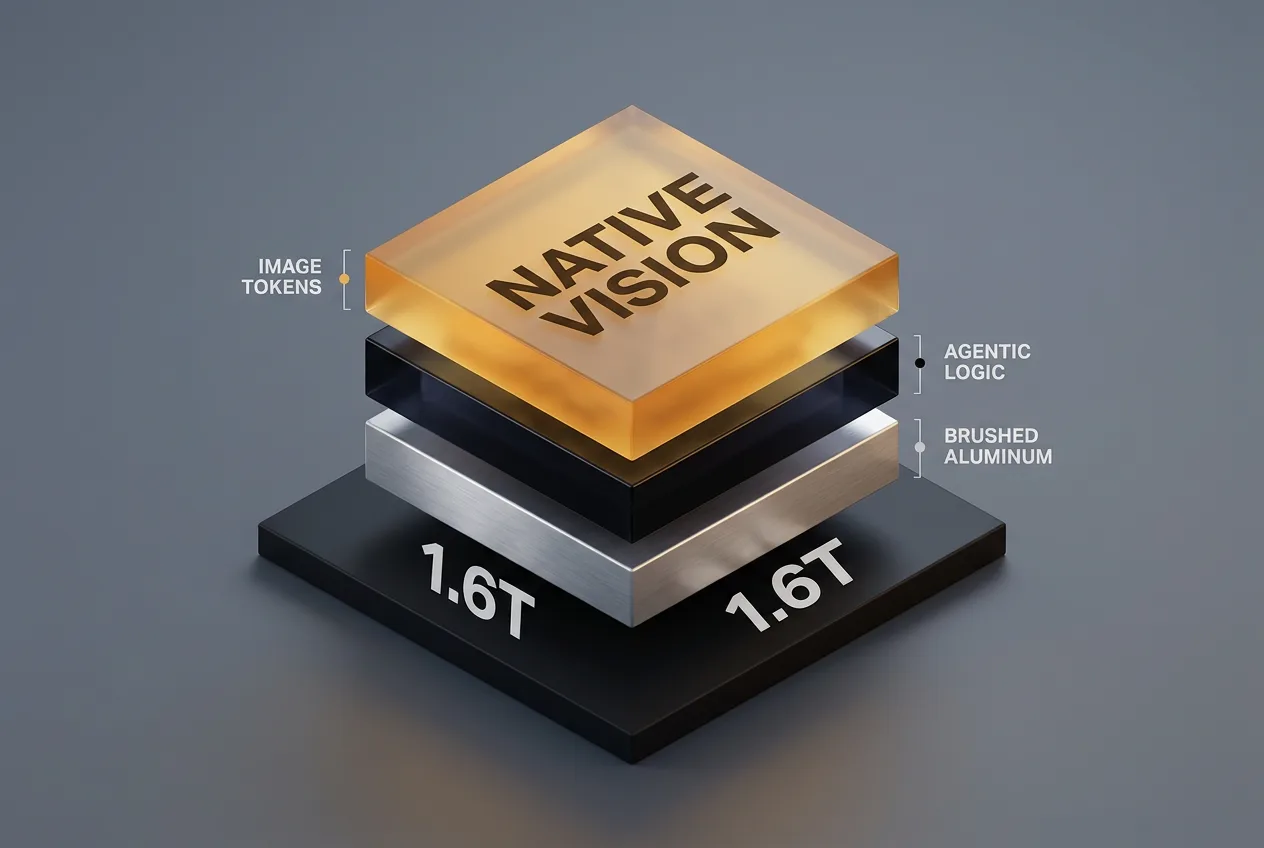
Text and image inputs are processed through a single unified backbone after visual signals are converted into multi-level discrete tokens. Video input is supported on the platform interface, while output remains text-only. Training occurred entirely on domestic Chinese accelerators, and the model includes W4A4 quantization for improved inference throughput.
LongCat-2.5 Capabilities, API Access and Benchmarks
Compared with LongCat-2.0 from June 2026, version 2.5 adds native visual understanding without a separate encoder and strengthens agentic coding through expanded trajectory data and reinforcement learning on failure cases. These changes target end-to-end engineering tasks involving full codebases and extended project horizons. The model supports OpenAI- and Anthropic-compatible API formats and integrates with agent harnesses including Claude Code, Codex, and Hermes.
API access runs through longcat.ai on a pay-as-you-go basis with limited-time discounted rates: $0.30 per million uncached input tokens, $0.006 for cached input, and $1.20 per million output tokens. Maximum output length typically reaches 128K–131K tokens. No public weights are available yet, though the team has indicated a future release; LongCat-2.0 remains accessible under an MIT license.
Vendor-reported benchmarks place LongCat-2.5 at 88.4 on Terminal Bench v2.1, 38.5 on Terminal Bench v4.0, 91.9 on BrowseComp, 64.6 on DeepSWE v1.1, and 82.1 on PaperBench. Additional scores include 65.1 on AutomationBench, 63.1 on HLE with tools, 83.1 on MCP Atlas, and 60.5 on NL2Repo. These figures position the model between Claude Opus 4.8 and 4.5 on many agent and visual tasks while trailing leaders on several harder coding benchmarks.
Limitations, Comparisons and Current Standing
LongCat-2.5 operates only through the LongCat platform API; self-hosted deployment is not yet possible. Independent verification of the published benchmarks remains pending, and some comparisons rely on vendor-run or indicative evaluations rather than standardized third-party testing. Output length caps and the absence of open weights limit certain research and production use cases.
Against comparable agent-focused models, LongCat-2.5 offers a larger total parameter count and longer native context than most current alternatives, yet its per-token activation and pricing structure differ from models that expose smaller dense architectures. Users report reliable handling of extended codebases and visual reasoning tasks, though complaints center on occasional output truncation at the upper context limit and slower response times during peak platform load.
The service lacks published details on data retention policies or specific compliance certifications beyond standard platform terms. No major security incidents have been reported since launch. Practical considerations for developers include the need to monitor token usage closely, given the output rate, and testing cached-input savings on repetitive agent workflows.
Frequently asked questions
What is the context window size of LongCat-2.5?
The model provides a native 1-million-token context window. This supports long-horizon agent tasks without additional chunking in many cases.
How much does LongCat-2.5 API access cost?
Current rates are $0.30 per million uncached input tokens, $0.006 for cached input, and $1.20 per million output tokens. These figures reflect limited-time discounted pay-as-you-go pricing.
Are LongCat-2.5 weights publicly available?
No public weights have been released. The team stated that weights are coming soon, while LongCat-2.0 remains available under an MIT license.
Which benchmarks does LongCat-2.5 lead on?
Vendor results show strong scores on Terminal Bench v2.1 at 88.4, BrowseComp at 91.9, and PaperBench at 82.1. Independent verification of these numbers is still pending.
Filed under
Comments
No comments yet. Be the first!