Reviews Akamai
Akamai Inference review: Beta AI Model Serving and Agent Sandbox Details
At a glance
Akamai launched Inference and Agent Sandbox betas on October 27, 2026, offering managed OpenAI-compatible model serving and isolated WebAssembly runtimes on its global edge network.
Akamai Inference review reveals two beta services released October 27, 2026, that extend the company’s existing GPU clusters and 4,350-plus edge locations into managed AI model serving and secure agent execution. Akamai Inference supplies OpenAI-compatible APIs for open-weight models ranging from 8 billion to 2.8 trillion parameters, while Agent Sandbox supplies a Spin-based WebAssembly runtime with strict outbound controls. Both run on NVIDIA Blackwell hardware and target MLOps teams seeking lower-latency and egress-controlled alternatives to hyperscalers.
Akamai Inference review of model catalog and deployment modes
The initial Inference catalog contains twelve open-weight models including NVIDIA Nemotron 3 Ultra, OpenAI gpt-oss-120b, Google Gemma 4, and several embedding models sized for retrieval-augmented generation. Users connect existing applications without code changes because the service exposes the standard chat and embeddings endpoints. Serverless mode autoscales across shared GPUs and bills per million input and output tokens once the free beta ends; dedicated mode reserves entire Blackwell nodes billed by the minute, including idle time.
Zero data retention applies to prompts and responses in both modes. Inference instances integrate directly with Akamai’s managed object storage and databases so enterprise data never leaves the platform during grounding operations. The service also supports private and public cloud connections for hybrid data sources. Hardware includes RTX PRO 6000 Blackwell Server Edition GPUs for low-latency inference and 8-GPU nodes with 288 GB HBM3e memory per card.
Agent Sandbox runs on Akamai Functions and executes generated JavaScript or Python code inside nested restricted environments. Each step is limited to roughly one minute in the current preview, with stateful long-running execution scheduled for later releases. Outbound network access defaults to deny, and compute, memory, and system-call limits are enforced at the sandbox boundary. The Spin SDK is open source under CNCF governance, allowing developers to select WebAssembly, microVM, or policy-container architectures.
Pricing, security controls, and comparison with alternatives
During the beta period serverless Inference remains free; future pricing will follow a per-million-token model for serverless and per-GPU-hour for dedicated instances. Separate GPU instance rates already published list RTX 4000 Ada cards starting at $0.52 per hour and Blackwell cards at $3 per hour, with $0.005 per GB egress overage. Dedicated B300 clusters require direct sales contact. Agent Sandbox pricing has not been published separately and is expected to follow Akamai Functions metering.
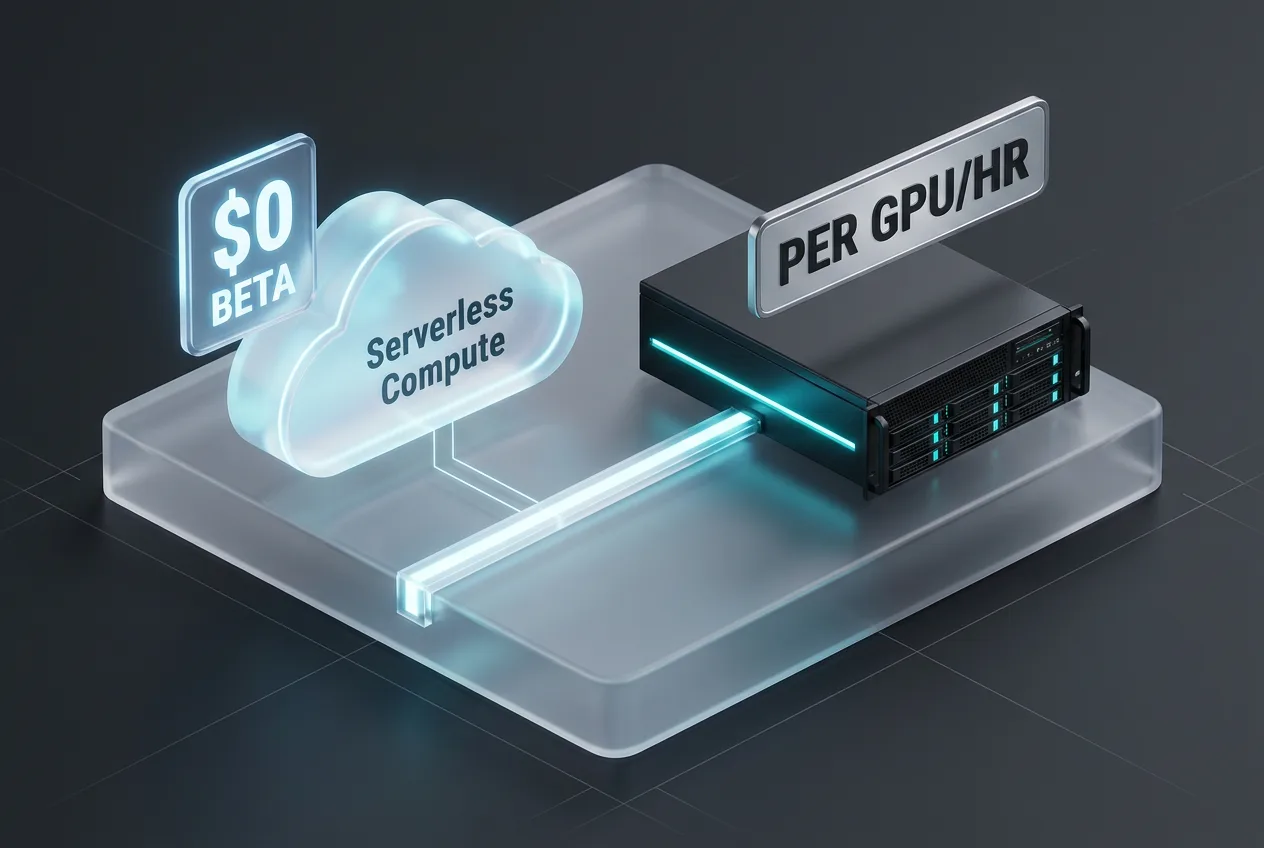
Security features include the deny-by-default network policy, capability restrictions, and the option to pair inference and sandbox workloads on the same regional infrastructure. No lock-in is claimed because models and code remain portable. Akamai Cloud reports more than $14 billion in multi-year contracts, indicating enterprise-scale capacity already in place.
| Service | Model Access | Agent Runtime | Current Pricing |
|---|---|---|---|
| Akamai Inference + Sandbox | OpenAI-compatible, 12 open-weight models | Spin WebAssembly, 1-minute steps | Beta free; later token or GPU-hour |
| Typical hyperscaler inference | Proprietary and open models | Container or VM options | Token plus egress fees |
| Specialist inference platforms | Limited model catalogs | Varies | Per-token or subscription |
Compared with hyperscalers, Akamai emphasizes edge proximity for real-time agent workloads and fixed egress costs. Specialist inference providers often lack integrated sandbox isolation or global PoP distribution. Both Akamai services remain in beta with serverless Inference and the Spin SDK available now by request; dedicated clusters and expanded agent controls are planned but carry no announced general-availability date.
Limitations and user considerations for Akamai Agent Sandbox
Current preview constraints include the one-minute execution window, limited model catalog size, and restricted availability of dedicated GPU nodes. No independent user reviews or complaint data exist yet because the services launched less than two weeks ago. Early adopters should verify token pricing once the beta concludes and confirm data-residency options for regulated workloads. The platform positions itself between hyperscalers and niche providers by combining edge scale with integrated security, yet the absence of published long-term pricing and full feature timelines leaves some enterprise planning questions open.
Frequently asked questions
When did Akamai Inference and Agent Sandbox launch?
Both services entered beta on October 27, 2026, as extensions of Akamai Cloud’s existing GPU and edge infrastructure.
What models are available in Akamai Inference?
The initial catalog lists twelve open-weight models between 8 billion and 2.8 trillion parameters, including Nemotron 3 Ultra, gpt-oss-120b, and Gemma 4, plus embedding models.
How is Akamai Agent Sandbox priced?
Pricing has not been published separately; the service runs on Akamai Functions and is expected to follow existing metering once the beta ends.
Does Akamai Inference retain prompt data?
The service applies zero data retention to prompts and responses in both serverless and dedicated modes.
What hardware powers Akamai Inference?
NVIDIA RTX PRO 6000 Blackwell Server Edition GPUs and 8-GPU Blackwell Ultra nodes with 288 GB HBM3e memory per GPU are used for inference workloads.
Filed under
Comments 1