Reviews Crypto Exchange
Kraken Review: Spot and Futures Trading with MiCA Licensing Explained
At a glance
Kraken provides spot trading for over 700 cryptocurrencies, perpetual futures with leverage, and operates under MiCA authorization in the EEA as of 2025.
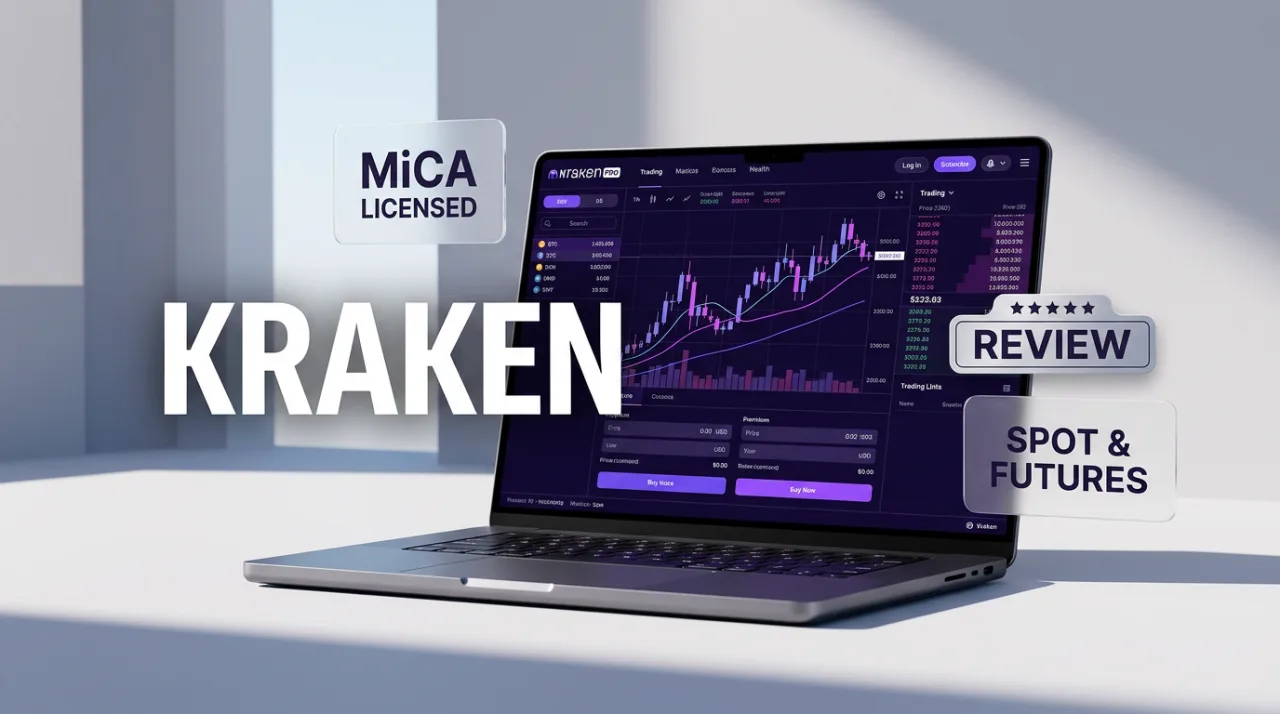
Kraken, operated by Payward Inc. since its 2011 launch, functions as a centralized exchange for spot trading, perpetual futures, margin, staking, and tokenized assets. It supports users in 190-plus countries with restrictions in certain U.S. states. The platform holds authorization as a Crypto-Asset Service Provider from Ireland’s Central Bank since June 2025, allowing passporting across 30 EEA countries for custody, trading, and transfer services.
Spot markets list 600 to 700 cryptocurrencies and roughly 715 coins tracked by CoinGecko in early November 2026. Kraken Pro supplies order-book tools including charts, stop orders, and API access, while the main app handles instant buys and conversions. Perpetual futures cover more than 100 pairs with leverage up to 50x in most cases and higher limits available outside U.S. and EU regions. U.S. clients access CFTC-regulated derivatives through Kraken Derivatives US following acquisitions completed in 2025 and 2026.
Trading Tools, Token Listings, and Regulatory Status
Token listings follow a free five-step process that begins with an application form detailing project information and tokenomics. Kraken reviews each submission for market fit, technical security, regulatory compliance, and liquidity plans. EEA listings additionally require a MiCA-compliant whitepaper in XBRL format submitted at least 20 business days before launch. No paid fast-track option exists.
The exchange also offers tokenized stocks and U.S. equities without commission in eligible regions. Staking programs and margin trading up to 10x round out the product set. Volumes fluctuate, with recent 24-hour combined spot and futures activity reported between $650 million and $1.4 billion. The platform serves approximately 7.1 million funded accounts as of Q3 2026, a 37 percent increase year over year.
Fees, Security Practices, and Market Comparisons
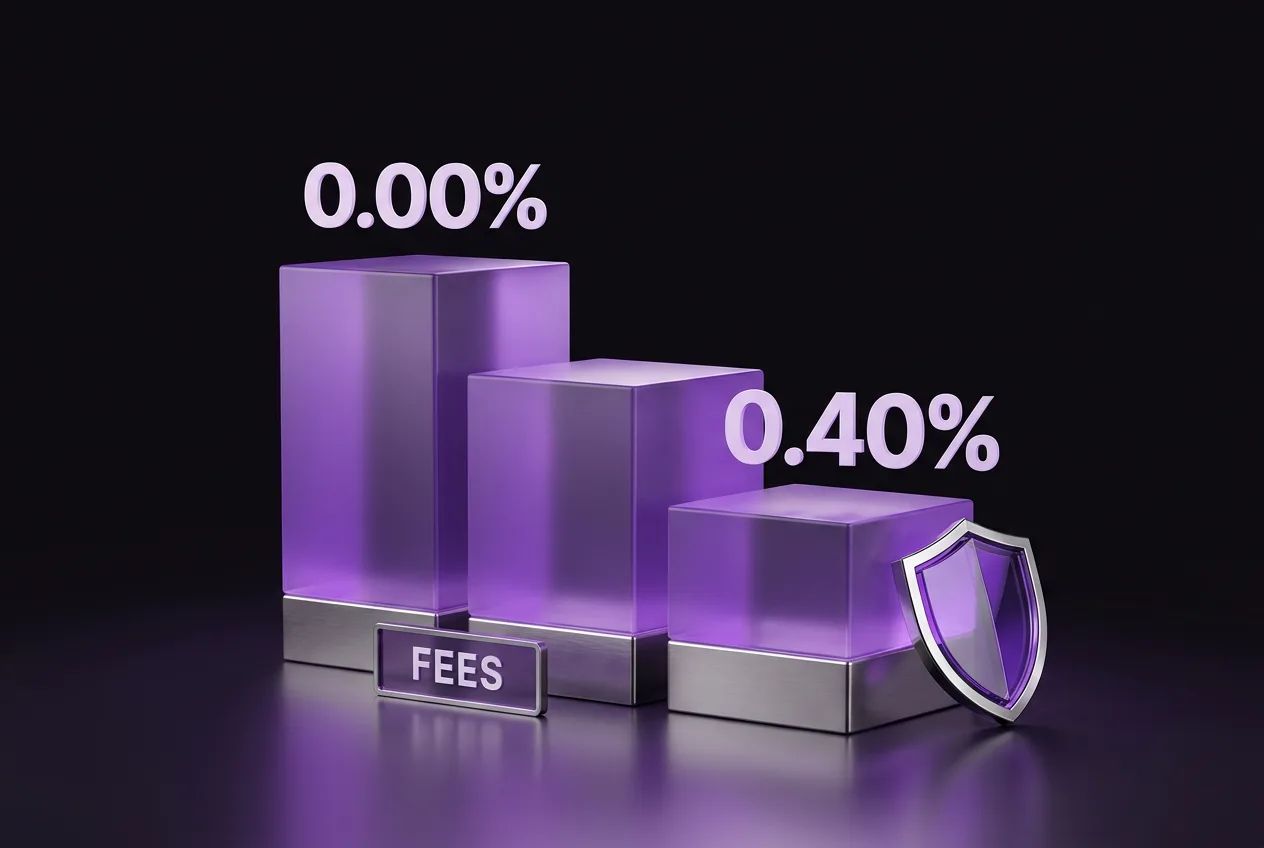
Kraken Pro spot fees begin at 0.40 percent maker and 0.80 percent taker for the entry tier based on 30-day volume or assets held, with reductions to zero maker and 0.05–0.10 percent taker at $10 million-plus volumes. Perpetual futures start at 0.02 percent maker and 0.05 percent taker. Instant buys in the app carry a 1 percent fee plus spread, waived up to $10,000 monthly volume with the $4.99 Kraken+ subscription. Withdrawal costs depend on network and fiat method, with SEPA and ACH transfers often free or low-cost.
Security includes continuous Proof of Reserves audits, with the September 30, 2026 snapshot showing 103.2 percent BTC coverage, 100.7 percent ETH, and over 105 percent for stablecoins. No client funds have been lost to hacks since inception. The exchange maintains additional registrations including UK FCA and U.S. FinCEN MSB.
Pros include broad coin selection, established regulatory footprint, and transparent reserves reporting. Cons center on higher entry-level spot fees compared with some peers and occasional user reports of account holds during verification. Trustpilot ratings sit near 3.2 out of 5 while the iOS app averages 4.7 out of 5.
| Exchange | Spot Fee Entry | Futures Pairs | MiCA Status | Proof of Reserves |
|---|---|---|---|---|
| Kraken | 0.40% maker / 0.80% taker | 100+ | CASP since June 2025 | Regular, Merkle tree |
| Binance | 0.10% maker / 0.10% taker | 200+ | Partial EU entities | Periodic |
| Coinbase | 0.60% maker / 0.60% taker | 20+ | CASP authorized | Periodic |
Limitations include state-level U.S. restrictions and higher fees for low-volume users. Token listing timelines can extend when additional legal or engineering work is required. Users should verify current fee schedules and regulatory pages directly, as volumes, reserves, and licensing details change over time.
Frequently asked questions
Is Kraken safe?
Kraken has operated since 2011 without client fund losses from hacks. It publishes regular Proof of Reserves reports verified by independent accountants and maintains multiple regulatory licenses including MiCA CASP authorization.
What are Kraken spot fees?
Entry-tier Kraken Pro spot fees stand at 0.40 percent maker and 0.80 percent taker. Rates decline with higher 30-day volume or assets held, reaching zero maker and 0.05 percent taker at the top tier.
How does Kraken list new tokens?
Projects submit a free application. Kraken evaluates asset profile, security, regulatory posture, and liquidity. EEA tokens require a MiCA whitepaper filed at least 20 business days prior to launch.
Does Kraken offer futures trading?
Yes. The platform lists over 100 perpetual futures pairs with leverage up to 50x in most regions. U.S. clients access CFTC-regulated contracts through a separate entity.
What regulatory licenses does Kraken hold?
Kraken obtained CASP authorization from Ireland’s Central Bank in June 2025 for passporting across the EEA. Additional registrations include UK FCA, U.S. FinCEN MSB, and CySEC MiFID for derivatives.
Filed under
Comments
No comments yet. Be the first!