Reviews AI Models
Kimi K3.1 Pro review: Moonshot AI 2.8T MoE open weights and 1M context
At a glance
Kimi K3.1 Pro is Moonshot AI’s 2.8T MoE model with 1M context, open weights, and competitive agentic benchmarks released in October 2026.
Kimi K3.1 Pro review starts with its release on October 23, 2026, as the first model in the K3.1 series from Moonshot AI. It upgrades the earlier K3 model from July 2026 through additional post-training across hundreds of domains. The model targets coding, finance, 3D tasks, and long-horizon agentic work.
Kimi K3.1 Pro review: architecture, weights, and core capabilities
The model uses a 2.8T total parameter MoE design with 104B active parameters across 896 experts. It selects 16 experts per token plus two shared experts and runs on 93 layers that combine 69 KDA and 24 Gated DSA attention blocks. A MoonViT-V2 401M vision encoder adds native text-plus-image input, while the context window reaches 1,048,576 tokens. Weights ship in MXFP4 format with MXFP8 activations after quantization-aware training.
Post-training reduced hallucinations on internal claim-level benchmarks from 23.4 percent to 8.3 percent. Gains appear in coding, CAD, finance documents, and multi-step agent workflows. The open weights dropped on November 4, 2026, via the Hugging Face repository moonshotai/Kimi-K3.1-Pro in 96 safetensors shards totaling roughly 1.56 TB. The license follows an MIT-style template with commercial restrictions aimed at large-scale MoE providers and high-traffic products.
Inference runs through vLLM or SGLang at roughly 30–50 tokens per second on typical hardware. Moonshot removed cyber-related training data before the open release, which lowered ExploitBench scores while preserving general coding performance. The model also supports video input in certain application contexts.
API access, pricing, benchmarks, and comparisons
The Kimi API endpoint named kimi-k3.1-pro charges $2 per million input tokens and $10 per million output tokens, with cached input at $0.20. A highspeed variant doubles those rates for two to three times faster generation. Endpoints are OpenAI-compatible and appear on Kimi.ai, OpenRouter, Together AI, and the Kimi Code and Work applications. Users can set reasoning_effort to low, high, or max.
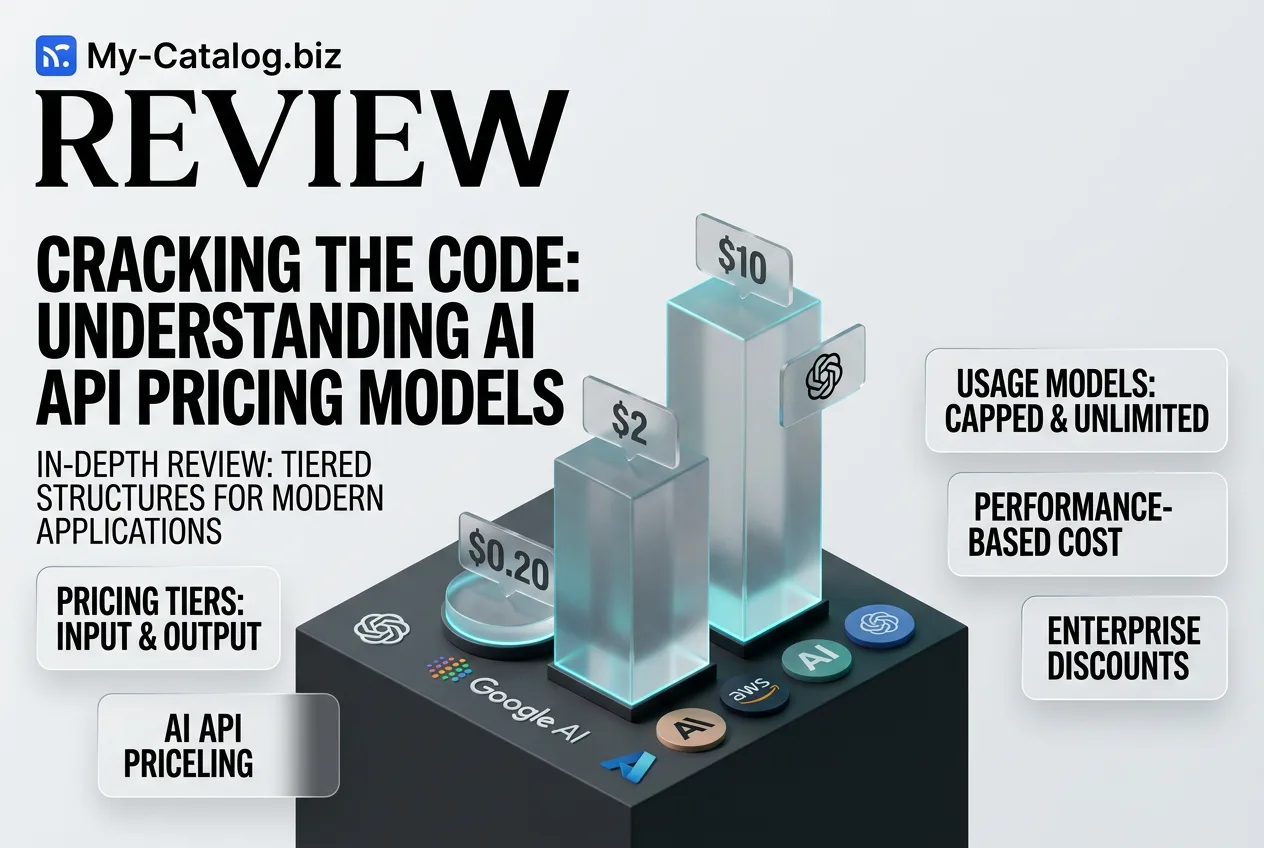
Moonshot-reported scores at maximum reasoning effort include Terminal-Bench 4.0 at 65.7 percent, SWE-Marathon v1.1 at 51.7 percent, OfficeQA Pro v2 at 64.4 percent, HLE-Full with tools at 70.0 percent, BrowseComp at 92.1 percent, and BenchCAD with tools at 92.7 percent. Independent runs on Artificial Analysis placed the model fourth among 215 entries with an Intelligence Index near 55, an 11-point rise over the prior K3 version.
| Model | Active params | Context | Input price /1M | Terminal-Bench 4.0 |
|---|---|---|---|---|
| Kimi K3.1 Pro | 104B | 1,048,576 | $2 | 65.7% |
| Claude Opus 5.5 | — | 200,000 | $15 | 66.4% |
| GPT-6 Astra | — | 128,000 | $10 | 58.2% |
User feedback on forums and review aggregators notes strong results on long-document finance and agentic coding tasks, yet some report slower single-GPU throughput compared with smaller dense models. Complaints center on occasional latency spikes and the custom license limits for commercial redistribution.
Limitations, safety choices, and final verdict
The model trails the top closed models by a few points on the Artificial Analysis index and shows slower baseline inference speed. The removal of cyber data before open release deliberately reduces certain security-related benchmark scores. No long-context surcharge exists on the API, yet the highspeed tier adds cost for latency-sensitive workloads.
Independent evaluations confirm gains in agentic and coding metrics over the K3 baseline, while self-reported numbers exceed some third-party runs by small margins. The 1M context and open weights position the model for local or fine-tuned deployments where commercial restrictions allow.
Kimi K3.1 Pro delivers competitive agentic performance and the largest open context window among current MoE releases, balanced against slower inference and specific licensing constraints.
Frequently asked questions
What is the context window size of Kimi K3.1 Pro?
Kimi K3.1 Pro supports a native context window of 1,048,576 tokens, allowing processing of very long documents without chunking.
When were the Kimi K3.1 Pro weights released?
Moonshot AI released the open weights on November 4, 2026, under a custom MIT-style license hosted on Hugging Face.
How much does the Kimi K3.1 Pro API cost?
The standard endpoint charges $2 per million input tokens and $10 per million output tokens, with cached inputs at $0.20 per million.
Does Kimi K3.1 Pro support image input?
Yes, the model includes a native MoonViT-V2 vision encoder for text and image inputs, with limited video support in some applications.
Filed under
Comments 2