Reviews AI Models
GLM-5.4 Review: Z.ai Loop Transformer Architecture and 1M Token Context
At a glance
GLM-5.4 introduces Z.ai's Loop Transformer for extended reasoning in coding and multimodal tasks with a 1M token context window.
GLM-5.4 is Z.ai’s flagship model released on November 23, 2026. It runs on the new Loop Transformer architecture and targets generalized coding tasks that combine code generation with video, 3D modeling and mechanical design inputs.
GLM-5.4 Model Overview and Loop Transformer Architecture
Z.ai built GLM-5.4 on the GLM-5 base at roughly 750 billion parameters. The model accepts video, image, text and file inputs while producing text outputs. It supports a 1 million token context and a maximum output length of 128 000 tokens.
The Loop Transformer reuses 28 layers from the GLM-5 base across two forward passes. Gated progressive updates and a hybrid KV cache combine sparse reuse from the first pass with a 128-token sliding window in the second pass. This design increases effective depth without adding parameters. Z.ai tested the approach on scales from 1 billion to 750 billion parameters through continued training rather than full pretraining from scratch.
Key capabilities include thinking mode, streaming at up to 200 tokens per second off-peak, function calling, context caching and structured outputs. The architecture produces shorter outputs on several benchmarks while delivering measurable gains in reasoning depth.
GLM-5.4 Benchmarks, Performance and Access Options
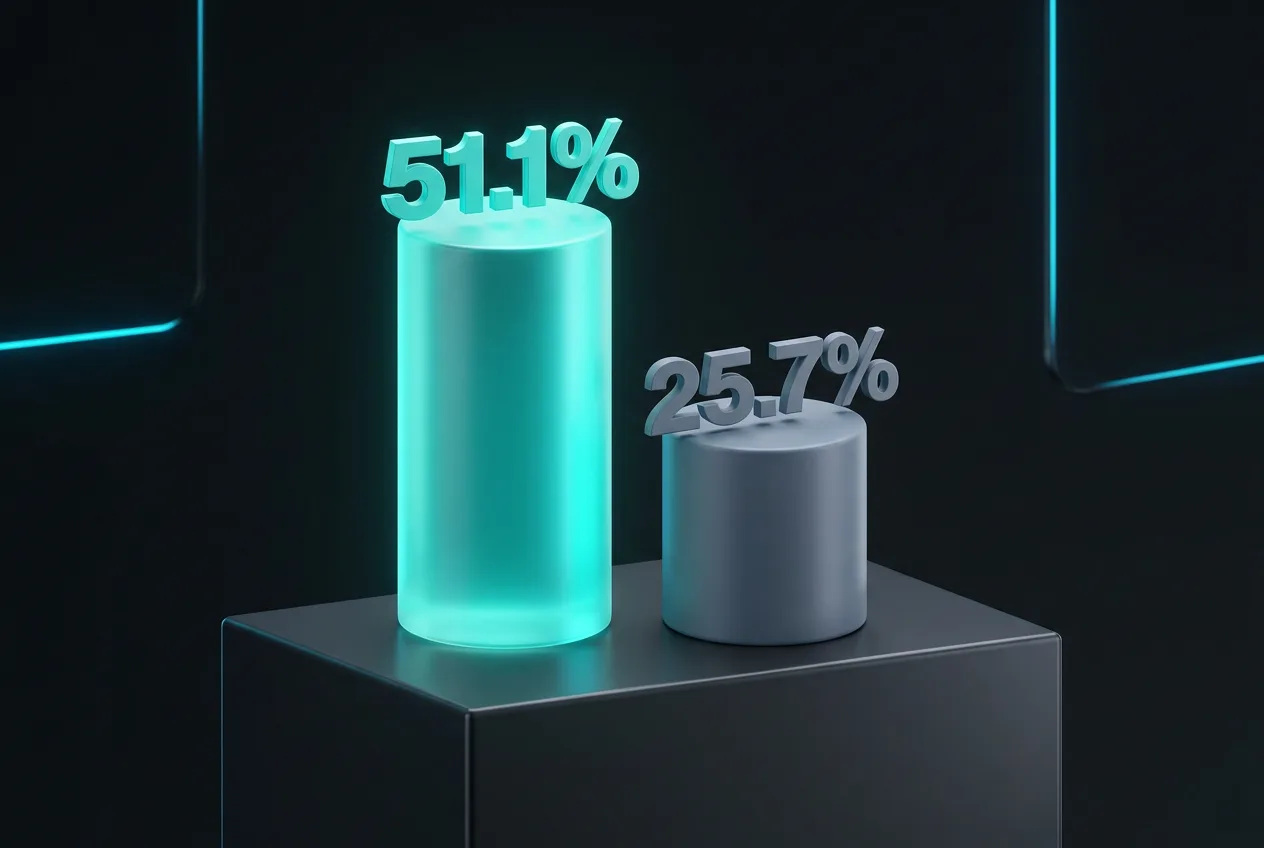
Internal head-to-head tests showed GLM-5.4 winning 51.1 percent of comparisons against GLM-5.3, with 25.7 percent ties. Independent KingBench 4 coding evaluation placed it at 33.2 out of 60, ranking seventh among 19 models and first among open models. The same test required 431 minutes and over one million reasoning tokens, highlighting longer inference times on difficult prompts.
Reviewers note strong performance in code review, security analysis and long-horizon visual coding tasks. Latency remains the main drawback, with Z.ai acknowledging slower “marathon thinking” loops on complex inputs.
Current access runs through GLM Coding Plan subscriptions: Lite at $18 per month, Pro at $80 and Max at $168. Subscribers receive 1.5 times the weekly quota compared with GLM-5.3 and lower credit usage per token. Standalone API access and open weights remain scheduled for later release after security reviews. No public per-token pricing has been published yet.
GLM-5.4 Limitations and Competitor Comparison
The model follows GLM-5.3, released in August 2026 as a text-only system. Early feedback highlights utility for architecture review and bug detection but flags extended runtimes. A significantly larger looped model is expected soon.
| Model | Context | Parameters | API Pricing (1M tokens) | Key Strength |
|---|---|---|---|---|
| GLM-5.4 | 1M | ~750B | Not yet published | Loop depth for complex coding |
| GLM-5.3 | 128K | ~750B | $1.40 / $4.40 | Faster inference |
| Gemini 4 Neon | 1M | Undisclosed | Undisclosed | Speed on KingBench |
Users should weigh the extended reasoning depth against higher latency when selecting between these options for production workloads.
Frequently asked questions
What is the GLM-5.4 context window size?
The model supports a 1 million token context window along with a 128 000 token maximum output length.
When was GLM-5.4 released?
Z.ai released GLM-5.4 on November 23, 2026 as the first model using the Loop Transformer architecture.
Is GLM-5.4 API available now?
Access currently requires a GLM Coding Plan subscription. Standalone Model API access is listed as coming soon after security assessment.
How does GLM-5.4 compare to GLM-5.3?
Internal tests show GLM-5.4 winning over half of direct comparisons, though it runs slower on complex prompts requiring extended reasoning steps.
Filed under
Comments 1