Reviews VPN
First VPN Review: Infrastructure Details, Sanctions History and User Account Implications
At a glance
First VPN operated as a bulletproof service from 2014 until its 2026 disruption, with servers seized across 27 countries and the operator sanctioned by the US Treasury.
First VPN review examines a service that ran from roughly 2014 to May 2026 before law enforcement dismantled its network. The provider, also known as 1VPNS or FVPNS, positioned itself as an anonymity tool that accepted cryptocurrency payments and advertised on Russian-language cybercrime forums. It claimed strict no-logs policies yet ultimately lost its entire user database to investigators.
First VPN review: Infrastructure and advertised features
The service supported OpenVPN, WireGuard, L2TP/IPSec, and VLESS TCP Reality protocols. It maintained approximately 32 exit nodes in 27 countries, including locations in the United States. Users could pay with Bitcoin, Perfect Money, Webmoney and similar anonymous methods, with subscription options ranging from two dollars per day to 483 dollars per year. Marketing occurred through self-hosted Jabber and Telegram channels, and domains included 1vpns.com along with Tor onion addresses. The operator publicly stated that the service was not subject to any jurisdiction and would not cooperate with law enforcement.
Registration required only an email or username, with activity logs supposedly unlinked from accounts. The service appeared exclusively on forums such as Exploit.in and XSS.is, where it promoted itself to users seeking to avoid detection. No public consumer-facing website or standard support channels existed outside those criminal marketplaces.
VPN sanctions, Operation Saffron and account implications
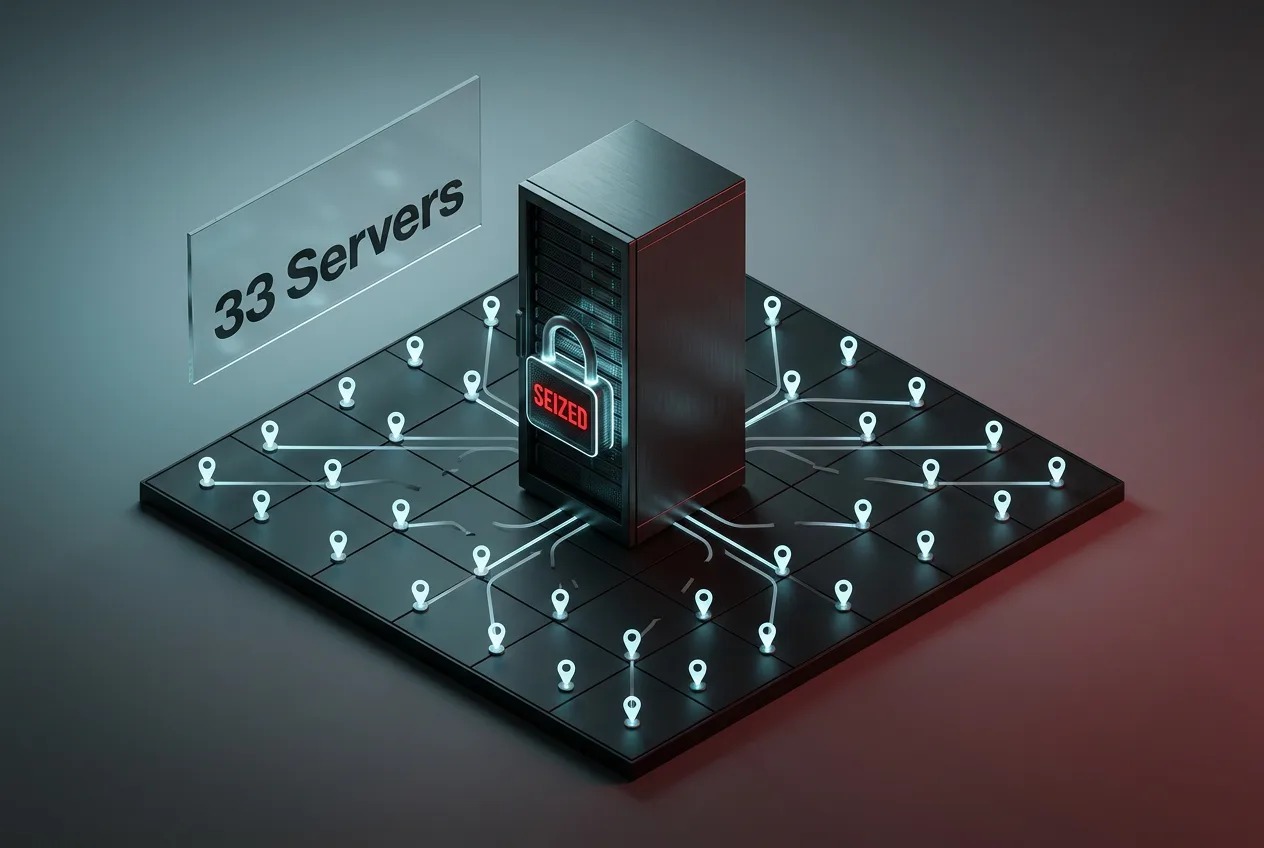
Europol coordinated Operation Saffron on May 19-20 2026, resulting in the seizure of 33 servers across 27 countries and the takedown of associated domains. Ukrainian national Dmytro Rashevskyi, identified as the administrator, was arrested and questioned in Dnipro. On July 13 2026 the US Treasury added First VPN Service, Rashevskyi, and a Belarusian associate to the OFAC SDN list under cyber-related authorities. This marked the first formal US sanctions designation of a VPN provider.
Authorities obtained the full user database despite the service's no-logs claims. More than 500 users were identified and 83 intelligence packages distributed internationally. Dutch police directly notified some users of their exposure. The service had been used by at least 25 ransomware groups for command-and-control traffic, data exfiltration and reconnaissance. The user base included individuals later linked to attacks on hospitals, financial firms and municipalities. The platform has remained offline since the seizures, and US persons are prohibited from any dealings with the sanctioned entity.
Is First VPN safe? Limitations and comparison context
The combination of criminal-market advertising, explicit jurisdiction-avoidance claims, and documented real-time traffic access by investigators directly contradicts the advertised privacy protections. Law enforcement reports indicate the service appeared in nearly every major cybercrime case supported by Europol during its final years. No verified revival or replacement infrastructure has appeared as of November 2026.
Compared with mainstream providers that publish transparency reports and operate under established legal frameworks, First VPN offered no independent audits, no public logging policy, and no mechanism for lawful data requests. Its exit-node count and protocol variety were modest even by 2014 standards, and the absence of any consumer-grade features such as streaming optimization or multi-device management limited appeal outside its stated target audience. The sanctions designation and database seizure remain the clearest indicators of the service's operational risks.
Frequently asked questions
What happened to First VPN in 2026?
Europol's Operation Saffron seized 33 servers in May 2026 and the US Treasury sanctioned the service in July 2026. The administrator was detained in Ukraine and the user database was obtained by investigators.
Did First VPN keep logs despite its claims?
The service advertised a no-logs policy, yet authorities seized the complete user database containing over 500 identified accounts plus traffic data that had been monitored for years.
Can anyone still use First VPN after the sanctions?
The service has been offline since May 2026. US persons are prohibited from any transactions with the sanctioned entity, and no verified replacement infrastructure has been reported.
Who used First VPN according to investigators?
Europol linked the service to at least 25 ransomware groups and stated it appeared in almost every major cybercrime investigation it supported during the relevant period.
Filed under
Comments
No comments yet. Be the first!