Reviews Cryptocurrency
USDT on Tron Review: Fees Speed and Liquidity Examined
At a glance
USDT transfers on Tron use the TRC-20 standard and deliver low fees along with fast confirmations backed by the largest single-chain USDT supply.
USDT on Tron processes the majority of Tether transfers through its TRC-20 standard. The network offers lower costs and quicker settlement than many alternatives while holding the largest share of USDT supply on any single chain.
USDT on Tron Fees Speed and Liquidity Breakdown
Tron launched in 2018 and adopted delegated proof-of-stake with 27 super representatives. Blocks appear every three seconds, allowing most USDT transfers to confirm in three to ten seconds. Practical finality including exchange crediting often occurs within one to three minutes, while full solidification requires about nineteen confirmations or fifty-five to sixty seconds.
Standard TRC-20 transfers burn 6.4 to 6.8 TRX when the recipient already holds USDT and the sender lacks staked or rented Energy. At current TRX prices near thirty-three cents, this equals roughly two dollars twelve cents to two dollars thirty cents. New recipient addresses double the cost to thirteen to thirteen point four TRX because Energy consumption rises from sixty-four thousand to one hundred thirty thousand units. Bandwidth of three hundred forty-five bytes may add twelve cents once the daily free quota is exceeded. Energy remains fixed at one hundred sun per unit after the 2025 governance vote.
Tron currently holds ninety-two point nine billion dollars in USDT, representing ninety-seven point eight percent of the chain's total stablecoin market cap. Third-quarter 2026 stablecoin settlement volume reached two point two one two six trillion dollars, averaging twenty-four point zero five billion dollars daily. Cumulative volume exceeded thirty trillion dollars by late September 2026, supported by roughly eighteen million monthly active addresses.
Practical Comparison Limitations and User Feedback
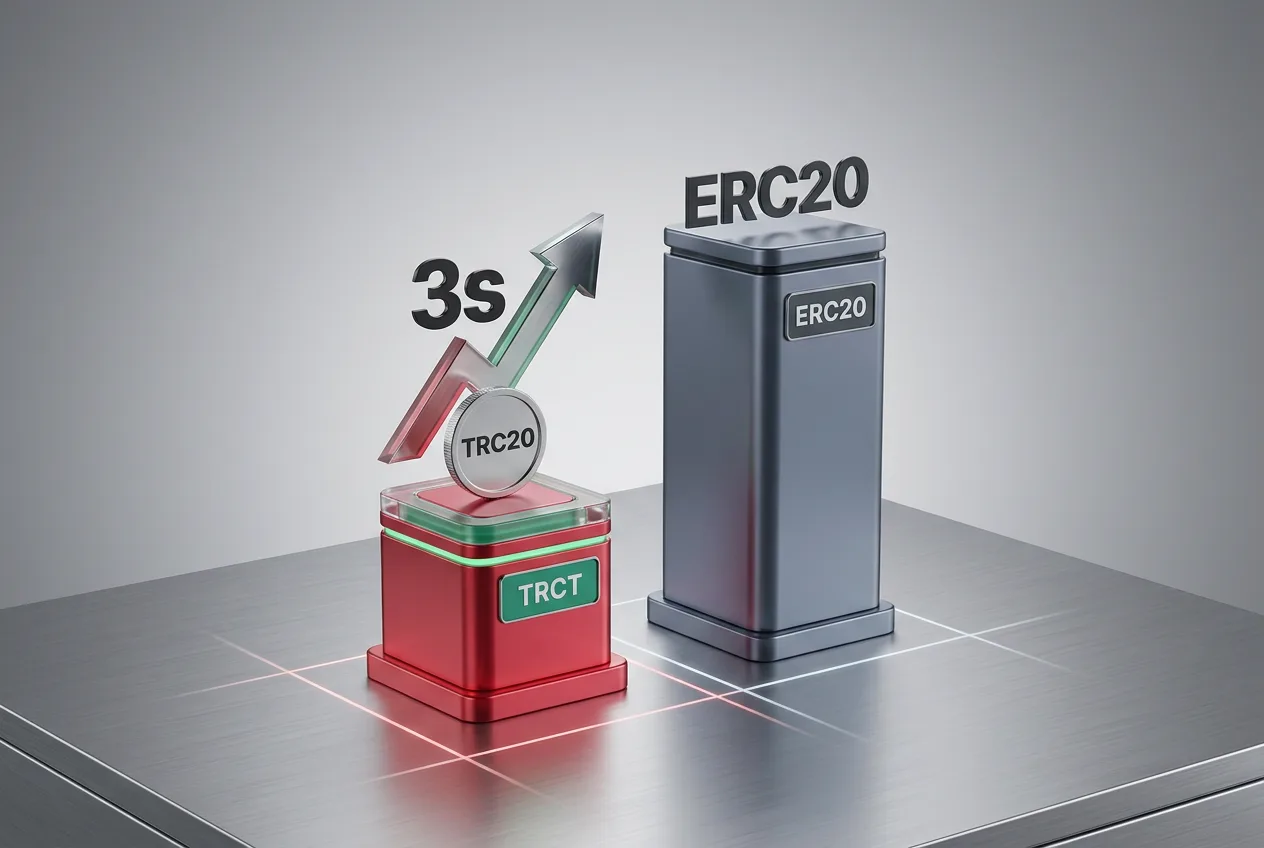
Tron USDT competes directly with transfers on Ethereum, Binance Smart Chain, and Solana. The table below summarizes key differences based on current public data.
| Network | Typical Transfer Cost | Confirmation Time | USDT Supply |
|---|---|---|---|
| Tron (TRC-20) | $2.12–$4.43 | 3–10 seconds | $92.9 billion |
| Ethereum (ERC-20) | $5–$25+ | 30–120 seconds | ~$50 billion |
| Binance Smart Chain | $0.20–$0.80 | 3–5 seconds | ~$25 billion |
Staking TRX or renting Energy on Tron can reduce or eliminate the burn cost for frequent users. Exchange withdrawals often charge a flat zero point five to two dollars in USDT, bypassing on-chain fees entirely. Daily throughput routinely exceeds several hundred transactions per second, with theoretical capacity above two thousand.
Public user reports on forums and review sites frequently note the low cost for remittances and trading settlements. Some complaints mention occasional delays when Energy must be acquired on the spot or when network congestion spikes during peak hours. No widespread outages or loss-of-funds incidents tied to the USDT contract have surfaced in recent months.
Tron’s dominance in USDT volume stems from early integration by major exchanges and consistent fee advantages over Ethereum. Limitations include dependence on TRX price for USD-denominated costs and the need to manage Energy or Bandwidth resources for repeated transfers. The network continues to see growth in active addresses and settlement volume without reported structural breaks.
Frequently asked questions
How much does a typical USDT transfer cost on Tron?
A standard transfer burns 6.4 to 6.8 TRX for addresses that already hold USDT, equaling roughly two dollars twelve cents to two dollars thirty cents at current prices. New addresses double the Energy requirement and the cost.
How long do USDT transfers take to confirm on Tron?
Blocks arrive every three seconds. Most transfers receive initial confirmation in three to ten seconds, with exchange crediting often complete within one to three minutes.
What is the current USDT supply on the Tron network?
Tron holds approximately ninety-two point nine billion dollars in USDT, accounting for nearly all of the chain's stablecoin market cap as of mid-October 2026.
Can users lower Tron USDT fees below the standard burn amount?
Yes. Staking TRX, renting Energy, or using exchange withdrawal services that absorb the fee can reduce or eliminate the on-chain cost for many transfers.
Filed under
Comments
No comments yet. Be the first!