Reviews Cloud Storage
Proton Drive Review: Security Features, Pricing and Limitations
At a glance
Proton Drive delivers client-side encryption for cloud storage but faces constraints in search speed and desktop features compared with mainstream alternatives.
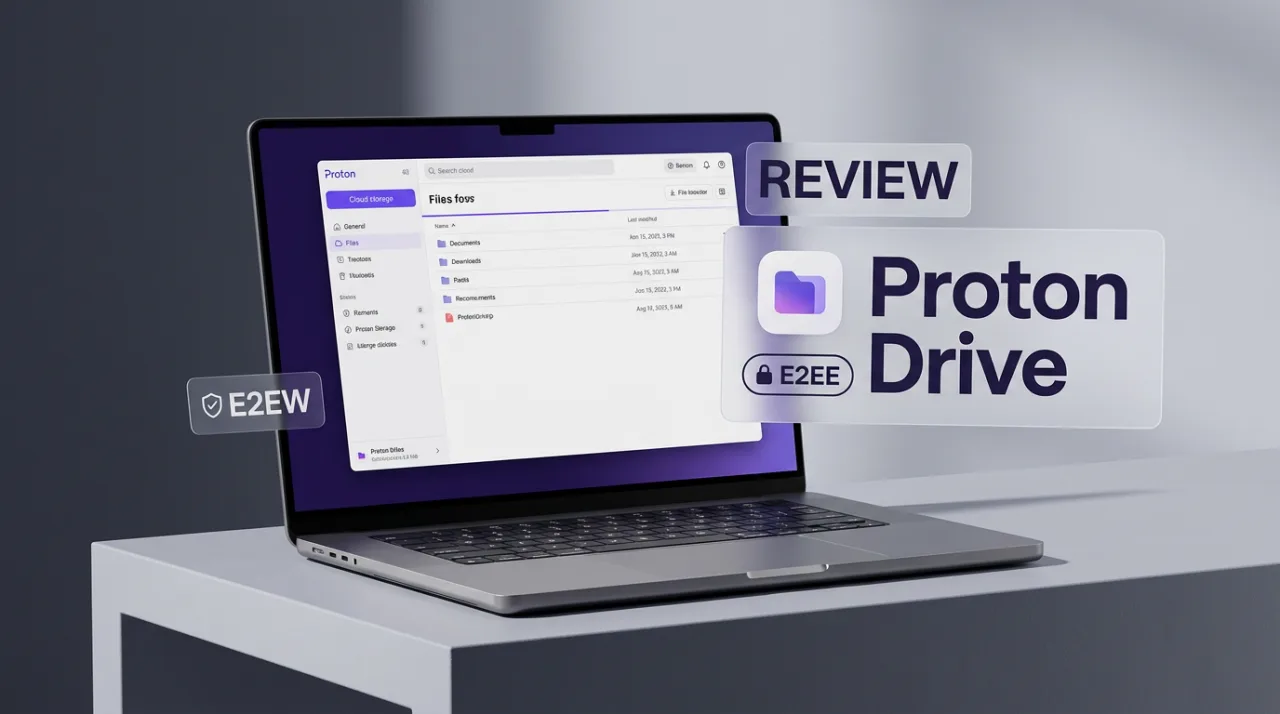
Proton Drive review examines the service launched in 2022 by Proton AG in Geneva. The platform provides end-to-end encrypted cloud storage integrated with Proton Mail, VPN, Calendar, and Pass. Client-side encryption ensures the company cannot read file contents or metadata.
Proton Drive Security and Encryption Details
Files receive AES-256 encryption plus ECC or OpenPGP on the device before upload. Servers operate under Swiss jurisdiction with locations reported in Switzerland, Germany, and Norway. Proton holds ISO 27001 and SOC 2 Type II certifications, and independent audits by Securitum cover the codebase with public reports available since 2022.
Open-source clients under GPL-3.0 run on web, Windows, macOS, iOS, and Android. No server-side scanning occurs, and zero-knowledge architecture prevents access to decryption keys. Password-protected share links and file versioning up to ten years on paid tiers add practical controls. Desktop synchronization works on Windows and macOS, while mobile apps support automatic photo backup.
Proton Drive review notes recent 2026 updates that improved upload speeds up to threefold through an SDK rebuild. A command-line interface for Linux appeared in June 2026, though a full graphical client remains in development. Proton Docs and Sheets enable collaborative editing within the encrypted environment.
Pricing Plans and Practical Limitations
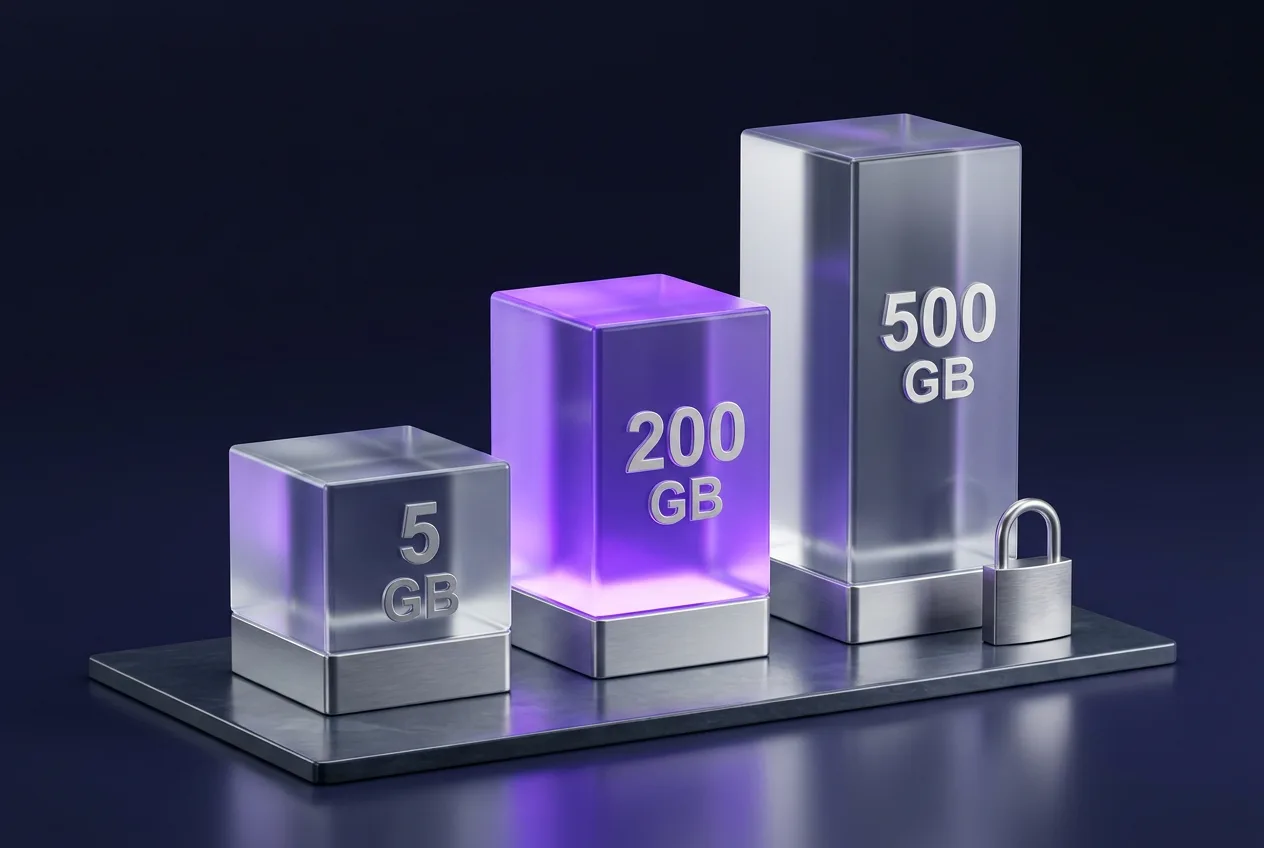
The free tier supplies 5 GB shared across services. Drive Plus offers 200 GB for $4.99 monthly or $3.99 monthly when billed annually. Proton Unlimited bundles 500 GB with the full suite for $12.99 monthly or $9.99 monthly annually. Duo and Family plans scale to 2 TB and 3 TB respectively for multiple users, while business options start at 1 TB per user with administration tools.
Storage quotas apply across all Proton products on paid plans. Trash items continue to count toward the limit. Account recovery for encrypted data requires a pre-configured recovery kit, since the provider cannot reset access. Full-text search remains unavailable because encryption blocks server-side indexing; only file and folder names can be searched.
| Service | Free Storage | Encryption Type | Starting Paid Price | Linux GUI Sync |
|---|---|---|---|---|
| Proton Drive | 5 GB | Client-side E2EE | $3.99/mo (annual) | CLI only (2026) |
| Google Drive | 15 GB | Server-side | $1.99/mo (100 GB) | Third-party |
| Dropbox | 2 GB | Server-side | $9.99/mo (2 TB) | Third-party |
Uploads run slower than unencrypted competitors because encryption happens locally. Sharing with external users requires sending passwords separately. Advanced selective sync options remain limited compared with established platforms.
Comparison with Alternatives and User Feedback
Proton Drive review places the service against Google Drive and Dropbox on encryption strength and collaboration speed. Google Drive and Dropbox provide faster native search and broader Linux support through third-party tools, yet they rely on server-side encryption that allows the provider to access content. Proton Drive maintains stricter privacy guarantees at the cost of search depth and upload velocity.
Public feedback highlights reliable encryption for sensitive files alongside complaints about the modest free allowance and absence of content indexing. Users on review sites note that performance improved after the 2026 SDK update, but large-scale team workflows still favor non-encrypted services. Recovery limitations surface in forums when users lose recovery materials.
The service continues independent audits and roadmap items that include expanded Docs features and eventual post-quantum updates. Linux users currently rely on the new CLI or third-party clients such as Rclone while awaiting a native GUI. These constraints define the current trade-off between privacy and convenience.
Frequently asked questions
Is Proton Drive safe?
Proton Drive uses client-side AES-256 encryption with zero-knowledge architecture, meaning the provider cannot access file contents or names. Independent audits and Swiss data protection laws support these claims.
What does Proton Drive cost?
Free accounts receive 5 GB. Paid plans start at $3.99 per month billed annually for 200 GB, with higher tiers bundling additional Proton services up to multi-terabyte Family plans.
Does Proton Drive work on Linux?
An official CLI client launched in June 2026. A graphical desktop sync application remains in development, so users currently combine the web interface or Rclone with the CLI.
Can Proton Drive search inside files?
No full-text search exists because client-side encryption prevents server-side indexing. Only file and folder names can be searched on the platform.
Filed under
Comments 2