Reviews AI Models
MiniMax M3.1 Flash Review: Agentic Performance, Pricing and Limitations Explained
At a glance
MiniMax M3.1 Flash is a 428B-parameter MoE model released October 19, 2026, for agentic workflows with 1M context and flat-rate pricing at $0.15 per million input tokens.
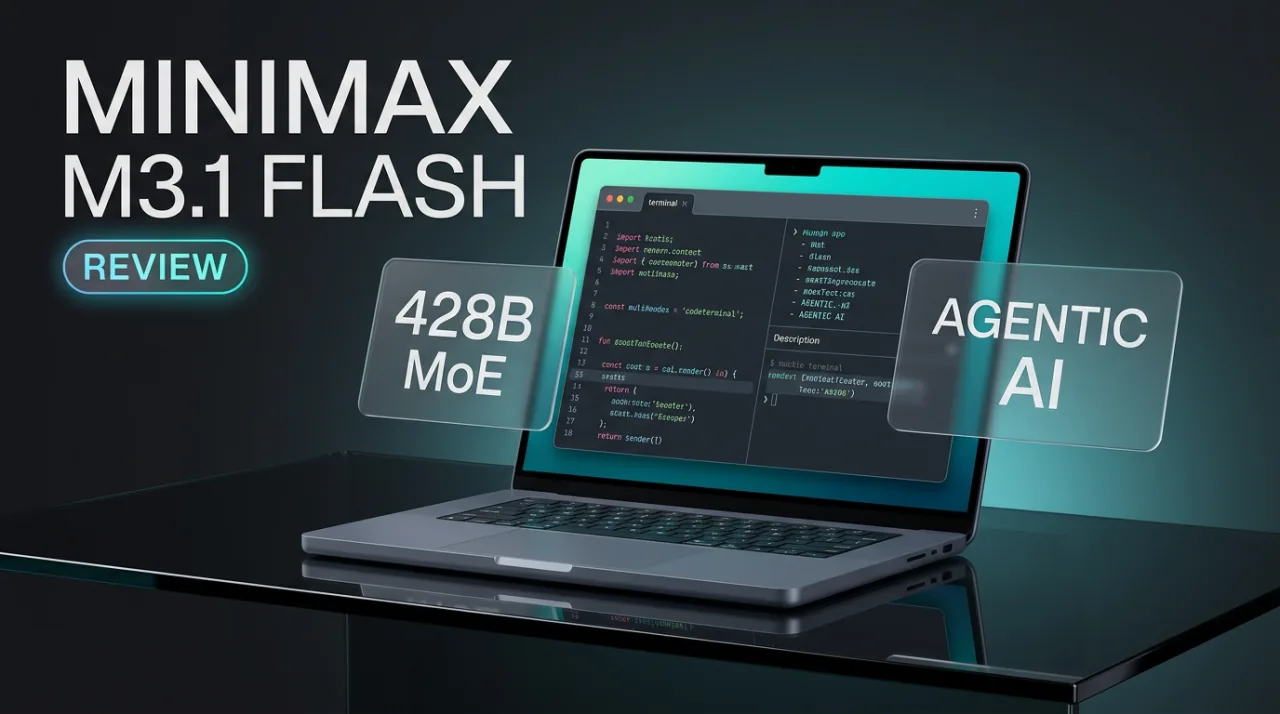
MiniMax M3.1 Flash delivers fast inference for agentic tasks at half the cost of its predecessor. The model, released October 19, 2026, by Chinese company MiniMax, targets coding, computer use, and cybersecurity workloads with a 1M-token context window and five tunable reasoning levels.
Early tests show competitive results on automation benchmarks alongside a documented high hallucination rate on factual recall. Open weights became available four days after launch under a community license.
MiniMax M3.1 Flash Overview and Key Features
MiniMax M3.1 Flash uses a 428B-parameter mixture-of-experts architecture with roughly 23B active parameters per token. It accepts text, image, and video inputs and generates up to 524K output tokens. Reasoning runs continuously with adjustable effort settings, defaulting to maximum.
The model supports agent loops through sparse attention optimizations that MiniMax claims yield three times faster inference than the June 2026 M3 release. It previously appeared in anonymous testing under the name Space Bunny. Access occurs through the official MiniMax API, M Plan, MiniMax Code, or self-hosted inference via vLLM and SGLang after the October 23, 2026 open-weight release on Hugging Face and ModelScope.
Reported agentic scores include 62.8 on Automation-Bench v1.0.6, 76.2 on BankerToolBench, 73.7 percent on DeepSWE v1.1, 61.7 on OSWorld V2, and 82 percent on CyberGym. The Artificial Analysis Intelligence Index places it at 42–43, up from 29 for the prior version, at an estimated $0.22 per task.
MiniMax M3.1 Flash Pricing, Benchmarks and Comparisons
MiniMax API charges $0.15 per million input tokens, $0.60 per million output tokens, and $0.015 per million cached input tokens with no long-context surcharge. Rates sit roughly half those of M3 and align with DeepSeek V4.1 Flash off-peak pricing; some third-party hosts list marginally lower figures.
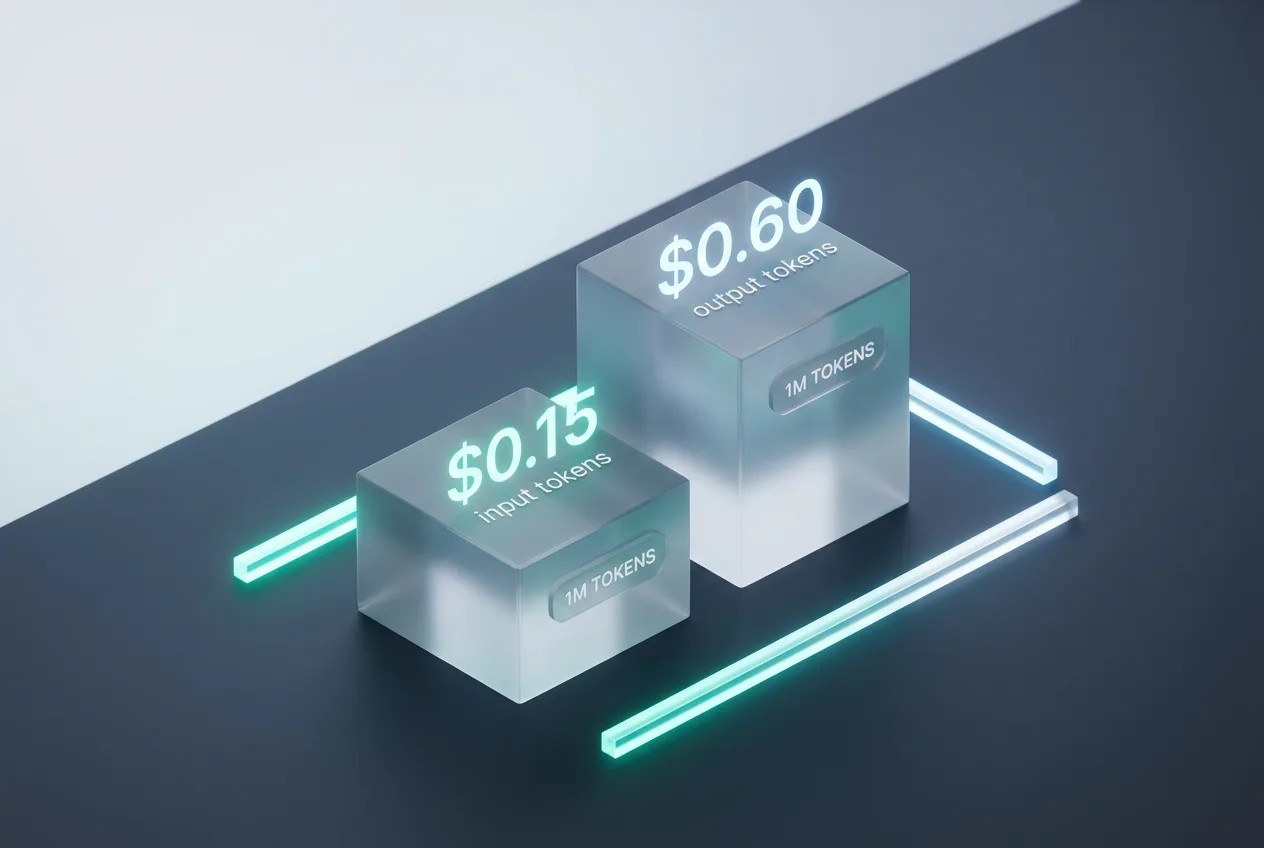
Performance comparisons show narrow wins over DeepSeek V4.1 Flash-1017 on Automation-Bench yet trailing results on most coding and terminal benchmarks. The model remains slower and more expensive per task than DeepSeek in several third-party evaluations and falls behind Claude Opus 5 on long-horizon terminal work.
| Model | Input Price / M tokens | Output Price / M tokens | Automation-Bench | Hallucination Rate |
|---|---|---|---|---|
| MiniMax M3.1 Flash | $0.15 | $0.60 | 62.8 | ~93% |
| DeepSeek V4.1 Flash | $0.15 (off-peak) | $0.60 | ~61 | Not reported |
| Claude Opus 5 | Higher | Higher | 76.2 (tie on BankerToolBench) | Lower |
Independent verification remains limited; most published numbers originate from MiniMax. Real-world reliability for unsupervised factual or high-stakes agent tasks requires additional verification layers.
MiniMax M3.1 Flash Limitations and Final Verdict
Artificial Analysis recorded 56 percent accuracy on AA-Omniscience factual recall and a 93 percent hallucination rate when the model produced confident but incorrect answers instead of refusals. Always-on thinking adds latency and cost for simple queries. Self-reported benchmarks dominate available data, and politically sensitive topics lack independent testing.
Early access ended on the free OpenRouter tier October 22, 2026. A higher-capability Pro variant remains expected later. Users running high-volume agent loops gain from the 1M context and low flat rates, yet must implement output checks to offset the documented hallucination tendency.
Frequently asked questions
What is the context window size of MiniMax M3.1 Flash?
MiniMax M3.1 Flash supports a 1M-token context window for long documents and multi-turn agent sessions.
How much does MiniMax M3.1 Flash cost per million tokens?
The MiniMax API lists $0.15 per million input tokens and $0.60 per million output tokens with a $0.015 cached-input rate and no long-context fees.
Does MiniMax M3.1 Flash have open weights?
Open weights for the 428B model were released October 23, 2026, on Hugging Face and ModelScope under a community license with attribution and commercial conditions.
What are the main limitations of MiniMax M3.1 Flash?
Independent tests note a 93 percent hallucination rate on factual recall tasks and slower per-task performance than DeepSeek on some coding benchmarks.
Filed under
Comments 1