Reviews AI Models
Meta Muse Spark Open Review: Open Weights Release, Multimodal Capabilities and Context Limits
At a glance
Meta released Muse Spark Open on October 15, 2026, as an open-weight MoE model with 816B total parameters and a 1M-token context window for agentic and multimodal tasks.
Meta Muse Spark Open review examines the October 15, 2026 open-weight release that shares its base with the closed Muse Spark 1.3 model. The sparse mixture-of-experts architecture contains 816B total parameters with 42B active per token across 256 experts, eight of which activate at inference. It supports native multimodal inputs including text, image, video, and audio while producing text outputs and maintains a 1,048,576-token context window.
Meta Muse Spark Open Overview and Key Features
The model runs on 62 layers and ships in BF16 format at roughly 1.6 TB or NVFP4 at about 530 GB. It includes reasoning effort settings with a default xhigh level and covers training data from more than 100 languages. Meta added extra safety post-training so the model can operate standalone without external guardrails. Users download weights from Hugging Face under the repository meta-models/Muse-Spark-Open-816B-A42B, while hosted options appear on Amazon SageMaker, Google Cloud Model Garden, and Microsoft Foundry.
Day-zero support exists in vLLM and SGLang, with fine-tuning handled through TorchTitan. On Apple hardware, MLX optimizations allow 2× M5 Ultra Mac Studios with 512 GB each to reach 16–25 tokens per second at small context, scaling to 37 tokens per second with four machines. GPU inference with NVFP4 fits on roughly four Blackwell or eight H200 cards, while BF16 requires around 2 TB VRAM including cache.
Multimodal performance shows ZeroBench at 50.0 and SimpleVQA at 73.6. The model leads open-weight peers on MCP-Atlas tool use at 89.2 and JobBench at 61.8, with strong results on AA-Omniscience knowledge at 25 and the lowest hallucination rate among comparable systems. Independent Artificial Analysis Intelligence Index places it near 39, behind GLM 5.3 at 45 and Kimi K3 at 44.
Benchmarks, Pricing, and Licensing Terms
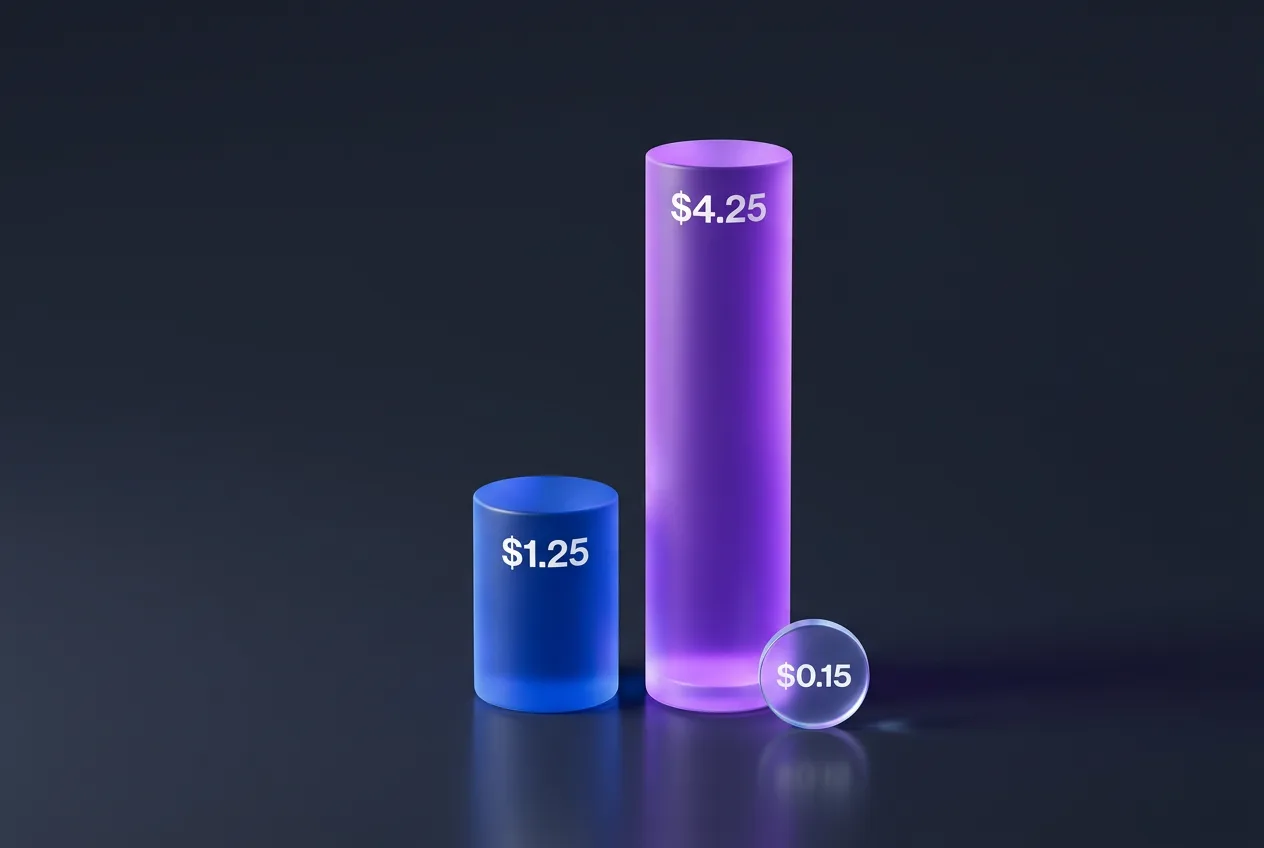
Hosted pricing stands at $1.25 per million input tokens and $4.25 per million output tokens, with cached input at $0.15. Self-hosting incurs only hardware costs. The Muse Model License permits free commercial use, fine-tuning, distillation, and resale of derivatives, yet requires prominent “Built with Muse Spark Open” attribution on all derived work. Revenue exceeding $20 million for the licensee and affiliates triggers a separate Meta agreement for model-as-a-service offerings, though internal, research, and embedded uses remain exempt. Usage rules prohibit military applications, critical infrastructure, regulated advice, and malware generation.
Security features include the lowest jailbreak success rate in published comparisons and high refusal rates on cyber and biological risk queries, offset by elevated over-refusal scores. The license does not claim ownership of model outputs. Independent evaluations and a full safety report remain pending.
| Model | Intelligence Index | Terminal-Bench 2.1 | Tool Use (MCP-Atlas) | Hallucination Rate |
|---|---|---|---|---|
| Muse Spark Open | 39 | 76.4 | 89.2 | Lowest peer |
| GLM 5.3 | 45 | 85.0 | — | Higher |
| Kimi K3 | 44 | — | — | Higher |
Common user reports on hosted platforms note solid long-context coding performance and reliable multimodal handling at moderate context lengths. Some complaints mention slower decode speeds on consumer GPUs compared with smaller open models and occasional over-refusals on edge-case prompts. Hardware requirements limit widespread local deployment, pushing many teams toward providers such as Fireworks, Together, or Groq.
Limitations and Deployment Considerations
Context window utilization beyond several hundred thousand tokens still lacks extensive third-party verification. The revenue threshold in the license creates uncertainty for growing startups planning API resale. Inference speed on Apple silicon improves with additional machines but remains below real-time thresholds for some interactive agent workloads. Full independent safety audits and broader benchmark suites are scheduled but not yet public, leaving certain risk profiles unconfirmed.
Organizations evaluating Meta Muse Spark Open should test context handling and refusal behavior on their specific agentic or multimodal workloads before committing to production. Self-hosting demands careful capacity planning around VRAM and interconnect bandwidth, while hosted routes simplify access at the listed per-token rates.
Frequently asked questions
What is the context window size of Muse Spark Open?
The model supports a 1,048,576-token context window. Independent verification of performance at the upper end of this range remains limited at present.
How much hardware does Muse Spark Open require for inference?
NVFP4 weights run on approximately four Blackwell or eight H200 GPUs. BF16 requires roughly 2 TB VRAM total. Apple MLX setups need multiple M5 Ultra Mac Studios for usable speeds.
Is the Muse Spark Open license fully open source?
No. The Muse Model License allows commercial use and fine-tuning but mandates attribution and imposes a revenue threshold that triggers additional Meta agreements for API resale.
How does Muse Spark Open compare on benchmarks to GLM 5.3?
Muse Spark Open scores around 39 on the Artificial Analysis Intelligence Index versus 45 for GLM 5.3. It leads on certain tool-use and knowledge tasks but trails on overall agentic and coding evals.
Filed under
Comments
No comments yet. Be the first!