Reviews NetSuite
NetSuite QuickStart Review: Free AI Finance Platform for U.S. Tech Startups
At a glance
NetSuite QuickStart launched October 14, 2026, as a free AI financial platform for qualifying U.S. tech startups with strict usage caps and eligibility rules.
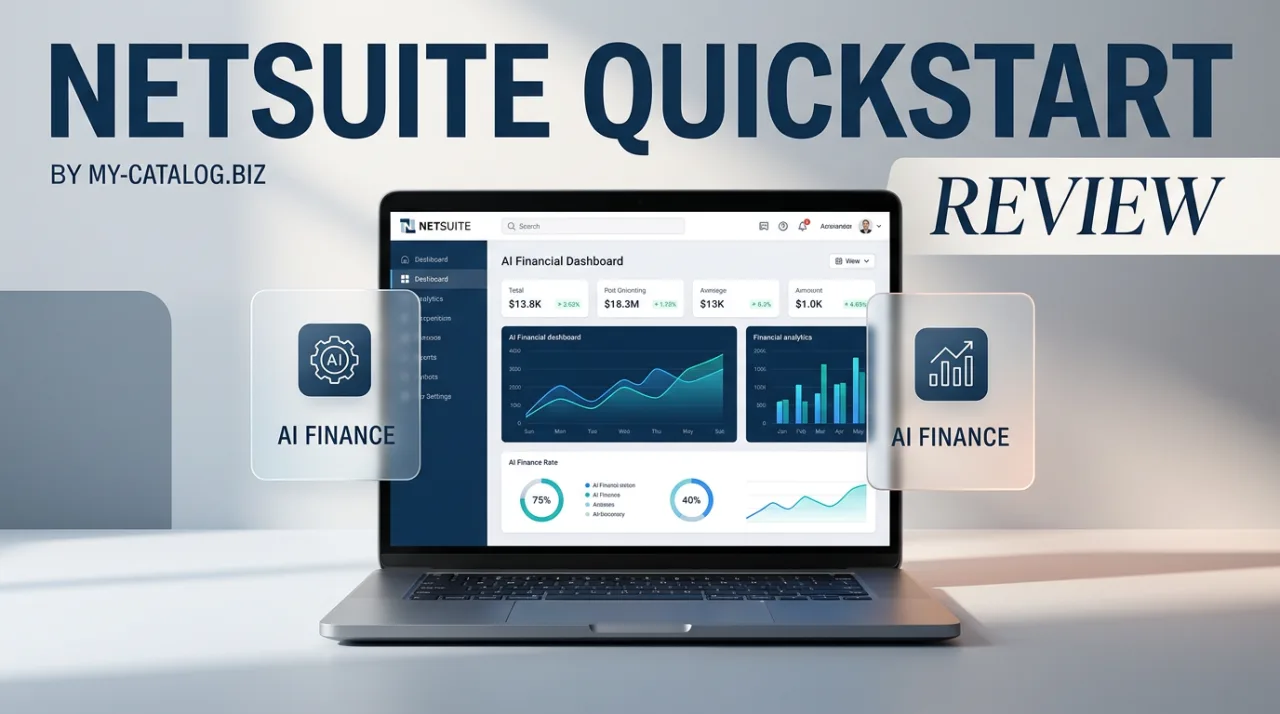
NetSuite QuickStart provides a free, AI-driven financial system for early-stage U.S. technology startups that meet narrow eligibility criteria. Oracle NetSuite introduced the platform on October 14, 2026, to handle basic accounting tasks without requiring a dedicated finance team. The service targets companies with up to five users, roughly one million dollars in annual revenue, and a single legal entity.
Founders connect a bank account, generate invoices, and review reports in under ten minutes through self-service setup. Embedded AI agents manage reconciliation, accounts payable and receivable, bill payments, subscription billing, inventory, and journal entries. Startup metrics such as monthly recurring revenue, burn rate, and runway appear automatically alongside standard financial statements.
NetSuite QuickStart Features, Pricing and Usage Limits
The platform includes the Ask Oracle conversational AI assistant and supports integration through the Model Context Protocol with tools such as Claude, ChatGPT, and Slack. Users gain access to balance sheets, income statements, cash flow reports, custom fields, data import, and audit logs. Support consists of email assistance and an AI Help Agent.
Pricing remains free for eligible users who stay within monthly caps that reset each period. Those caps allow 2,500 new business records, 800 emails, 175 new documents, 20 GB of storage, four bank or credit card connections, two concurrent integration requests, and five users. No public information exists on overage charges or what occurs when limits are reached.
Registration requires verification against the stated criteria. The system is positioned as an on-ramp; data and workflows transfer to the full paid NetSuite instance once a company grows beyond the defined boundaries. No details have been released on graduation pricing or timelines.
Limitations, Comparisons and Current User Feedback
QuickStart restricts access to U.S. tech startups only. Multi-entity, international, or non-tech organizations receive no eligibility. The monthly record and storage ceilings can constrain even modest transaction volumes, and the absence of published overage or upgrade terms leaves uncertainty for growing users.

Security and privacy specifications have not been detailed in public documentation. The service operates under QuickStart Terms of Use and Service, yet independent audits or specific encryption standards remain undisclosed at this stage.
Public user reviews are scarce because the platform launched only days before this review. Early commentary from industry analysts focuses on the potential reduction in setup barriers rather than hands-on experience. Common questions center on AI accuracy for complex entries and the clarity of the upgrade path to full NetSuite.
| Platform | Free Tier Limits | Target Users | AI Features |
|---|---|---|---|
| NetSuite QuickStart | 2,500 records, 5 users, 20 GB | U.S. tech startups ≤$1M revenue | Embedded agents, Ask Oracle assistant |
| QuickBooks Online | Limited transactions, 1 user | Small businesses general | Basic automation only |
| Xero | 20 invoices, 5 bills | Small businesses general | Bank feeds and reconciliation |
Compared with QuickBooks Online and Xero, QuickStart offers higher record allowances and stronger AI automation within its niche. Both alternatives provide broader eligibility and clearer published pricing for paid tiers, though they lack the startup-specific metrics and direct migration path to a full enterprise ERP system.
Potential issues include the narrow eligibility window and the lack of transparency around what happens when monthly limits are exceeded. Analysts note that competitors may respond with their own free tiers, and user feedback on AI control accuracy will likely emerge over the coming months.
NetSuite QuickStart supplies concrete automation and reporting for qualifying early-stage U.S. tech companies while data remains portable to the paid NetSuite environment. The service carries defined monthly caps and strict eligibility that limit its scope to a narrow audience.
Frequently asked questions
Who qualifies for NetSuite QuickStart?
Early-stage U.S. tech startups with up to five users, a single legal entity, and roughly one million dollars or less in annual revenue qualify. The platform excludes multi-entity, international, or non-tech companies.
What monthly limits apply to NetSuite QuickStart?
Users receive 2,500 new records, 800 emails, 175 documents, 20 GB storage, four bank connections, two integration requests, and five users each month. Limits reset monthly with no rollover.
Is NetSuite QuickStart completely free?
The service is free within the stated monthly limits for eligible users. No public details exist on overage fees or pricing after a company exceeds the caps.
How does NetSuite QuickStart compare to QuickBooks or Xero?
QuickStart provides higher record limits and startup-specific AI metrics but restricts eligibility to U.S. tech firms. QuickBooks and Xero offer wider availability and published paid tiers yet fewer specialized AI tools for early-stage reporting.
Filed under
Comments
No comments yet. Be the first!