Reviews Azure
LocalStack for Azure Review: Public Preview Capabilities and Constraints
At a glance
LocalStack for Azure entered public preview in October 2026 as a Docker-based emulator for core Azure services aimed at local development and testing.
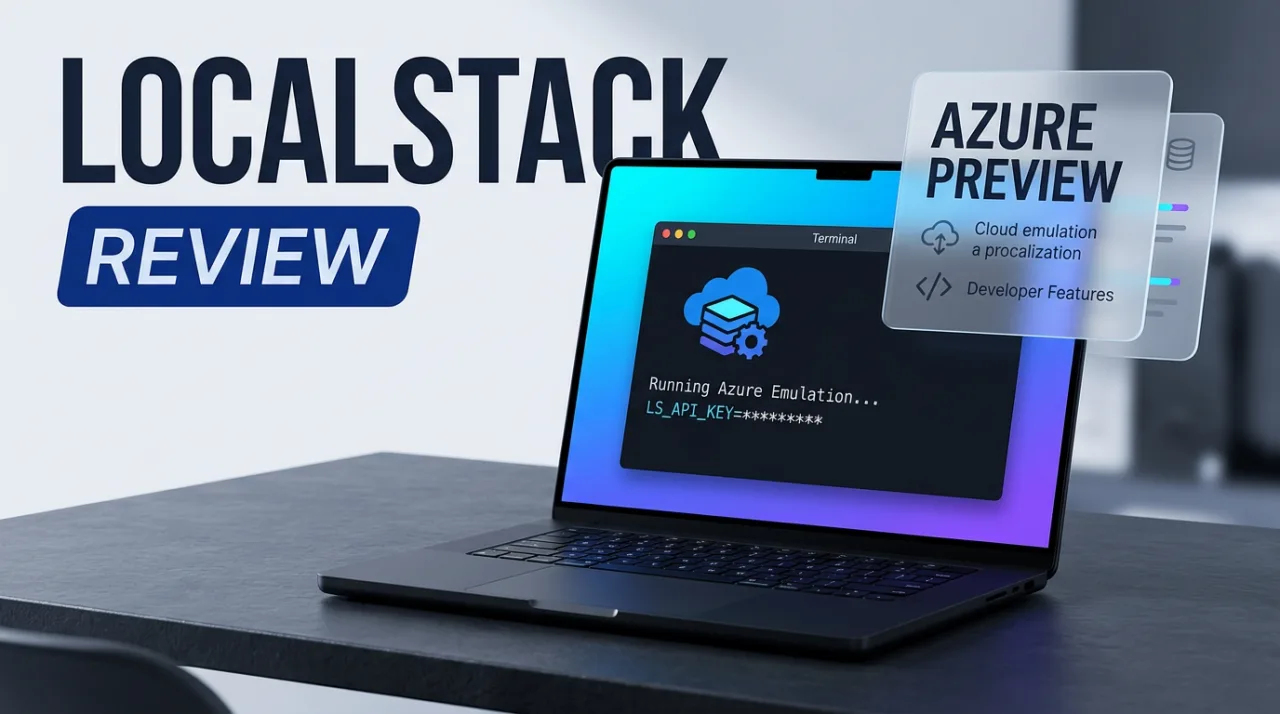
LocalStack for Azure provides a containerized emulator for core Azure services so developers can build and test applications locally without provisioning live resources. The service entered public preview on October 7, 2026, and runs through Docker with support for existing Azure SDKs, CLI tools, and infrastructure-as-code templates. It targets development and test workflows rather than production use.
LocalStack for Azure Features and Supported Services
The preview covers 23 resource providers focused on typical enterprise patterns. Supported areas include containers such as AKS and Container Apps, serverless options like Azure Functions and App Service, and data services including Cosmos DB, Azure SQL Database, and PostgreSQL flexible servers. Storage, messaging via Service Bus and Event Hubs, Key Vault, managed identity, virtual networks, and monitoring tools like Application Insights are also available.

Emulation works with standard tools including Azure CLI, Bicep, ARM templates, Terraform, and Pulumi. Applications can use unchanged code for later deployment to live Azure. Setup relies on the lstk CLI or direct Docker images and integrates into CI pipelines such as GitHub Actions. Developer tools like state snapshots and observability features remain planned for later stages rather than available at launch.
Every service includes documented limitations and workarounds on the official documentation site. Resource Manager lacks multi-subscription support, template validation is incomplete in places, and RBAC enforcement operates on an opt-in basis. State does not persist across container restarts, and coverage percentages vary by individual service.
LocalStack Pricing Outlook, Limitations, and Alternatives
Access during public preview remains free and self-serve with no billing commitments required. Users sign up through the LocalStack pricing page or add the Azure preview plan to an existing account. General availability is targeted for early 2027, at which point paid plans and transition details will be published with at least 30 days of notice.
Key constraints include single-container operation, the requirement for a LocalStack Auth Token, and partial API coverage that requires checking per-service documentation before adoption. Existing LocalStack for AWS customers can extend their setup to include Azure support without separate infrastructure.
Compared with direct Azure usage, LocalStack for Azure eliminates cloud costs during testing but introduces emulation gaps that live resources do not have. Against Azurite, which focuses narrowly on storage emulation, the preview offers broader service coverage at the cost of additional Docker setup. Relative to full cloud provisioning, it reduces expenses for repeated test cycles while requiring manual verification of unsupported operations.
| Aspect | LocalStack for Azure Preview | Azurite | Live Azure |
|---|---|---|---|
| Scope | 23 providers | Storage only | Full platform |
| Cost in preview | Free | Free | Pay per use |
| State persistence | Limited | Yes | Yes |
| IaC support | Bicep, Terraform, ARM | Limited | Full |
Common user reports note reliable core emulation for supported paths but highlight the need to review service-specific limitations before committing workloads. Feedback channels remain open to shape additional developer experience features ahead of general availability.
Frequently asked questions
When did LocalStack for Azure enter public preview?
The service launched its public preview phase on October 7, 2026, as a free self-serve offering.
What pricing applies during the LocalStack for Azure preview?
Preview access carries no charges or commitments. Paid plans and billing details will appear at general availability in early 2027.
Which services does LocalStack for Azure support in preview?
The preview includes containers, serverless compute, Cosmos DB, Azure SQL, storage, messaging, Key Vault, networking, and monitoring services across 23 resource providers.
How does LocalStack for Azure compare to Azurite?
LocalStack covers a wider range of services while Azurite remains limited to storage emulation. Both operate locally without cloud costs.
Filed under
Comments 1