Reviews Diffusion LLM
Inception Mercury 3 Review: Diffusion LLM Speed, 1M Context, Pricing and Limitations
At a glance
Inception Mercury 3 delivers parallel token refinement in a closed-weights model with a 1M-token context. This review examines its speed claims, API pricing, and performance constraints.
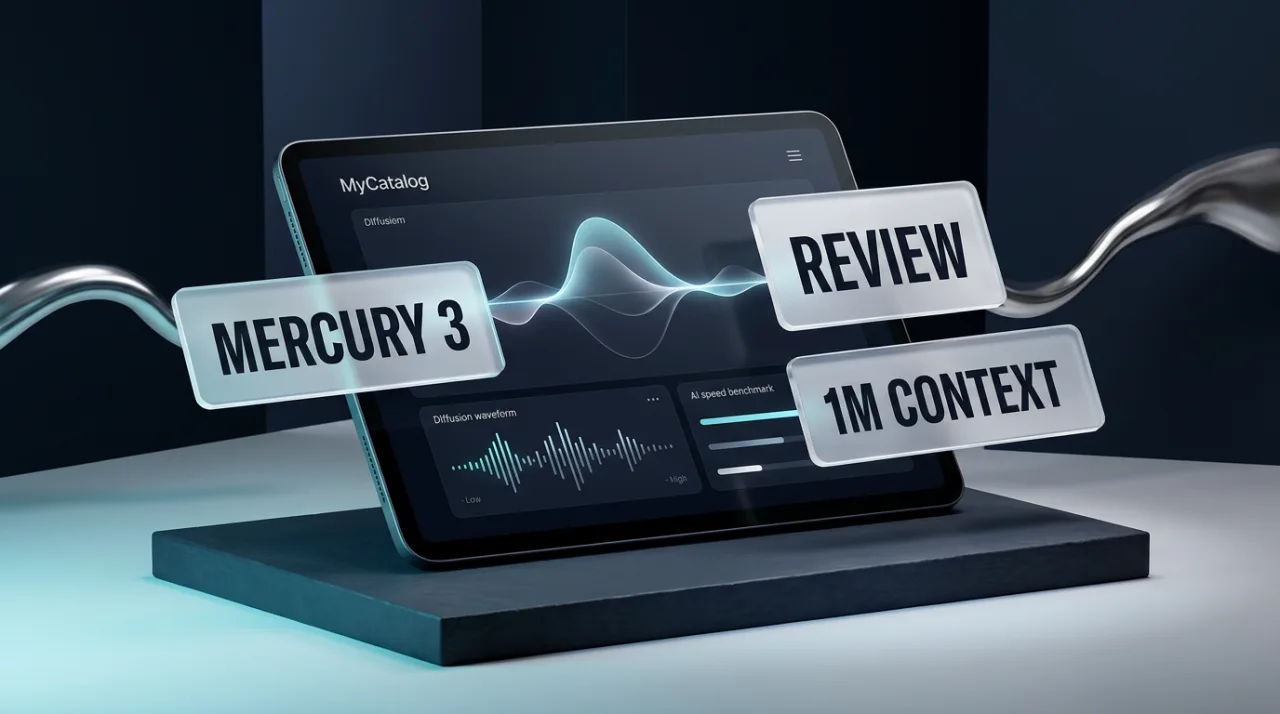
Inception Mercury 3 is a closed-weights diffusion LLM released on October 19, 2026, by Inception, a Redwood City lab. It generates text through parallel token refinement instead of sequential autoregressive steps and supports a 1M-token context window. The model targets real-time agentic workloads via an OpenAI-compatible API.
Inception Mercury 3 Features and Capabilities
The model accepts text-only inputs and produces text outputs up to roughly 131K tokens. It includes tool calling, structured outputs, and four reasoning effort levels: instant, low, medium, and high. Temperature cannot drop below 0.5. The context window expanded from 260K tokens in Mercury 2.5 to 1M tokens, which suits long-document tasks when paired with caching.
Inception reports 1,068 tokens per second on NVIDIA GPUs, a figure 4–8 times higher than the speeds listed for GPT-6 Luna and Claude Haiku 5.5 in the company table. Independent measurements from OpenRouter show median rates between 160 and 254 tokens per second during launch week. Partner reports indicate median generation times near 0.9 seconds and end-to-end times near 2.2 seconds when reasoning effort remains low. Higher reasoning settings increase latency noticeably.
At medium effort, Inception’s internal benchmarks show Mercury 3 leading or tying the two comparison models on 8–10 of 12 tests. It records 51.08 on SWE-Bench Atlas and 76.84 on IFBench. It trails on MRCR v2 long-context retrieval and some extended coding tasks. No third-party leaderboards have published results yet.
| Model | Context Window | Reported Speed | SWE-Bench Atlas | IFBench |
|---|---|---|---|---|
| Mercury 3 | 1M | 160–254 t/s (real-world) | 51.08 | 76.84 |
| GPT-6 Luna | Unknown | ~130 t/s | ~33 | Lower |
| Claude Haiku 5.5 | Unknown | ~240 t/s | ~33 | Lower |
Pricing, Access, and Practical Constraints
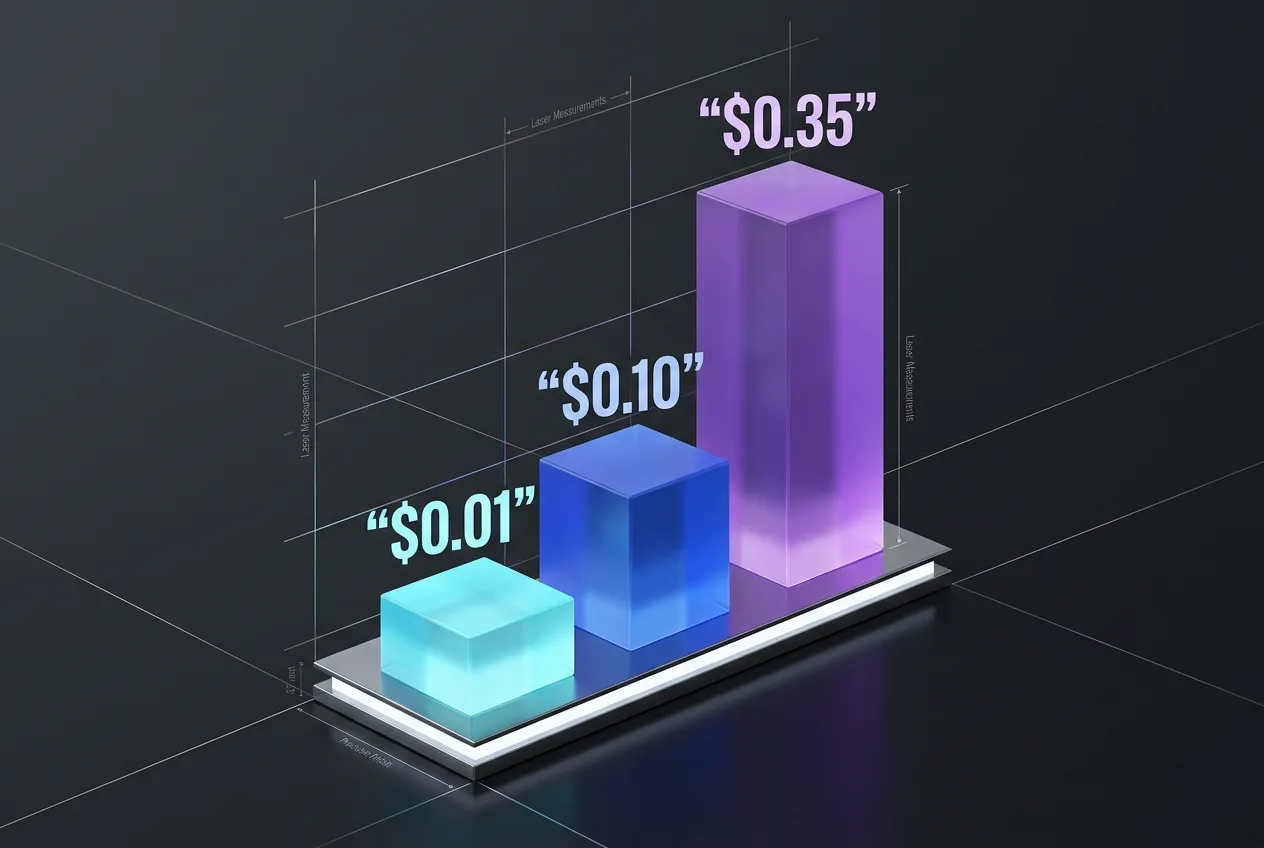
Launch pricing offers a 50 percent discount with no announced end date: $0.10 per million input tokens and $0.35 per million output tokens. Cached input costs $0.01 per million. Standard list prices stand at $0.20 input and $0.70 output. Every new API key receives 100M free tokens. The model is reachable through the official Inception API as well as OpenRouter, Baseten, and Vercel.
Registration requires an API key with no additional verification steps described in public documentation. The interface follows the OpenAI chat completions schema, so existing client libraries work without modification. No on-premise or self-hosted options exist.
Security information remains limited to the closed-weights design. Data handling details appear only in the standard terms of the hosting platforms. No public incident reports or compliance certifications have surfaced in the first week of availability.
Early partner feedback from TinyFish, RevisionDojo, Octen, and Lorikeet highlights low latency in web-agent and tutoring loops. Some reviews note strong results on short, well-defined tasks and high-volume agent cycles. Others report weaker performance on complex multi-step analysis or extended reasoning chains. Common complaints include the temperature floor of 0.5 and variable tail latencies under heavier reasoning settings.
Mercury 3 shares its API surface with GPT-6 Luna and Claude Haiku 5.5, yet its diffusion architecture removes sequential token dependencies. Pricing under the launch discount undercuts the public rates of the other two models, though the discount period remains unspecified. The 1M context exceeds typical windows offered by the competitors at the same price tier, while the absence of image input restricts it to text-only workloads.
Confirmed limitations include the text-only modality, closed weights, and lack of independent benchmark data. Real-world throughput falls below the headline figure and fluctuates with reasoning effort. The minimum temperature setting reduces control over output determinism. Some long-context and long-horizon tasks show lower scores than the comparison models in the vendor table. The temporary nature of the discounted rates introduces future cost uncertainty.
Frequently asked questions
How fast is Inception Mercury 3 in practice?
Vendor claims reach 1,068 tokens per second on NVIDIA GPUs. Independent measurements from OpenRouter place median throughput between 160 and 254 tokens per second, with generation times near 0.9 seconds for typical prompts.
What does Inception Mercury 3 cost after the launch discount?
List prices are $0.20 per million input tokens and $0.70 per million output tokens. Cached input is $0.02. The current 50 percent discount sets rates at $0.10 and $0.35 respectively.
Does Mercury 3 support image inputs?
No. The model accepts text-only inputs and returns text outputs. No vision capabilities are listed in the official documentation.
Can users run Mercury 3 locally?
The weights are closed. Access occurs only through the Inception API or partner platforms such as OpenRouter and Baseten.
Filed under
Comments 3