Reviews AI Models
GPT-6.1 Terra Review: API Pricing, Context Window, Performance Benchmarks and Limitations
At a glance
OpenAI released GPT-6.1 Terra on October 26, 2026 as a mid-tier model with a 1,050,000-token context window and API rates of $1 per million input tokens.
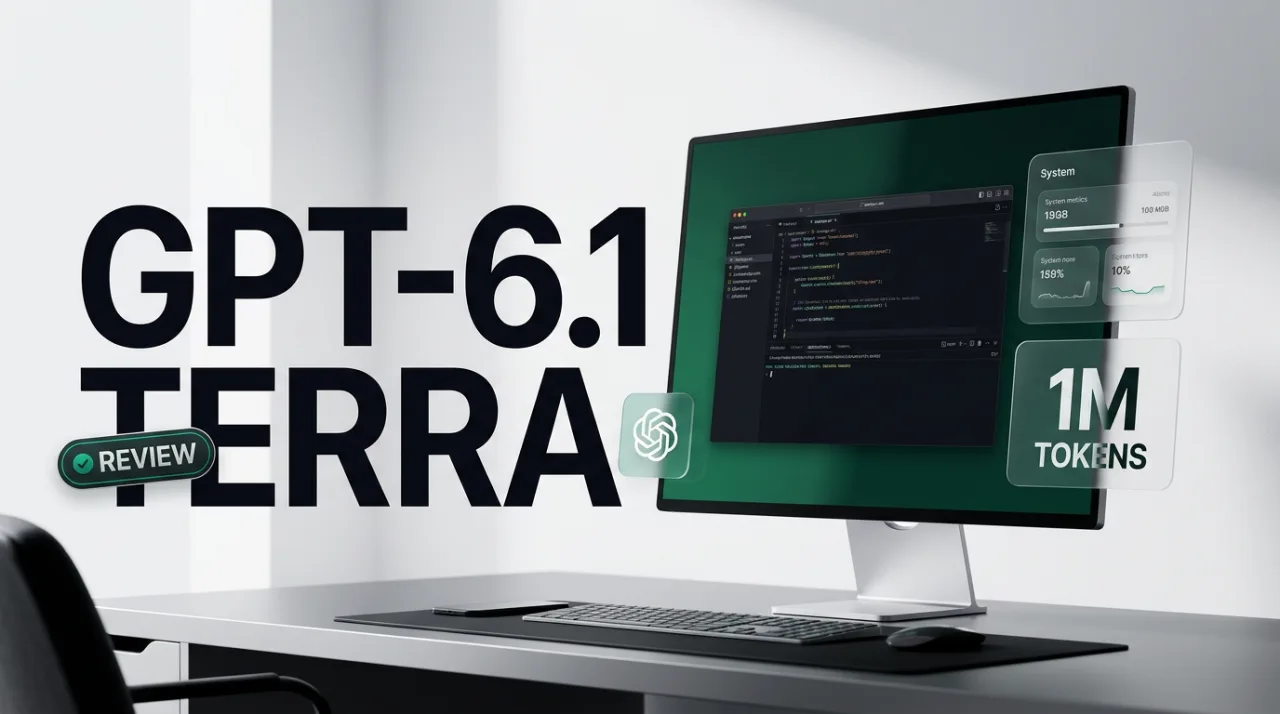
GPT-6.1 Terra review examines OpenAI’s mid-tier model released October 26, 2026. The model targets high-volume professional work such as visual reasoning, screen-based computer use, coding agents, and document handling. It sits below GPT-6.1 Sol and GPT-6 Astra in the lineup and above GPT-6 Luna.
GPT-6.1 Terra Overview and Key Features
Developed by OpenAI, GPT-6.1 Terra (model ID gpt-6.1-terra) succeeds GPT-5.6 Terra. It supports text and image inputs with text-only outputs and carries a knowledge cutoff of June 1, 2026. The context window reaches 1,050,000 tokens with a maximum of roughly 922,000 input tokens and 128,000 output tokens. Tool calling operates through the Responses API, and the model includes streaming, structured outputs, function calling, file search, web search, and prompt caching.
Reasoning effort can be set to none, low, medium (default), high, xhigh, or max. Unsupported features include fine-tuning, predicted outputs, and realtime audio or video handling. The model meets the Critical cybersecurity threshold under OpenAI’s Preparedness Framework and shows improved scope adherence compared with its predecessor.
GPT-6.1 Terra Pricing, Benchmarks and Comparisons
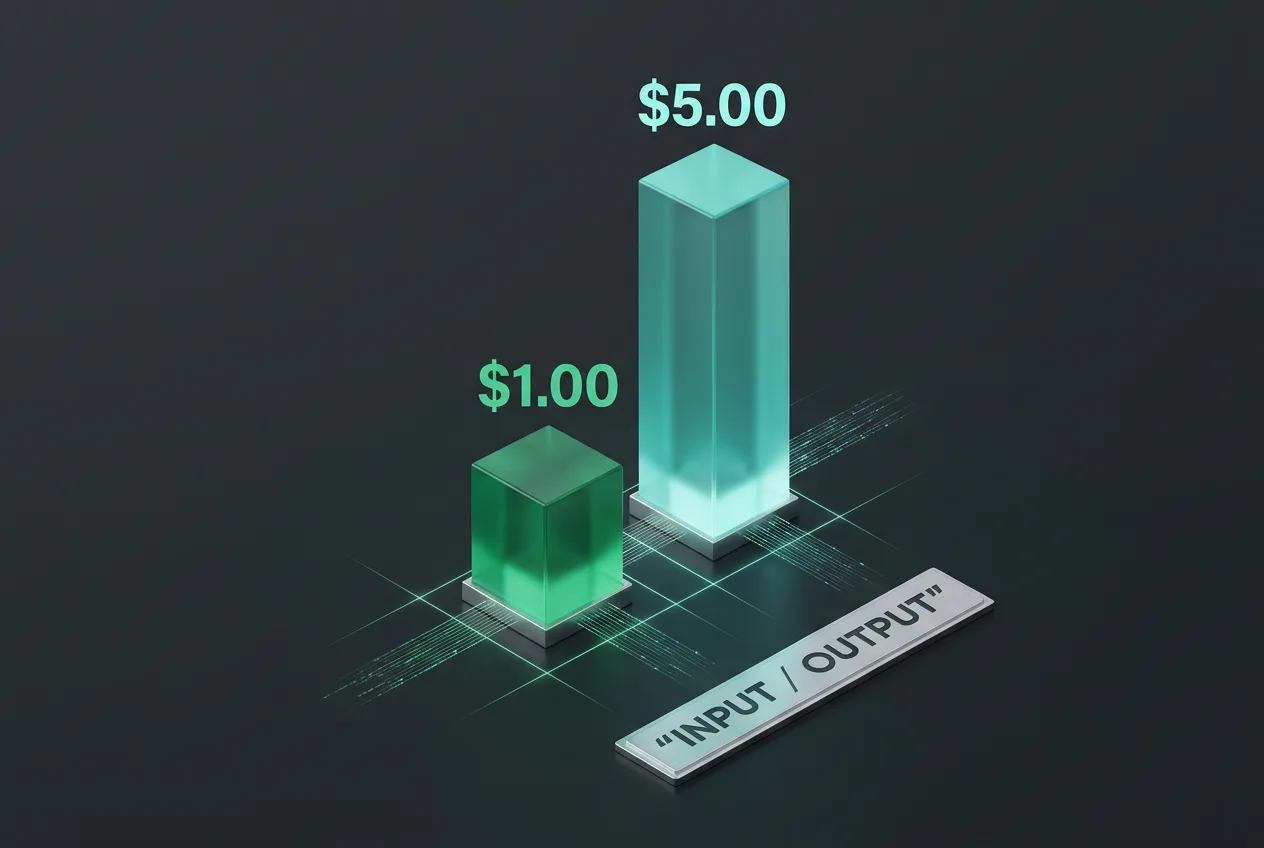
Standard API pricing stands at $1 per million input tokens and $5 per million output tokens. Cached input costs $0.05 per million tokens. Cache writes are priced at $1.25 for 30-minute retention or $2.50 for 12-hour retention. Batch and Flex tiers receive 50 percent lower rates. Inputs exceeding 272,000 tokens incur double the input and cache rates and 1.5 times the output rate. Fast mode doubles the base rates.
On Agents’ Last Exam at medium effort the model scores 15 points higher than GPT-5.6 Terra at roughly one-third the cost and matches GPT-6 Astra performance at about one-tenth the token price. At maximum effort it completes tasks more than three times faster than GPT-6.1 Sol or Astra while using fewer tokens. On Terminal-Bench 4.0 it reaches 50.3 percent accuracy versus 21.5 percent for GPT-5.6 Terra. MMMU-Pro visual reasoning scores reach 85.5 percent at maximum effort, nearly matching higher-tier models at lower cost.
| Model | Input $/M | Output $/M | Context Window | Agents’ Last Exam (medium) |
|---|---|---|---|---|
| GPT-6.1 Terra | 1 | 5 | 1,050,000 | +15 vs prior Terra |
| GPT-5.6 Terra | 2 | 10 | 800,000 | baseline |
| Claude Opus 5.5 | 15 | 75 | 200,000 | lower efficiency |
Compared with Claude Opus 5.5, GPT-6.1 Terra delivers more than nine times lower cost per task at maximum effort. In ChatGPT Work and Codex plans, usage allowances cover more tasks than previous Terra or higher-tier models.
Limitations, Security and User Feedback
Long-context prompts above 272,000 tokens trigger higher rates. Rate limits vary by account tier and are not publicly fixed. No fine-tuning or realtime support exists. Most detailed performance numbers remain OpenAI-internal, though third-party indexes such as Artificial Analysis report directional agreement at approximately 48 on the Intelligence Index at maximum effort. Independent verification continues.
Public user feedback on forums and review sites notes strong prompt-injection resistance and reduced factual errors at higher effort levels. Complaints center on the absence of fine-tuning and the pricing uplift for very long contexts. Early adopters in agentic workflows report faster task completion than prior models at similar spend.
Frequently asked questions
What is the context window size of GPT-6.1 Terra?
The model supports a 1,050,000-token context window with a practical maximum of roughly 922,000 input tokens.
How much does GPT-6.1 Terra cost per million tokens?
Standard rates are $1 for input and $5 for output. Cached input drops to $0.05 per million tokens.
Does GPT-6.1 Terra support fine-tuning?
No. Fine-tuning, predicted outputs, and realtime features remain unsupported.
How does GPT-6.1 Terra compare with Claude Opus 5.5 on cost?
At maximum effort the model achieves more than nine times lower cost per task while completing work over three times faster.
Filed under
Comments 1