Reviews Google Cloud
Google Multi-Party Compute Review: MPC Crypto Custody Preview Features and Institutional Access
At a glance
Google Multi-Party Compute offers threshold signing for digital asset keys in a private preview. The service targets banks and institutions with key distribution across multiple parties.
Google Multi-Party Compute provides a custody platform that splits private keys using threshold signing so that no single party holds the full key. Launched in private preview in late October 2026, the service runs on Google Cloud and targets banks managing Bitcoin, Ethereum, and Solana assets. Documentation updated on October 27 shows commercial availability planned for early 2027.
Google Multi-Party Compute Review Examines Core MPC Features and Signing Workflow
The platform implements the DKLS23 protocol to enable configurable threshold schemes such as 2-of-3 or 5-of-7. Each key share resides on independent, hardware-backed environments that can include Google Cloud regions, customer premises, other public clouds, or mobile devices. Transaction policies written in Cedar evaluate spending limits and destination allowlists inside Confidential Space before any signature is produced.
Supported algorithms currently cover ECDSA on secp256k1 for Bitcoin and EVM-compatible chains. EdDSA support for Solana remains listed as coming soon, with post-quantum options scheduled after general availability. After key generation the service returns the public key and derived addresses without ever assembling the complete private key in plaintext.
Role-based access includes Admin, Policy Author, and Signer permissions. Key recovery mechanisms and enterprise governance controls form part of the offering. Alphabet has already deployed the system internally for its own Ethereum and Solana holdings.
Preview Access, Pricing Outlook, and Security Model
Private preview participation remains limited to unnamed design partners and major financial institutions. The service was presented at the Google Cloud Digital Assets Symposium in New York on October 28, 2026, with speakers from Morgan Stanley, Citi, Wells Fargo, and OKX. No public pricing information has been released.
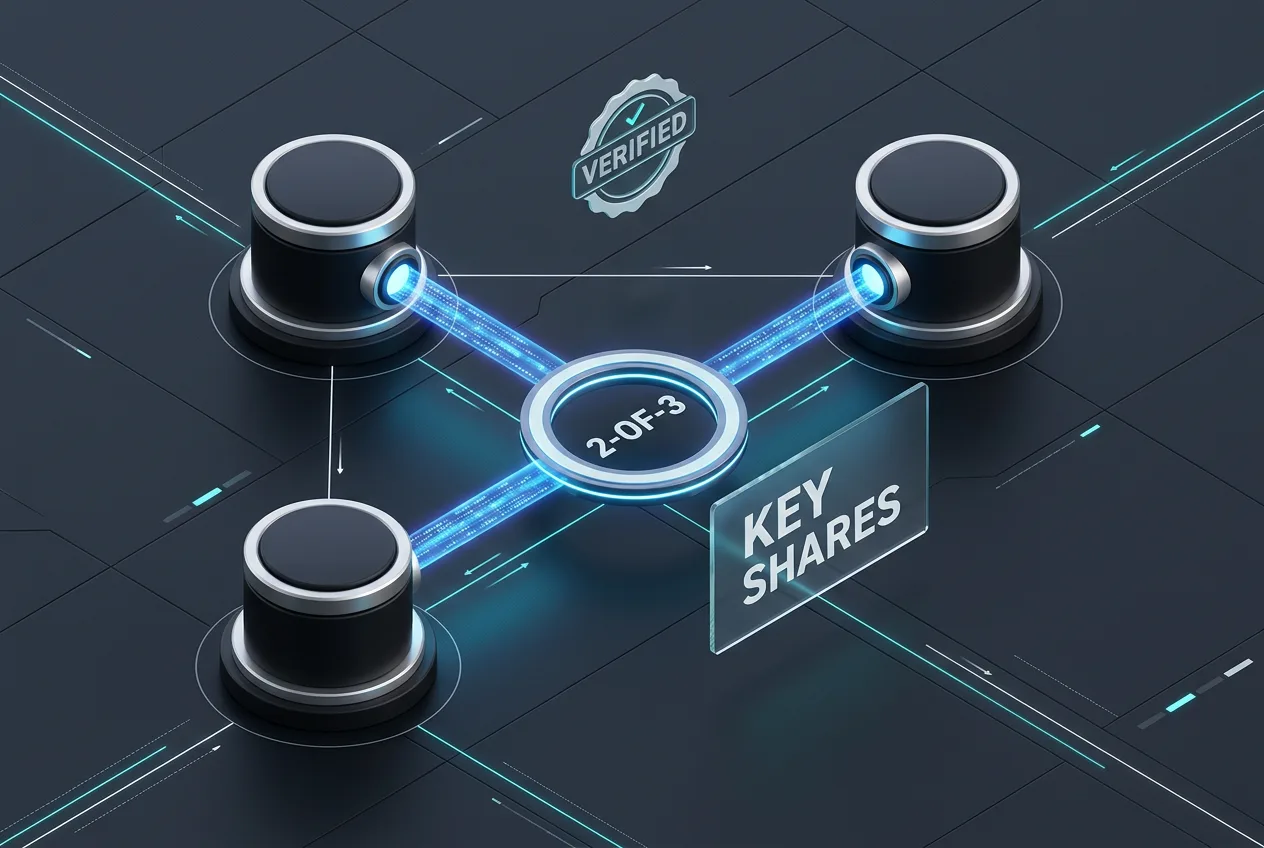
Security relies on the absence of any single point of failure and Google’s inability to access key material in plaintext. The approach addresses documented risks where private-key compromises accounted for 43.8 percent of 2024 crypto thefts according to Chainalysis data. No independent security audits or detailed cryptographic proofs appear in current public materials.
Integration requires Google Cloud accounts and familiarity with Confidential Space configurations. Teams must define roles and Cedar policies before generating keys, which adds setup steps compared with simpler multi-signature wallets.
Google Multi-Party Compute Alternatives and Current Limitations
Direct competitors include Fireblocks MPC-CMP, BitGo multi-signature custody, Fordefi, and Copper. Google emphasizes its cloud scale and banking relationships while noting it does not operate a competing retail custody business. Anchorage Digital remains an option for regulated institutional custody with different regulatory qualifications.
| Service | Key Technology | Supported Chains | Current Status |
|---|---|---|---|
| Google Multi-Party Compute | DKLS23 threshold signing | Bitcoin, Ethereum (Solana soon) | Private preview |
| Fireblocks | MPC-CMP | 80+ chains | Generally available |
| BitGo | Multi-signature | Bitcoin, Ethereum, others | Generally available |
Limitations include unknown final pricing, unspecified performance benchmarks against existing providers, and incomplete documentation on Solana timing. The service currently lacks public details on exact asset limits or settlement speeds that institutions would require for production use.
Final availability depends on feedback from preview participants. Organizations evaluating the platform should monitor release notes for updates on supported algorithms and policy tooling before committing to migration planning.
Frequently asked questions
When will Google Multi-Party Compute become generally available?
Documentation indicates a target release in early 2027. The service remains in private preview as of October 29, 2026, with no confirmed public launch date.
Which blockchains does Google Multi-Party Compute support today?
ECDSA on secp256k1 works for Bitcoin and Ethereum-compatible chains. Solana support via EdDSA is listed as coming soon in current documentation.
How does Google Multi-Party Compute handle pricing?
No pricing details have been published. Google has not disclosed fees, transaction costs, or subscription tiers for the preview or general availability phases.
Is Google Multi-Party Compute audited?
Public materials do not list independent security audits or formal cryptographic proofs. Users must rely on Google’s internal documentation for security claims.
Filed under
Comments 3