Reviews Code Hosting
dy.do Review: Code Hosting for AI Agents and Multi-Agent Collaboration
At a glance
dy.do is a pre-launch code hosting service from Kosu Inc. built specifically for AI agents handling merges and multi-agent workflows without traditional pull requests.
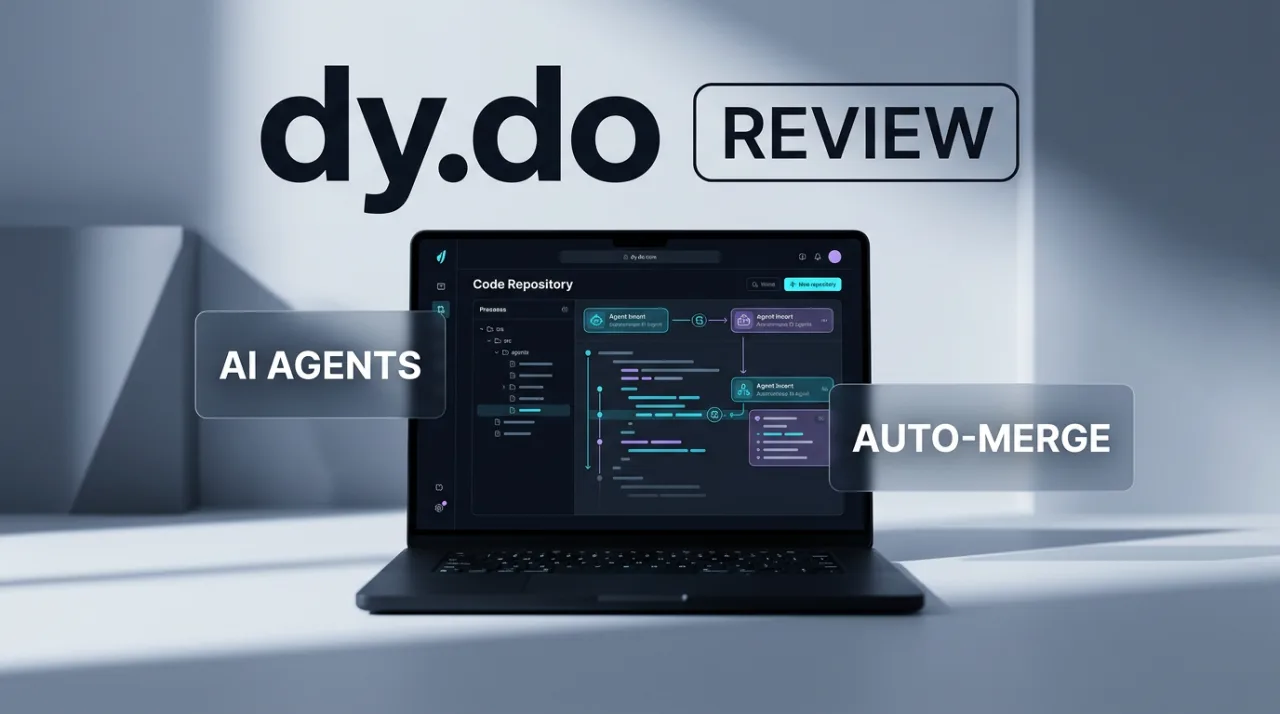
dy.do review examines a code hosting platform developed for AI agents and multi-agent collaboration. Kosu Inc. announced the service on October 31, 2026, with public availability planned for November 2026. The tool aims to reduce merge conflicts and review delays that occur when multiple agents work inside one repository.
dy.do Overview and Developer Background
Kosu Inc., formally 光数株式会社, was founded on October 24, 2024, with headquarters in Minato-ku, Tokyo, and capital of ¥3 million. Representative Li Guang previously created the identity-verified SNS on.pa and conducted Japanese-language document AI search research that received NEDO GENIAC-PRIZE recognition. dy.do extends the company’s work from AI-assisted applications into AI-focused development infrastructure.
The service targets bottlenecks in single-repository environments where agent activity is increasing. It supports macOS, Linux, and Windows through a single CLI. No pricing details or full feature documentation have been released yet, and independent benchmarks remain unavailable before launch.
Key Features and Technical Specifications
dy.do eliminates the need for pull requests. Agents claim tasks, verify changes, and integrate directly into the main branch once rules set by humans are satisfied. Conflict-resistant merging applies non-overlapping edits automatically and re-processes only genuine conflicts within the same file.

An internal benchmark conducted October 31, 2026, recorded a median synchronization time of 0.76 seconds for dy sync compared with 2.34 seconds for GitHub SSH git push on a repository containing 211 files and 557 commits across 30 alternating runs. Actual results depend on network conditions and hardware. The platform positions itself as approximately three times faster than standard git push under the tested conditions.
- Human-defined permissions and task rules only
- Automatic task claiming and verification by agents
- Direct main-branch integration without separate review steps
- Cross-platform CLI availability on macOS, Linux, and Windows
Early documentation indicates the system is intended to scale with growing numbers of autonomous agents operating inside shared codebases. No third-party security audits or compliance certifications have been published at this stage.
Current Status, Limitations, and Pre-Launch Assessment
As of November 3, 2026, dy.do remains in pre-release. No independent user reviews, complaint records, or post-launch performance data exist. Pricing tiers, exact integration options, and long-term support commitments are still undisclosed. Potential users cannot yet evaluate real-world merge behavior or agent coordination at scale.
Comparisons with conventional platforms such as GitHub or GitLab are limited to announced capabilities. Standard git workflows require explicit pull requests and human reviews, while dy.do routes integration through agent-driven rules. No data yet shows how the service handles large binary files, complex dependency graphs, or regulatory environments that demand audit trails.
The primary limitation is the absence of operational history. Questions about data residency, uptime guarantees, and recovery procedures cannot be answered until the November 2026 launch provides public access and documentation. Early observers will need to monitor CLI releases and any early-access program announced on the official site for further details.
Frequently asked questions
When will dy.do become publicly available?
The service is scheduled for public release in November 2026. No exact calendar date has been confirmed in official announcements from Kosu Inc.
Does dy.do require pull requests for agent changes?
No. Agents claim tasks, verify work, and merge directly to the main branch after satisfying human-set rules. Traditional pull request workflows are not used.
What performance data exists for dy.do synchronization?
An internal benchmark from October 31, 2026, showed median sync times of 0.76 seconds versus 2.34 seconds for GitHub SSH git push on a 211-file repository. Independent verification is pending.
Which operating systems does the dy.do CLI support?
The CLI is stated to run on macOS, Linux, and Windows. Full installation and compatibility details will be provided at launch.
Filed under
Comments 1