Reviews Dell
Dell AI Data Platform Review: Semantic Layer and Knowledge Graph for Enterprise AI
At a glance
The Dell AI Data Platform adds a unified semantic layer and enterprise knowledge graph to supply AI agents with governed context from enterprise data stores.
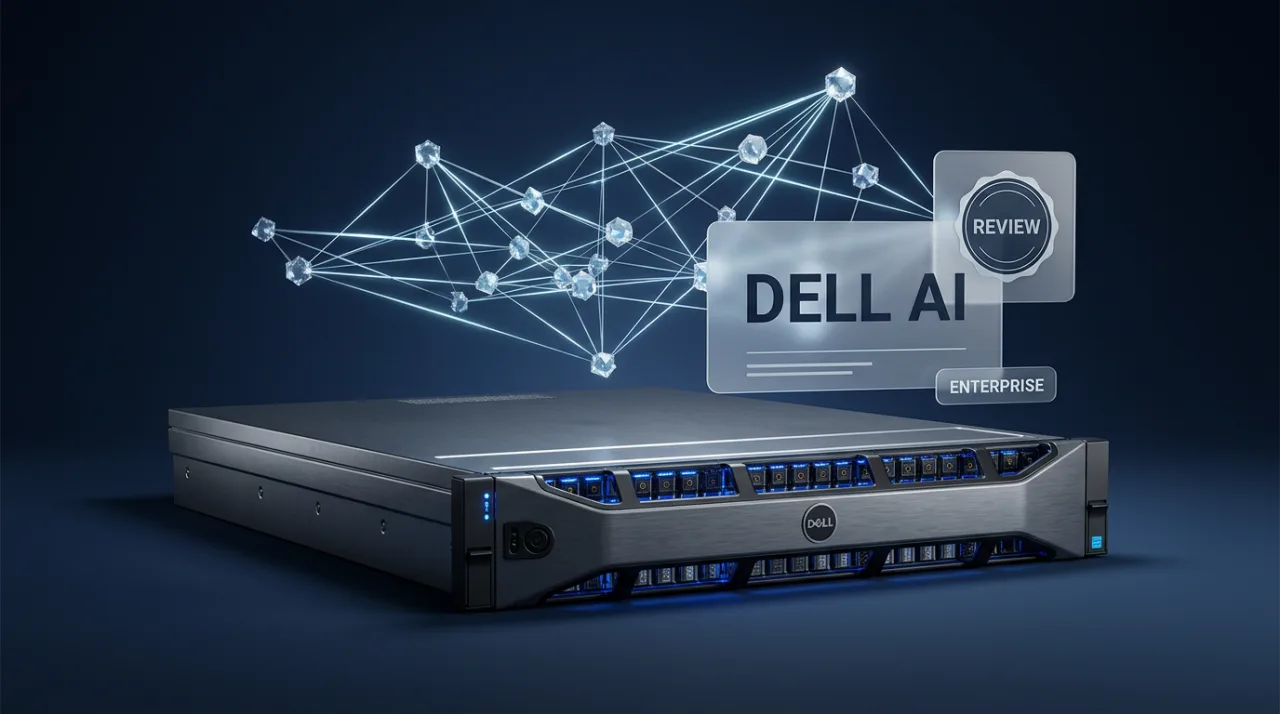
The Dell AI Data Platform supplies a unified semantic layer and enterprise knowledge graph to deliver trusted context to AI agents and applications from customer data. Announced on October 6, 2026, the updates form part of the Dell AI Factory with NVIDIA and target data silos, repeated reconstruction costs, and lack of meaning in existing enterprise datasets. The platform keeps data in customer data centers while supporting RAG and agentic AI workloads through modular storage and data engines.
Dell AI Data Platform Core Features and Performance
The unified semantic layer supplies consistent business definitions, rules, and a searchable glossary across structured and unstructured data. It accepts imported ontologies and taxonomies and integrates the NVIDIA Auto-Ontology open-source library. The enterprise knowledge graph maps relationships via metadata, lineage, and query history; it self-tunes and retrieves relevant tables, data products, multimodal files, and vector indexes according to permissions. Knowledge agents operate as topic-specific advisors grounded in graph slices, with customer controls on access, quality, and spending, running on NVIDIA Nemotron Retriever models.
The Dell Data Processing Engine with NVIDIA cuDF on RTX PRO 4500 Blackwell GPUs recorded an average 3.9x speedup versus CPU-only execution in internal September 2026 tests on PowerEdge R770 servers under default settings. Peak gains reached 20.4x on batch data-mining workloads. Apache Arrow integration, scheduled for 1H 2027, enables in-place querying to cut data movement. The Dell Data Processing Engine with cuDF stack ships in December 2026.
PowerScale updates arriving in November 2026 raise the limit to 500 tenants per cluster with per-tenant RBAC and mTLS over NFS. A new open-source Dell Storage Performance Tool on GitHub benchmarks S3-compatible object storage for training, inference, and checkpointing. The architecture combines Storage Engines such as PowerScale, ObjectScale, and Lightning FS with Data Engines for analytics, Spark processing, and Elastic search, plus a Data Orchestration Engine. As of August 2026 the Dell AI Factory with NVIDIA counted more than 6,500 customers.
Storage, Security, and Platform Comparisons
PowerScale and ObjectScale receive ongoing scaling work alongside tighter NVIDIA integrations. AI-ready data services and implementation services are already available. The platform emphasizes governance, security, and avoidance of lock-in to specific models or storage backends. No public pricing details appear in the October 2026 announcements; enterprises must contact Dell for quotes on storage, processing, and orchestration components.
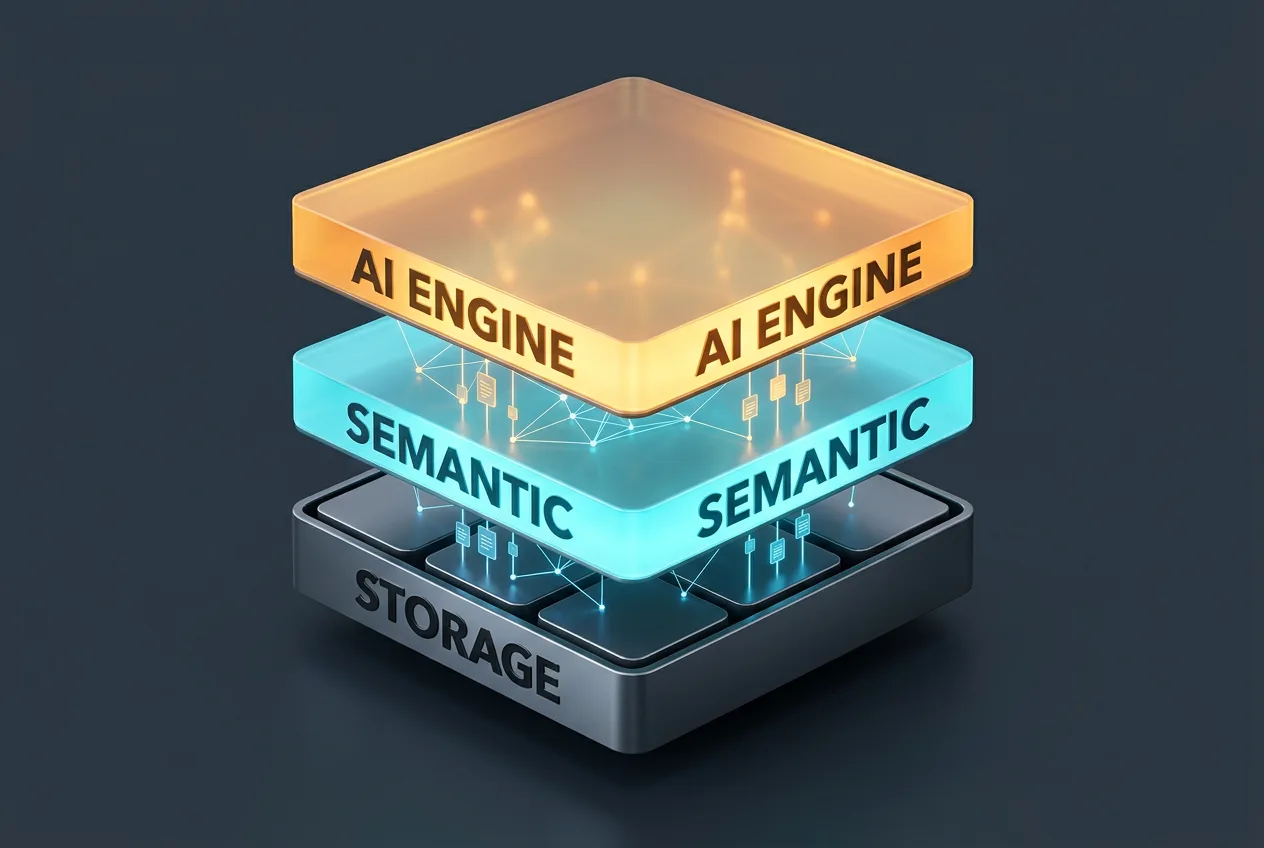
Security provisions include granular RBAC, mTLS encryption, and customer-controlled access to graph slices. No independent third-party benchmarks for the semantic layer or knowledge graph exist yet. The platform addresses repeated token and compute costs that arise when agents rebuild context without shared meaning or lineage.
Compared with generic data lakehouses, the Dell offering adds an integrated semantic layer and self-tuning graph absent from standard Starburst or Spark deployments alone. Against specialized vector databases it supplies broader multimodal support and permission-aware retrieval across existing enterprise tables rather than isolated indexes. Storage throughput tools and 500-tenant isolation exceed typical object-store limits found in competing on-premises stacks. User reports from CTBC Bank note real-time fraud detection gains after deploying the orchestration and storage layers, while other organizations cite productivity improvements in RAG pipelines.
Limitations and User Feedback
Core semantic and graph features reach general availability only in 1H 2027, so production deployments currently rely on existing storage and processing engines. Internal performance numbers lack external validation. Some enterprises report that initial ontology imports require manual cleanup before the glossary becomes fully searchable. Complaints center on the need for dedicated NVIDIA GPU hardware to achieve stated speedups and on the absence of transparent per-tenant billing metrics before the 500-tenant PowerScale release.
Public feedback from forums and review sites shows positive notes on reduced data prep time once Apache Arrow lands, alongside requests for clearer documentation on Knowledge Agent spending controls. Broader adoption depends on validated partner services and continued PowerScale scaling through 2027.
Frequently asked questions
When do the semantic layer and knowledge graph become available?
The unified semantic layer, enterprise knowledge graph, and Knowledge Agents are scheduled for release in the first half of 2027.
What performance gains does the Dell Data Processing Engine show?
Internal tests on PowerEdge R770 servers with NVIDIA cuDF recorded an average 3.9x speedup over CPU-only runs, with peaks of 20.4x on batch workloads.
How many tenants does the updated PowerScale support?
PowerScale clusters support up to 500 tenants with granular RBAC and mTLS over NFS starting November 2026.
Is pricing information available for the Dell AI Data Platform?
Public announcements do not list pricing; enterprises must request quotes directly from Dell for storage, processing, and orchestration components.
Filed under
Comments
No comments yet. Be the first!