Reviews AI Model Reviews
DeepSeek V4.1 Flash review: Architecture Updates, API Costs, and Local Deployment
At a glance
DeepSeek V4.1-Flash-1017 delivers updated multimodal performance with 1M context support, clear API pricing, and MIT-licensed weights for local runs.
DeepSeek V4.1 Flash review examines the October 17, 2026 checkpoint of the V4.1-Flash series, which adds modest gains across agent and coding benchmarks while keeping the same API rates. The model runs as a multimodal Mixture-of-Experts system with a 552B backbone and supports both hosted API calls and local inference. Users seeking concrete numbers on cost, speed, and hardware needs will find the details below.
Architecture Details and Core Capabilities
The model uses a Causal Encoder-Decoder layout with 20 encoder layers and 20 decoder layers. It activates roughly 8B parameters during prefill and 16B during decode. A 1M-token context window is paired with support for up to 384K output tokens, vision input, tool calling, JSON mode, and separate thinking or non-thinking generation paths.
Efficiency comes from Compressed Sparse Attention 2, FP4 KV caching, and a global KV cache footprint of about 890 bytes per token. The weights are released under an MIT license and are available on Hugging Face and ModelScope. Official files total between 510 GB and 763 GB depending on format, though community GGUF quants can reduce that range.
Practical inference options include SGLang, vLLM in preview, llama.cpp, and Unsloth. Engram offloading and expert caching lower memory demands. Recommended sampling settings are temperature 1.0, top_p 1.0, and at least 256K max tokens. Smaller quantized versions run on high-RAM single-GPU or CPU-plus-SSD setups, while full precision typically needs multi-GPU hardware at the Blackwell level or equivalent.
API Pricing Structure and Reported Benchmarks
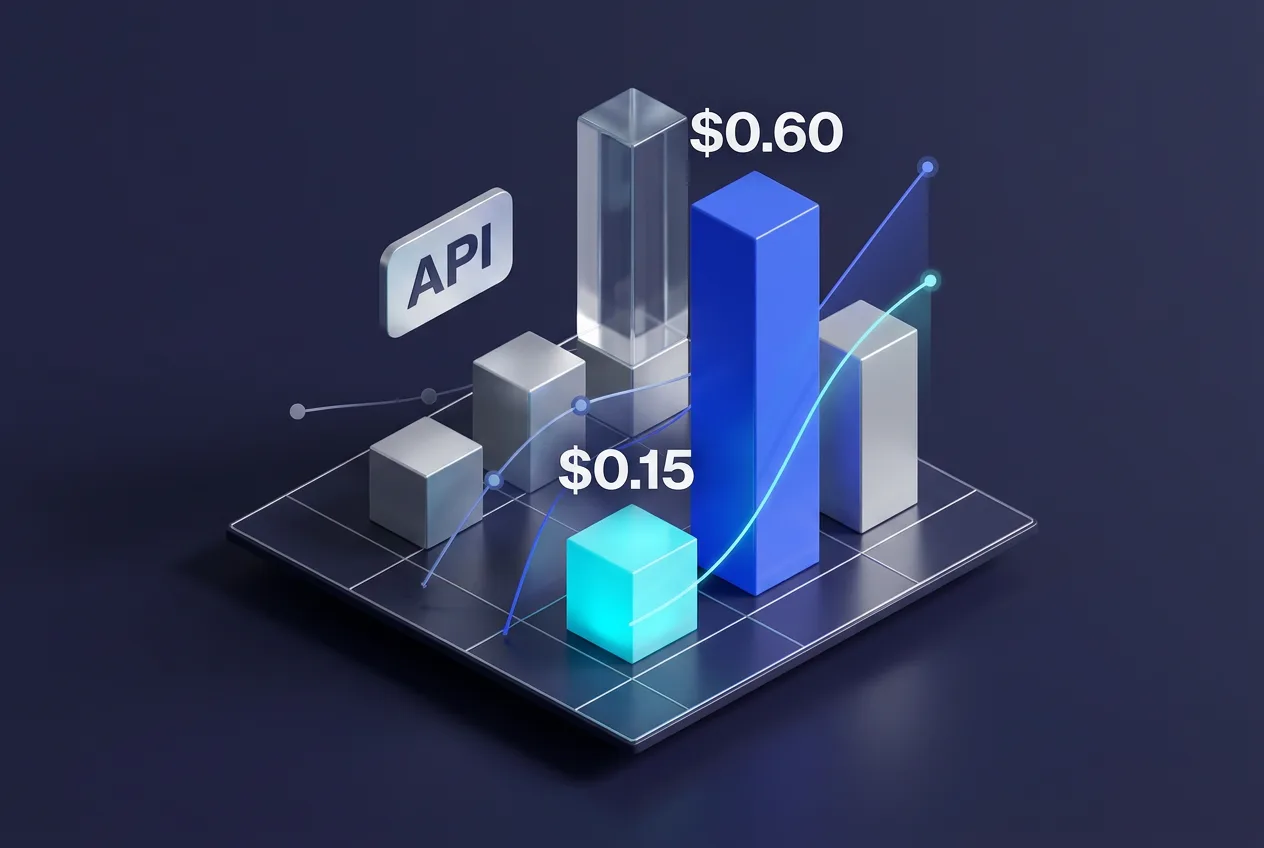
API access uses the alias deepseek-flash. Input pricing per million tokens is $0.15 off-peak or $0.30 during peak for cache misses, and $0.003 or $0.006 for cache hits. Output costs $0.60 off-peak or $1.20 at peak. Peak hours run 01:00–04:00 and 06:00–10:00 UTC on weekdays excluding Chinese holidays. A separate Search and Fetch API charges $0.75 per 1,000 successful requests, with billing rollout starting late October or early November 2026. Concurrency is capped at 2,500.
DeepSeek reports gains on eleven internal benchmarks. DeepSWE v1.1 rose to 77.0 from 74.2, Terminal-Bench 4.0 to 42.3 from 31.2, and Automation-Bench v1.0.6 to 60.5 from 54.8. Other scores include Agents’ Last Exam at 35.4, Apex Bench v1.1 at 72.1, ProgramBench at 29.1, and NL2Repo-Bench at 68.2. No independent reproductions have appeared yet.
| Benchmark | Score | Prior Version |
|---|---|---|
| DeepSWE v1.1 | 77.0 | 74.2 |
| Terminal-Bench 4.0 | 42.3 | 31.2 |
| Automation-Bench v1.0.6 | 60.5 | 54.8 |
| Apex Bench v1.1 | 72.1 | 64.6 |
Self-Hosting Requirements, Security Notes, and Practical Limits
Self-hosters can download the weights immediately and run them through the provided reference code. High-end multi-GPU setups remain the norm for full performance, yet reduced-precision versions allow testing on more modest hardware. API users receive the update automatically with no action required.
Open weights give local control over data flow. U.S. federal agencies face restrictions on DeepSeek technology tied to data location and legal concerns, though no incidents specific to the 1017 checkpoint have been documented. Earlier DeepSeek releases showed higher susceptibility to certain prompts in external tests, and community-modified variants exist. No widespread user complaints or new safety reports have surfaced for this release.
Key constraints include the large disk footprint, the need for substantial GPU resources in production, and the absence of third-party benchmark confirmation. Search and Fetch tool billing begins soon, which will add costs for some workflows. Independent evaluations and further runtime optimizations are still pending.
Frequently asked questions
What is the current pricing for the DeepSeek V4.1 Flash API?
Input cache-miss rates are $0.15 off-peak and $0.30 peak per million tokens. Cache-hit input drops to $0.003 or $0.006. Output costs $0.60 off-peak or $1.20 at peak. Separate Search and Fetch requests bill at $0.75 per thousand.
Can DeepSeek V4.1-Flash-1017 run locally?
MIT-licensed weights are available for download. Supported runtimes include SGLang, vLLM preview, and GGUF quants via llama.cpp or Unsloth. Full precision needs multi-GPU hardware, while smaller quants fit high-RAM single-GPU or CPU-plus-SSD systems.
How large is the DeepSeek V4.1 Flash context window?
The model supports a 1M-token context and up to 384K output tokens. It also handles vision input, tool calls, and JSON mode within that window.
Are there independent benchmarks for the 1017 checkpoint?
All published scores come from DeepSeek. No third-party reproductions have been released as of late October 2026. Gains appear across agent and coding tasks, but external verification is still needed.
What hardware is required for self-hosting?
Production runs typically need high-end multi-GPU servers. Reduced-precision community quants lower the requirement to high-RAM single-GPU or CPU-plus-SSD configurations for testing.
Filed under
Comments 1