Reviews Endpoint Security
Cato AI Endpoint Review: Endpoint AI Discovery, Policy Enforcement and Integration Details
At a glance
Cato AI Endpoint extends AI security controls beyond browsers to desktop apps and local agents, with inline inspection and policy enforcement.
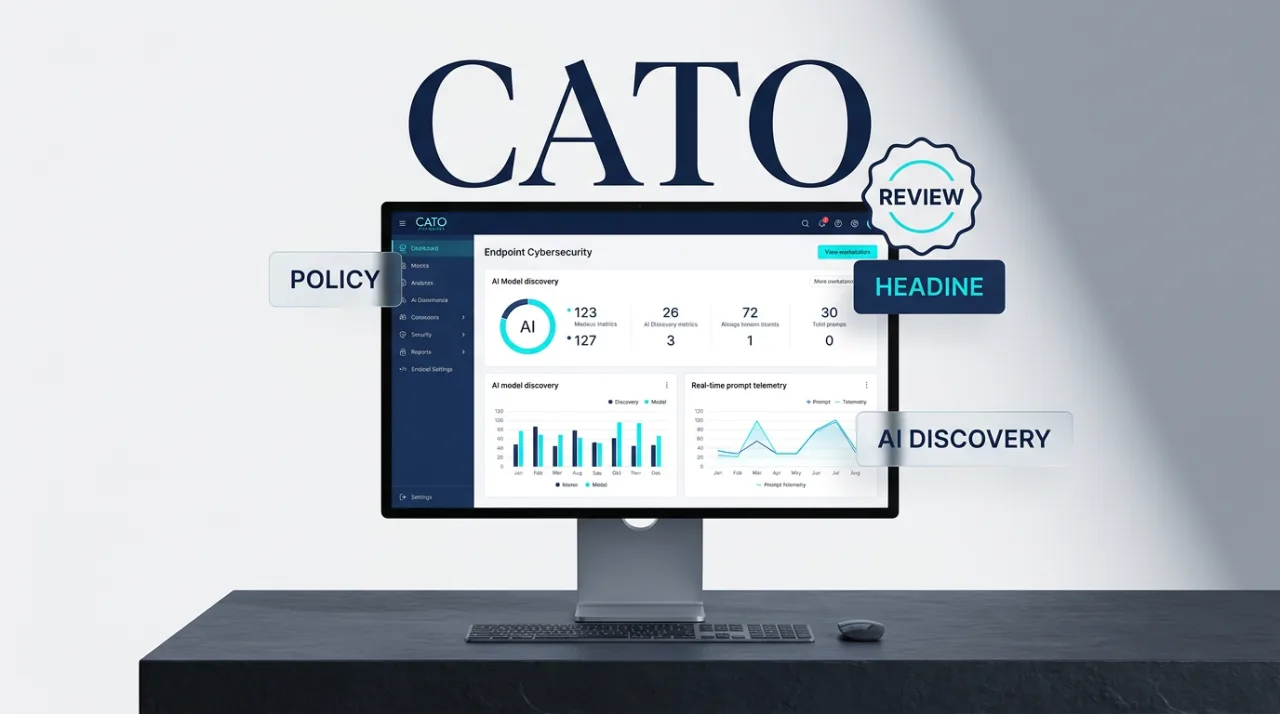
Cato AI Endpoint is an endpoint client released by Cato Networks on October 27, 2026, that identifies and controls AI tool usage across browsers, native desktop applications, and local agents. The client inspects prompts and responses directly on the device and applies policies for data protection and acceptable use. It operates alongside existing security stacks rather than replacing them.
What Is Cato AI Endpoint and How Does It Work?
The service discovers AI applications, local agents, MCP servers, tools, and skills that run on endpoints. It captures context including user identity, endpoint details, prompt content, response data, and agent activity for risk scoring and anomaly detection. Supported examples include Claude Code, Cursor, and Codex, along with detection of risky configurations such as broad command-line permissions.
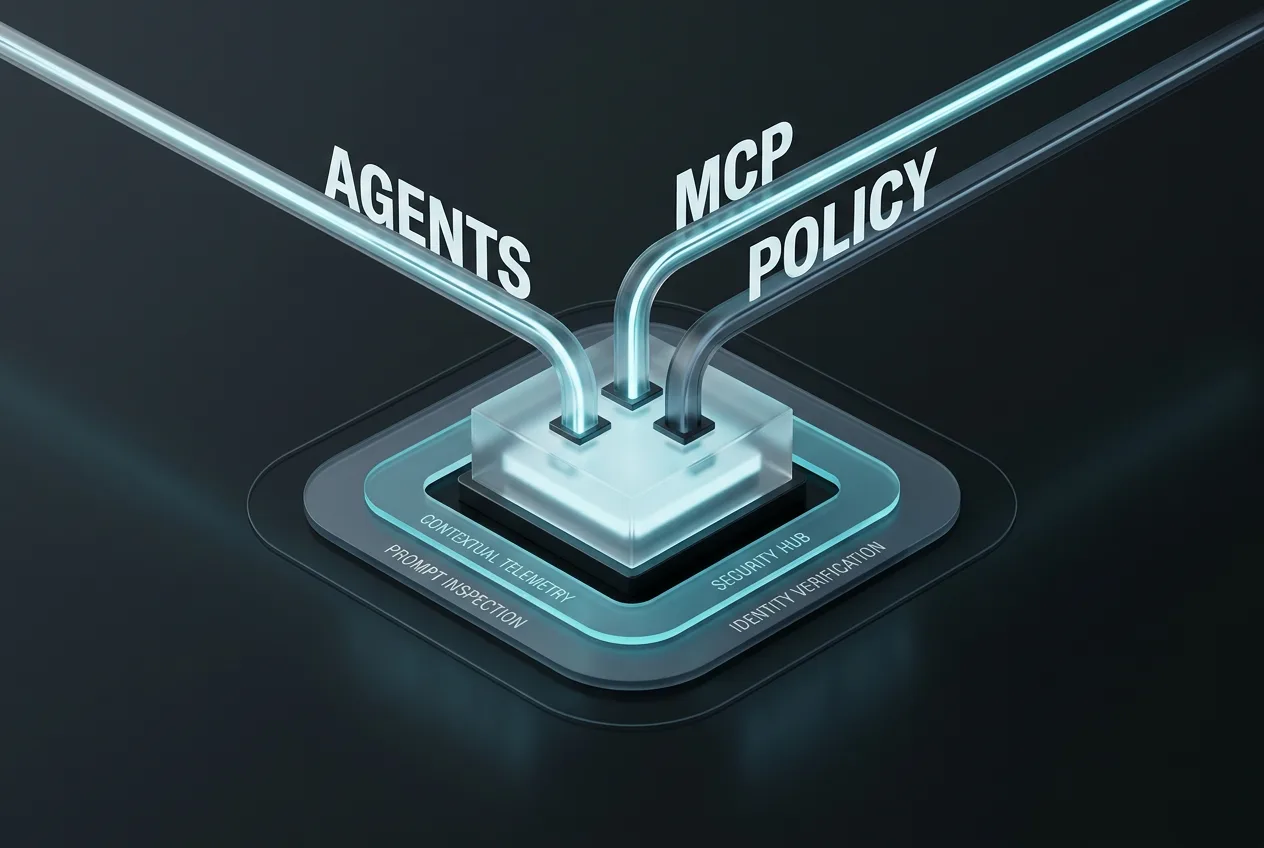
Inspection occurs inline at the endpoint before traffic leaves the device. Enforcement actions include blocking specific tool calls and restricting data exposure. Only AI-related traffic is sent to the Cato cloud; remaining network flows continue through the organization’s current SSE, SASE, VPN, or EDR tools. The same AI security engine and policy set used in Cato’s inline platform applies here, enabling consistent rules across users and agents.
Deployment targets existing customers and is described as achievable within weeks. The client does not require changes to the underlying network architecture. No full public matrix of supported operating systems or agent versions has been released yet.
Pricing, Security, Limitations and Competitor Context
Pricing for Cato AI Endpoint has not been published as a fixed per-user rate. Cato’s related AI Security for Users and EPP capabilities follow per-user or per-employee licensing, with AI features sold separately from base SASE subscriptions. Quotes are required for current terms.
Security relies on the existing Cato AI engine for prompt and response analysis plus policy decisions. The client adds endpoint-level visibility that browser extensions cannot provide. It complements Bitdefender-based EPP and integrations with CrowdStrike and Microsoft Defender. No independent third-party testing or breach history specific to this client exists at launch.
Limitations include incomplete public details on agent coverage and the requirement for organizations to maintain separate endpoint protection for non-AI workloads. Early feedback from one customer CIO notes the balance between productivity gains from AI and the need for governance controls, though widespread user reviews remain unavailable.
| Capability | Cato AI Endpoint | Zscaler | Netskope |
|---|---|---|---|
| Local agent inspection | Yes | Limited | Limited |
| Inline prompt/response enforcement | Yes | Browser-focused | Browser-focused |
| Integration with existing EDR | Routes only AI traffic | Full replacement option | Full replacement option |
| Pricing model | Quote-based per user | Per user | Per user |
Compared with Zscaler and Netskope, Cato AI Endpoint emphasizes coexistence with current tools instead of requiring a full platform swap. Palo Alto Networks offers similar agent-based controls but focuses more on broader endpoint detection rather than specialized AI prompt inspection at launch.
Final Assessment
Cato AI Endpoint addresses a documented gap in visibility for shadow AI and local agent activity that browser-only solutions leave open. Its strength lies in context-linked policy enforcement and non-disruptive deployment. Organizations already using Cato’s platform gain the most immediate value, while others must weigh licensing costs and the still-limited public information on supported agents against the need for endpoint AI governance.
Frequently asked questions
What does Cato AI Endpoint discover on devices?
It identifies browser-based AI tools, native desktop applications, local agents, MCP servers, and individual tools or skills running on endpoints.
Does Cato AI Endpoint replace existing EDR or VPN tools?
No. It routes only AI-related traffic to the Cato platform while other traffic continues through current security stacks.
Is pricing for Cato AI Endpoint publicly listed?
No fixed per-user price is published. Licensing follows the quote-based model used for other Cato AI Security and EPP capabilities.
Which agents does Cato AI Endpoint currently support?
Examples listed in announcements include Claude Code, Cursor, and Codex, with detection for risky configurations such as broad command-line access.
Filed under
Comments 2