Reviews Binance
Binance Agent OS Review: AI Agent Integration for Crypto Trading
At a glance
Binance Agent OS connects AI agents to trading, wallet, and on-chain tools through user-set permissions and sub-accounts launched in August 2026.
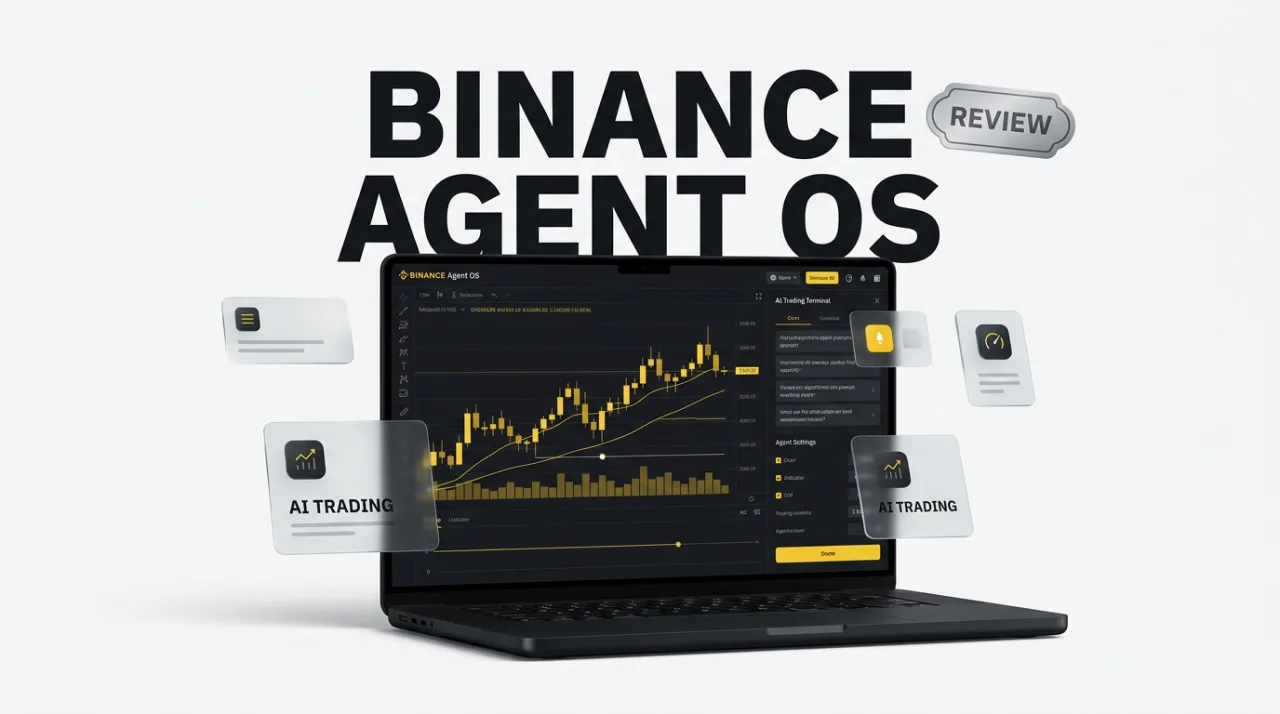
Binance Agent OS launched on August 20, 2026, as a developer toolkit within the Binance Intelligence stack. It lets AI agents built on models such as ChatGPT or Claude connect directly to Binance APIs for market data, trading, and on-chain actions. Users retain control through dedicated sub-accounts and granular permission scopes.
Overview and Core Capabilities
Developers add the Model Context Protocol server at agent.binance.com/mcp/agentic to compatible environments, then authenticate with a Binance account. Agents gain read access to order books, prices, and klines, plus the ability to execute spot, futures, and margin trades. On-chain functions include swaps through the Agentic Wallet and machine-to-machine payments via the x402 protocol. Daily API calls exceeded 280,000 within weeks of launch, with MCP connections doubling and volumes rising roughly 20 times in the first week.
Setup requires funding a separate Agentic sub-account and defining scopes that block withdrawals by default. Users can enforce per-trade approvals or set funding limits. Binance applies its standard sub-account risk and AML rules but does not review agent logic. Real-time market and account data remain the most requested capabilities, with average users issuing more than 800 requests per day by early October 2026.
Skill Hub and Wallet Agentic Hub extend earlier 2026 modular releases that added derivatives trading and token audits. The platform supports over 300 million Binance users who can now route agentic workflows without building custom integrations from scratch.
Security Limits, Costs, and Comparisons
Default on-chain limits cap regular swaps at approximately 50,000 dollars per day and DeFi transactions at 100,000 dollars per day. The x402 payment channel defaults to 20 dollars daily. No separate loss caps exist beyond the amount funded into the sub-account. Emergency revocation and scope changes remain available at any time.

Binance charges no additional platform fees for Agent OS beyond standard trading commissions. Hidden costs appear only if users exceed sub-account balances or trigger external network fees on on-chain actions. Registration occurs through existing Binance accounts with no extra software required beyond MCP-compatible clients.
Competitors offer similar agent connections. The table below summarizes key differences based on publicly reported defaults.
| Feature | Binance Agent OS | Kraken MCP | Coinbase Agent Kit |
|---|---|---|---|
| Default daily swap limit | 50,000 USD | 25,000 USD | 30,000 USD |
| Withdrawal block | Enabled by default | Enabled by default | Optional toggle |
| Per-trade approval | User configurable | Fixed policy | User configurable |
| Model Context Protocol | Native support | Native support | Partial support |
OKX tools provide comparable wallet access but report higher default payment limits near 50 dollars per day for similar protocols. User reports on public forums note that Binance volumes grew faster than Kraken or Coinbase equivalents during September 2026, though some traders cite occasional latency on high-frequency agent calls. Common complaints include the need for separate sub-account funding and the absence of automated loss-stop rules beyond user-set scopes. Positive feedback highlights reliable market-data endpoints and straightforward permission revocation.
Technical constraints remain: Binance does not audit agent reasoning, and on-chain limits reset daily without carry-over. Expansion plans include additional skills and broader MCP wallet features, though no release dates have been published. The service positions user-managed controls as the primary safeguard for autonomous trading activity.
Frequently asked questions
How do users set trading limits in Binance Agent OS?
Users fund a dedicated Agentic sub-account and define approval rules or daily caps through the permission interface. Withdrawals stay blocked unless explicitly enabled. Changes take effect immediately upon save.
What daily transaction limits apply to on-chain actions?
Regular swaps default to roughly 50,000 dollars per day while DeFi transactions reach 100,000 dollars. The x402 payment channel limits transfers to 20 dollars daily. These figures reset every 24 hours.
Does Binance inspect the reasoning of connected AI agents?
No. Binance applies existing sub-account security and AML policies but leaves agent decision logic entirely to the user and the chosen model.
How does Binance Agent OS compare with Kraken MCP tools?
Binance offers higher default swap limits and native MCP support while Kraken maintains stricter fixed policies. Both require sub-account funding and block withdrawals by default.
Filed under
Comments
No comments yet. Be the first!