Reviews Database
Astra DB Review: Serverless Vector Database Capabilities and Pricing
At a glance
Astra DB is a serverless Cassandra-based database with native vector search for AI applications. This review examines its features, pricing tiers and operational constraints.
Astra DB review shows a managed serverless database originally built on Apache Cassandra that now includes native vector search. Launched in 2020 by DataStax and integrated into IBM watsonx.data after the 2025 acquisition, it targets developers building AI and retrieval-augmented generation applications alongside traditional NoSQL workloads.
Astra DB Capabilities and Core Features
The service offers two serverless variants: one optimized for vector workloads and another for standard applications. Both support the Data API for REST and JSON access as well as CQL with official drivers. Vector collections store embeddings up to 16,000 dimensions and enable approximate nearest-neighbor searches using cosine and other similarity metrics, plus metadata filtering and hybrid search that combines vector and keyword results.
Automatic scaling removes cluster management tasks. Multi-region replication is available on paid plans, and triple replication across availability zones is standard. Integrations exist with LangChain, Langflow and other frameworks. The Astra vectorize feature can generate embeddings automatically through selected providers such as NVIDIA models in supported regions like AWS us-east-2.
Regions span dozens of locations across AWS, Google Cloud and Azure, though vector-enabled regions and feature availability differ by tier. Maintenance windows are published per region and cloud provider. The portal includes a Data Explorer for testing queries without external tools.
Pricing Structure, Security and Practical Limits
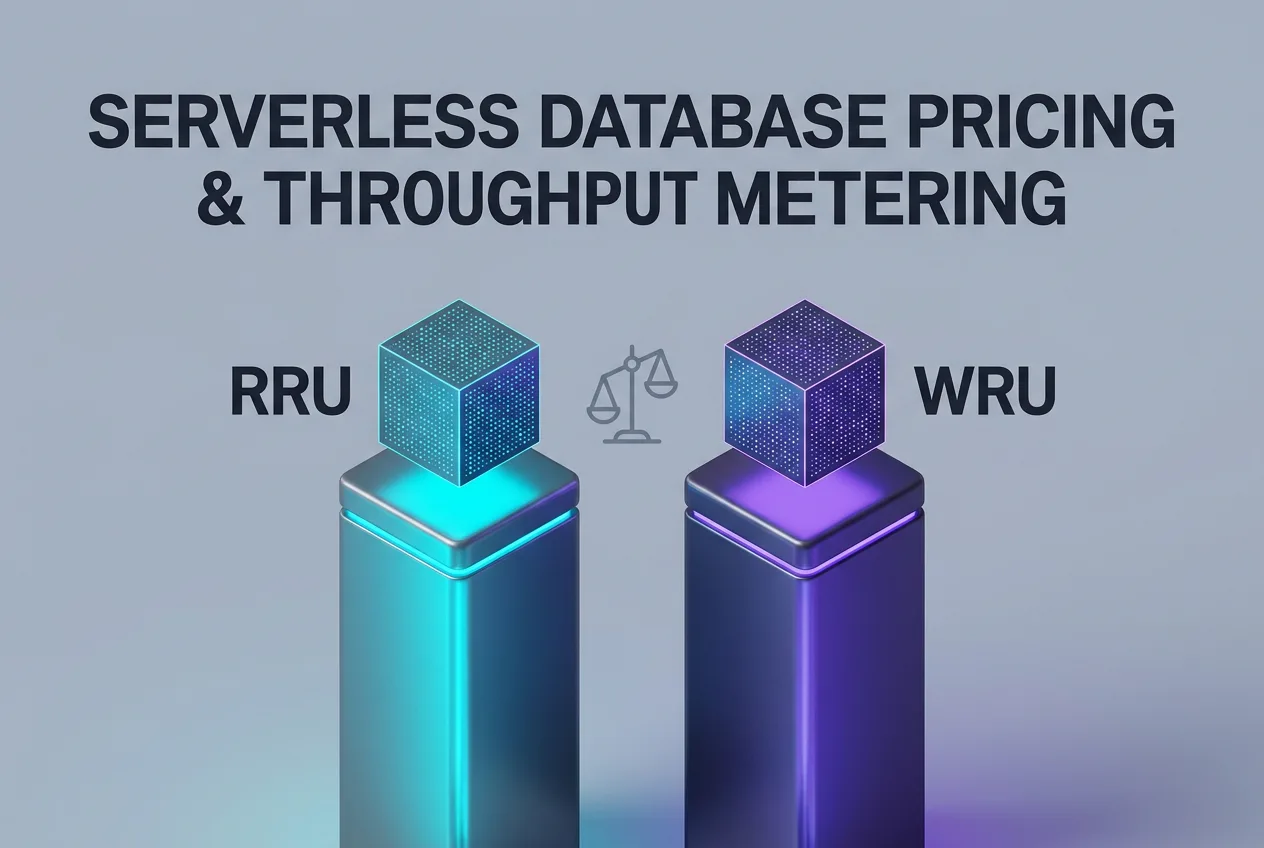
Pricing follows a usage-based model on the Standard tier, which replaced older Pay-As-You-Go options after the IBM acquisition. Metering tracks Read Request Units and Write Request Units, storage in gigabytes per month and data transfer. One RRU covers roughly 4 KB of payload while one WRU covers 1 KB. Exact rates vary by region and are listed on IBM watsonx.data pricing pages.
The recurring Free tier supplies approximately 25 dollars in monthly credit, allowing up to 80 GB storage and 20 million operations before hibernation. Paid Standard and Enterprise tiers add private endpoints, customer-managed keys and 24/7 support with provisioned capacity units. Enterprise requires annual commitment.
Security measures include encryption at rest and in transit on all plans, with private endpoints and customer-managed keys restricted to paid tiers. The platform runs on established cloud infrastructure with published maintenance schedules. Default throughput sits near 12,000 operations per second, though new or idle instances may see lower limits until scaled.
Competitor Comparison, Limitations and Final Assessment
Compared with Pinecone, Astra DB combines vector search with full Cassandra tables and hybrid queries in one service, while Pinecone focuses exclusively on vectors. Pricing differs because Astra charges per request unit rather than fixed index size. Versus Weaviate Cloud, Astra provides stronger multi-cloud region coverage and Cassandra compatibility but lacks Weaviate’s built-in classification modules.
| Service | Vector Dimensions | Pricing Model | Free Tier Storage |
|---|---|---|---|
| Astra DB | 16,000 | Request units + storage | 80 GB credit |
| Pinecone | 20,000 | Pods or serverless | Starter index |
| Weaviate Cloud | Unlimited | Resources + queries | 14-day sandbox |
Documented limits include five databases on the Free plan, table and index caps, and region-specific availability for vector features. Post-acquisition integration with IBM watsonx continues, yet some users report uncertainty around future pricing adjustments. Real-world throughput can drop below advertised defaults during initial scaling periods.
Public user feedback on forums and review sites highlights reliable uptime and straightforward vector API access, while complaints focus on credit exhaustion speed on Free tier and variable request-unit costs across regions. No widespread security incidents have been reported since launch. Astra DB suits teams already familiar with Cassandra or needing combined vector and tabular workloads within a single managed platform.
Frequently asked questions
What is the storage limit on the Astra DB Free tier?
The Free tier provides roughly 80 GB of storage backed by a 25-dollar monthly credit. Once the credit is exhausted the database hibernates until the next cycle.
Does Astra DB support hybrid vector and keyword search?
Yes. Collections can store both vector embeddings and metadata. The service allows combined queries with optional reranking on supported plans.
How are Astra DB operations metered on paid plans?
Standard tier bills Read Request Units and Write Request Units separately from storage and egress. One RRU equals about 4 KB of payload.
Which clouds does Astra DB run on after the IBM acquisition?
The platform remains available on AWS, Google Cloud and Azure with dozens of regions. Vector features and pricing still vary by specific location.
Filed under
Comments 1