Reviews Payment Security
Bluefin TrustConex Review: PCI-Validated P2PE Transaction Security, Key Management and Platform Capabilities
At a glance
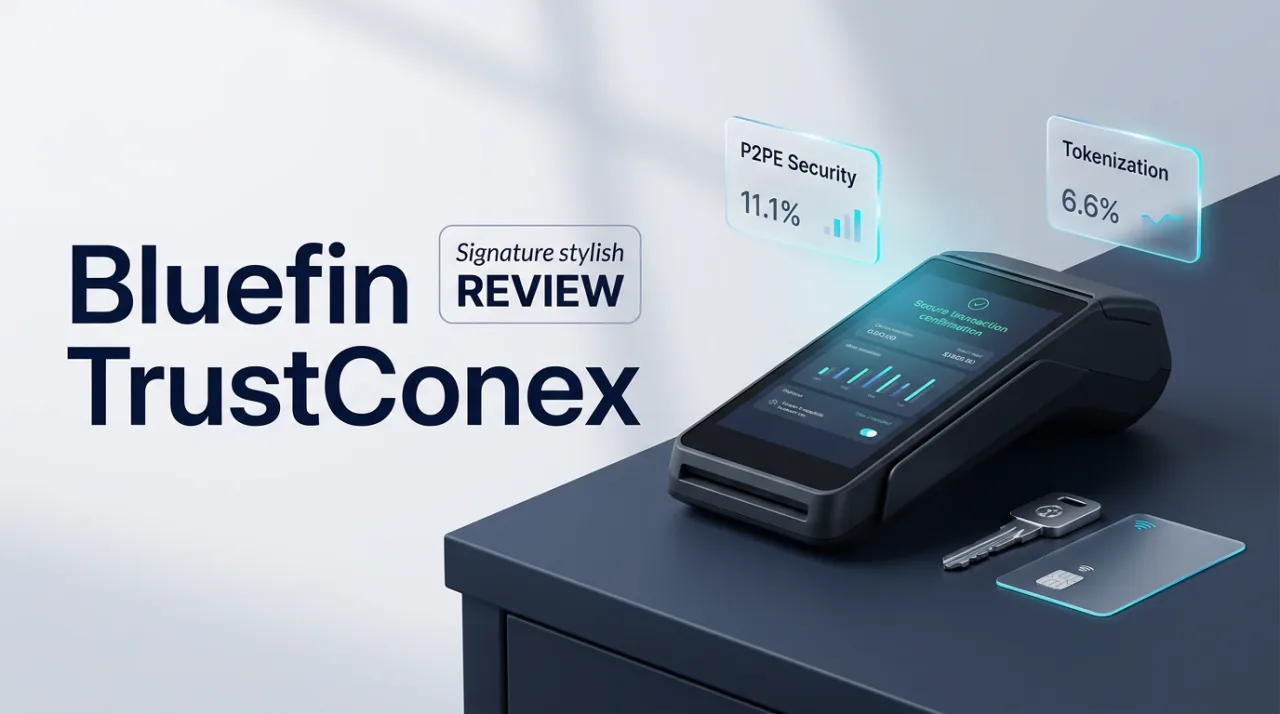
Bluefin TrustConex extends PCI-validated P2PE to existing payment setups through a proxy-based design that reduces scope without major recertification.
Bluefin TrustConex Overview and Core Architecture
Bluefin TrustConex serves as a processor-agnostic, proxy-based orchestration layer that brings Bluefin’s established PCI-validated P2PE solution into card-present environments. Launched as a rebranded evolution of PointConex, the platform encrypts cardholder data at the point of interaction on certified hardware devices. Decryption then occurs inside Bluefin’s PCI DSS-assessed environment rather than on merchant systems.
The architecture supports PIN translation using separate P2PE and PIN keys per device. It integrates with existing applications through minimal code changes and avoids full EMV recertification cycles. Bluefin manages device attestation, chain-of-custody, and lifecycle via its P2PE Manager tool, covering more than 120 certified devices from 17 manufacturers including PAX, Verifone, and Ingenico.
Bluefin itself was founded in 2007 and first listed a North American PCI-validated P2PE solution around 2014. The company reports protecting over $350 billion in transactions annually across roughly 35,000 to 40,000 connected businesses in 60 countries.
Key Features, Pricing Details, and Security Controls
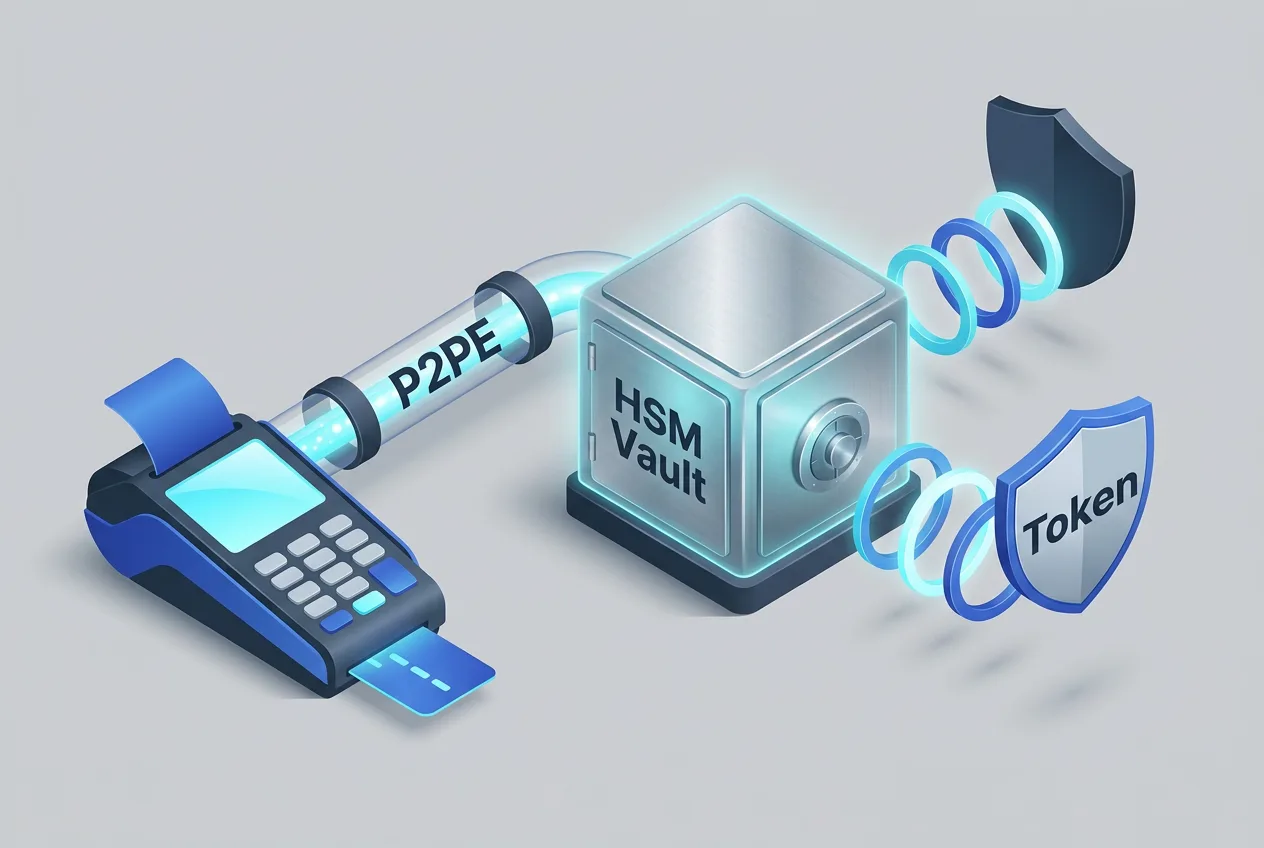
TrustConex combines centralized key management with automatic tokenization for reuse across channels such as e-commerce and recurring billing. It works alongside Bluefin’s ShieldConex Orchestration and Decryptx for real-time decryption and proxying to multiple processors. The solution supports direct POI, controller-mediated, and POS-connected integration models.
Pricing remains custom-quoted with no public rate card available. Merchants typically encounter interchange-plus processing fees plus monthly statement charges around $10, minimums, and separate PCI or equipment costs. Security components are bundled into negotiated agreements rather than fixed tiers.
Security rests on hardware encryption at the POI, decryption within a controlled PCI environment, and support for the full validated P2PE framework. This structure can enable SAQ P2PE qualification and reduce PCI DSS scope by up to 90 percent in qualifying deployments. No public breach incidents tied to TrustConex have been reported.
- 120+ certified devices supported
- One P2PE key and one PIN key per device
- Automatic tokenization for omnichannel use
- Processor-agnostic proxy routing
Comparisons, Limitations, and Final Assessment
TrustConex differs from point solutions that require extensive recoding by maintaining processor flexibility and device compatibility without forcing gateway changes. In contrast to non-validated P2PE offerings, it follows the complete PCI framework from encryption through key management to decryption.
| Aspect | Bluefin TrustConex | Typical Non-Validated P2PE | Gateway-Only Solutions |
|---|---|---|---|
| Scope Reduction | Up to 90% via validated framework | Limited or none | Minimal |
| Device Support | 120+ models, 17 manufacturers | Varies widely | Processor-specific |
| Key Management | Centralized, Bluefin-hosted | Often merchant-managed | Gateway-dependent |
| Integration Changes | Proxy-based, low code impact | Frequently requires recertification | Full gateway switch |
Public user reviews specific to TrustConex remain sparse because the product is a recent extension of earlier Bluefin tools. General Bluefin merchant feedback mentions occasional statement fees and contract terms as pain points, while the 2026 Cybersecurity Breakthrough Award for Transaction Security Solution of the Year provides third-party recognition of the underlying technology.
Limitations include the absence of published pricing transparency and reliance on custom contracts that may carry legacy equipment or cancellation clauses. Expansion plans focus on hospitality and fuel sectors through continued device partnerships, yet detailed roadmaps have not been released. The platform’s strength lies in its ability to layer validated P2PE onto existing infrastructures while preserving processor choice.
Frequently asked questions
What devices does Bluefin TrustConex support?
The platform works with over 120 PCI-certified and EMV-capable devices from 17 manufacturers including PAX, Verifone, Ingenico, Newland, Sunmi, and LANDI.
Does Bluefin TrustConex publish pricing?
No public rate card exists. Pricing is provided through custom quotes that combine security components with processing and gateway fees.
How does TrustConex reduce PCI scope?
By encrypting data at the POI and decrypting only inside Bluefin’s validated environment, the solution supports SAQ P2PE qualification and can cut merchant PCI DSS scope significantly.
Is TrustConex processor-agnostic?
Yes. The proxy-based design routes transactions to multiple processors and gateways without requiring a full switch or extensive recertification.
Filed under
Comments 1